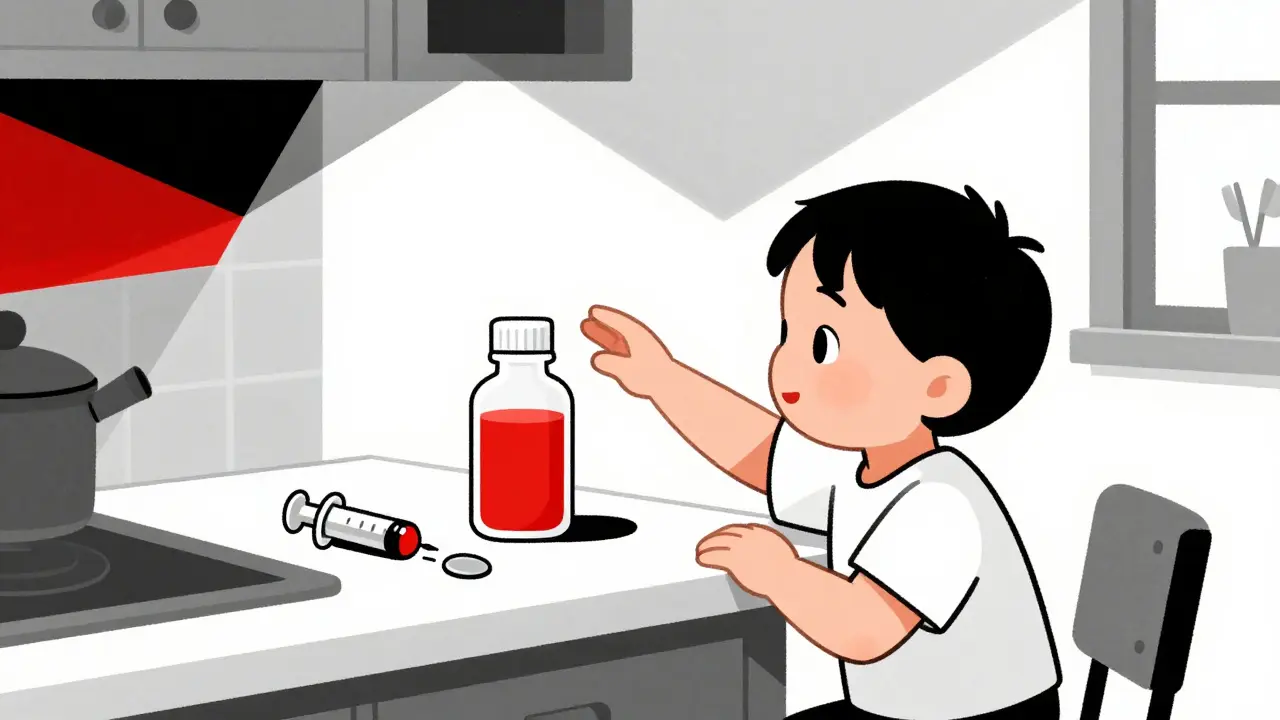

Every year, tens of thousands of children under five end up in emergency rooms because they accidentally swallowed the wrong amount of medicine. Not because they were being rebellious. Not because anyone meant to harm them. But because a pill bottle was left on the counter, a teaspoon was used instead of the syringe that came with the medicine, or a parent didn’t realize there were two different strengths of the same drug on the shelf. These aren’t rare mistakes. They’re common, preventable, and often deadly.
Why This Happens More Than You Think
Children under five are naturally curious. They explore the world by putting things in their mouths. A brightly colored liquid medicine bottle looks like candy. A pill that’s shaped like a dinosaur? To a toddler, it’s a toy. The CDC reports that in 2010, emergency departments saw over 76,000 cases of young kids getting into medications. Even today, that number stays stubbornly high. The biggest culprits? Liquid acetaminophen and diphenhydramine. Together, they account for nearly half of all pediatric medication overdoses. Why? Because they’re everywhere - in cough syrups, sleep aids, allergy meds. And because parents often don’t realize that infant and children’s versions have different concentrations. One drop too many, and the dose doubles. A kitchen spoon? That’s not a measuring tool. It’s a gamble. Studies show 78% of dosing errors come from using spoons, cups, or droppers not meant for medicine.The PROTECT Initiative: A Real Solution in Action
In 2008, the CDC launched the PROTECT Initiative - a coordinated national effort to stop these accidents before they happen. It’s not just a slogan. It’s three concrete strategies that have already cut emergency visits by 25% since 2010. First: packaging. Child-resistant caps aren’t foolproof. The Consumer Product Safety Commission found that 10% of kids can open them by age 3.5. But when those caps are paired with flow restrictors - little plastic inserts that limit how much liquid can pour out - the risk drops sharply. Since 2019, federal rules require all liquid pediatric medications to use milliliters (mL) on labels, not teaspoons or tablespoons. That’s a win. 95% of manufacturers now comply. Second: education. The Up and Away and Out of Sight campaign isn’t just a poster. It’s a simple rule: keep all medicines locked up, out of sight, and at least four feet off the ground. That means not on the nightstand, not on the bathroom counter, not in a purse left on the couch. A parent in a Reddit thread shared how their 2-year-old got into blood pressure pills left on the nightstand after a doctor’s visit. They didn’t know the pills were dangerous. Now, they use a locked cabinet. Third: standardized dosing. The device that comes with the medicine? That’s the only one you should use. Not a spoon. Not a syringe from last time. Not a shot glass. If the bottle says 5 mL, use the syringe marked in mL. No guessing. No estimating. If you lose the device, call your pharmacy. They’ll give you a new one for free.What You Can Do Today
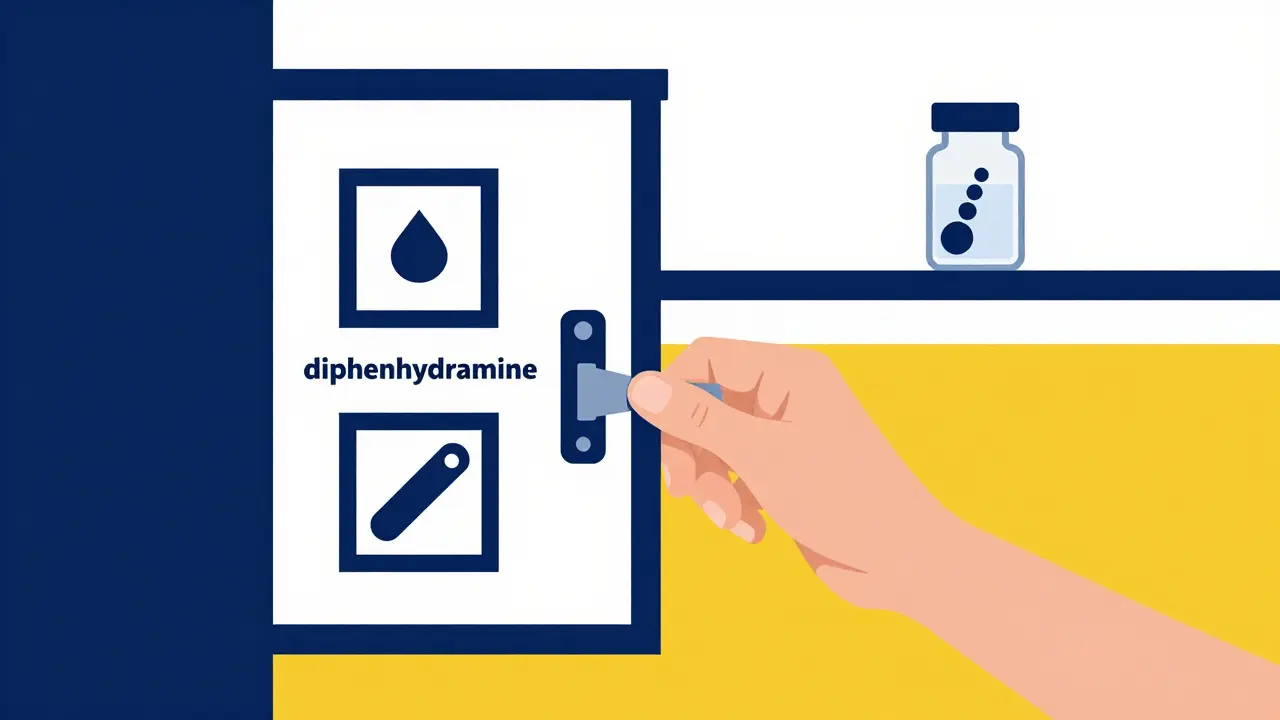
You don’t need to wait for a new law or a fancy gadget. Here’s what you can do right now:- Lock it up. Use a locked cabinet or a childproof lock on a high shelf. Even if you think your child can’t reach it, they might. Climbing is part of development.
- Use the right tool. Always use the syringe, dropper, or cup that came with the medicine. If it’s missing, ask for a replacement. Don’t use kitchen spoons - they vary wildly in size.
- Check the concentration. Infant acetaminophen is 160 mg/5 mL. Children’s is also 160 mg/5 mL - but older bottles might say 80 mg/5 mL. Always read the label. If you’re unsure, ask your pharmacist.
- Dispose of leftovers. Unused opioids, antibiotics, or painkillers shouldn’t sit in your medicine cabinet. Use a take-back program at a pharmacy or hospital. If none are available, mix pills with coffee grounds or cat litter, seal them in a bag, and throw them in the trash. Never flush them.
- Know the number. Save 1-800-222-1222 in your phone. That’s Poison Control. They’re available 24/7. Don’t wait for symptoms. Call immediately if you suspect your child swallowed anything they shouldn’t have.
What to Do If It Happens
If your child swallowed medicine they shouldn’t have:- Don’t wait. Don’t try to make them vomit. Don’t give them milk or water unless instructed. Just act.
- Call Poison Control. Dial 1-800-222-1222. Have the medicine bottle with you. Tell them what was taken, how much, and when.
- Call 911 if they’re unconscious, having trouble breathing, or seizing. These are signs of a serious overdose. Don’t hesitate.
- If it’s an opioid overdose and you have naloxone, use it. The American Academy of Pediatrics now recommends that all children prescribed opioids also get naloxone at home. It’s a nasal spray. It’s safe. It can save a life. Learn how to use it before you need it.
Why This Isn’t Just About Pills
This isn’t just about keeping kids away from medicine. It’s about changing how we think about safety in the home. We lock up cleaning supplies. We cover electrical outlets. We install smoke detectors. But we still leave pills on the counter because we think, “I’m just going to be right back.” The truth? It only takes seconds. And children are faster than we think. Only 32% of households store medicines in locked cabinets. Only 58% use child-resistant caps correctly. That’s not negligence. It’s habit. And habits can be changed.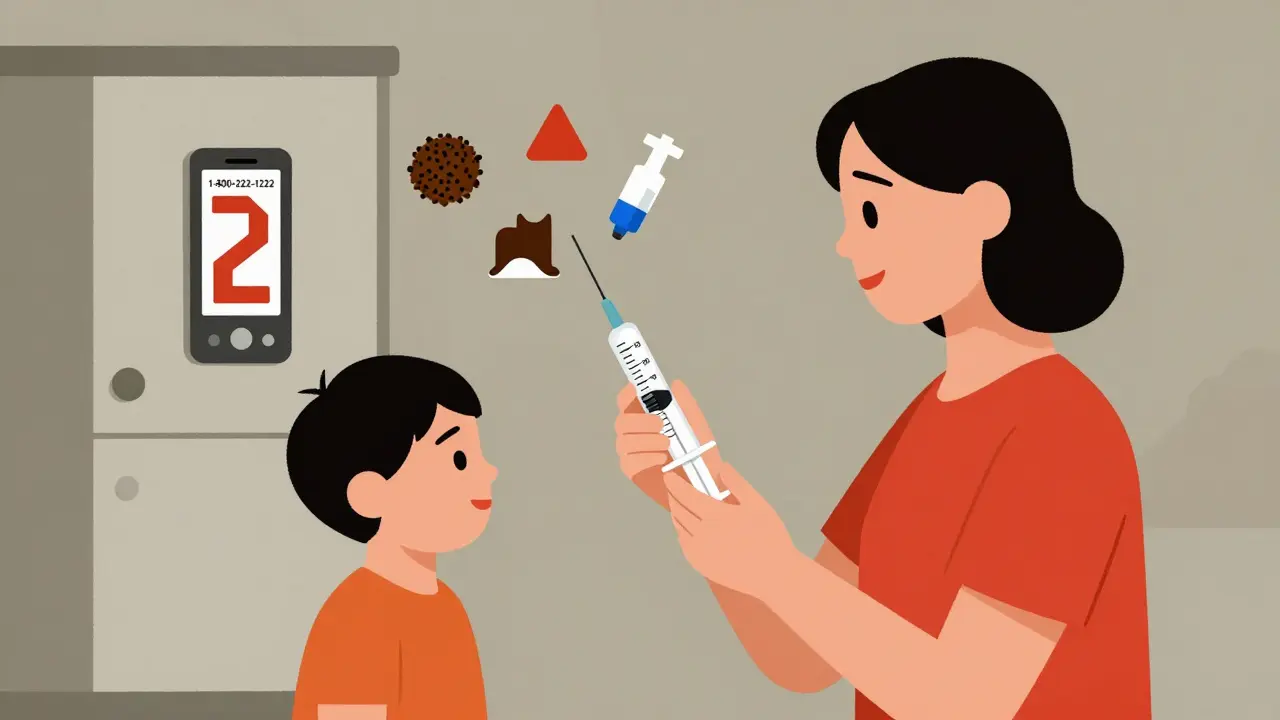
The Bigger Picture
The CDC has set a goal: reduce pediatric medication overdoses by 10% by 2030. They’re on track. But progress is uneven. Some states have strong disposal programs. Others don’t. Some pediatricians talk about safe storage during checkups. Others don’t. And while smart packaging tech exists - like AdhereIT’s smart caps or Hero Health’s automated dispensers - most families can’t afford them. Eighty-seven percent of low-income households don’t have access. That’s why the PROTECT Initiative’s focus on low-cost, high-impact changes matters so much. You don’t need a $300 smart box. You need a locked cabinet. You need the right syringe. You need to know the Poison Control number.Final Thought: It’s Not Your Fault - But It’s Your Power
If your child accidentally takes medicine, it’s not because you’re a bad parent. It’s because the system didn’t make it easy to do the right thing. But now, you have the power to change that - for your family and for others. Start today. Lock the cabinet. Use the right syringe. Save the number. Talk to your pediatrician. Share what you learn. One small change can stop a tragedy before it begins.What should I do if my child swallows medicine they shouldn’t have?
Don’t wait for symptoms. Call Poison Control immediately at 1-800-222-1222. Have the medicine bottle ready. If your child is unconscious, having trouble breathing, or seizing, call 911 right away. If you have naloxone and suspect an opioid overdose, use it as directed - it’s safe and can reverse the effects.
Are child-resistant caps really effective?
They help, but they’re not foolproof. About 10% of children can open them by age 3.5. That’s why they should always be used with other strategies - like storing medicine in a locked cabinet, out of sight and reach. Never rely on caps alone.
Can I use a kitchen spoon to give my child medicine?
No. Kitchen spoons vary too much in size. A teaspoon at home might hold 3 mL - but the medicine might need 5 mL. Always use the syringe, dropper, or cup that came with the medicine. If you lost it, ask your pharmacy for a free replacement.
What’s the difference between infant and children’s acetaminophen?
Both are now 160 mg per 5 mL. But older bottles may say 80 mg per 5 mL. Always check the label. If you’re unsure, ask your pharmacist. Never assume the concentration is the same - giving the wrong dose can be dangerous.
Is it safe to flush old medicine down the toilet?
Only if the label says to. Otherwise, don’t flush. Instead, mix pills with coffee grounds or cat litter, seal them in a bag, and throw them in the trash. Use a drug take-back program if one’s available at your pharmacy or hospital - it’s the safest option.
Should I keep naloxone at home if my child is on opioids?
Yes. The American Academy of Pediatrics now recommends that all children prescribed opioids also get naloxone at home. It’s a nasal spray that can reverse an overdose. Ask your doctor for it. Learn how to use it. Keep it with you.
How do I know if my child’s medicine has a flow restrictor?
Look inside the bottle’s neck. A flow restrictor is a small plastic piece that limits how fast liquid pours out. It’s common in newer bottles of liquid acetaminophen, ibuprofen, and cough syrup. If you’re unsure, ask your pharmacist. It’s a safety feature - not a flaw.
Are there any apps or tools that help prevent dosing errors?
Some smart packaging devices exist, like AdhereIT or Hero Health, but they’re expensive and not widely accessible. The best tools are free: the dosing device that comes with the medicine, a locked cabinet, and knowing the Poison Control number. Stick to those.


