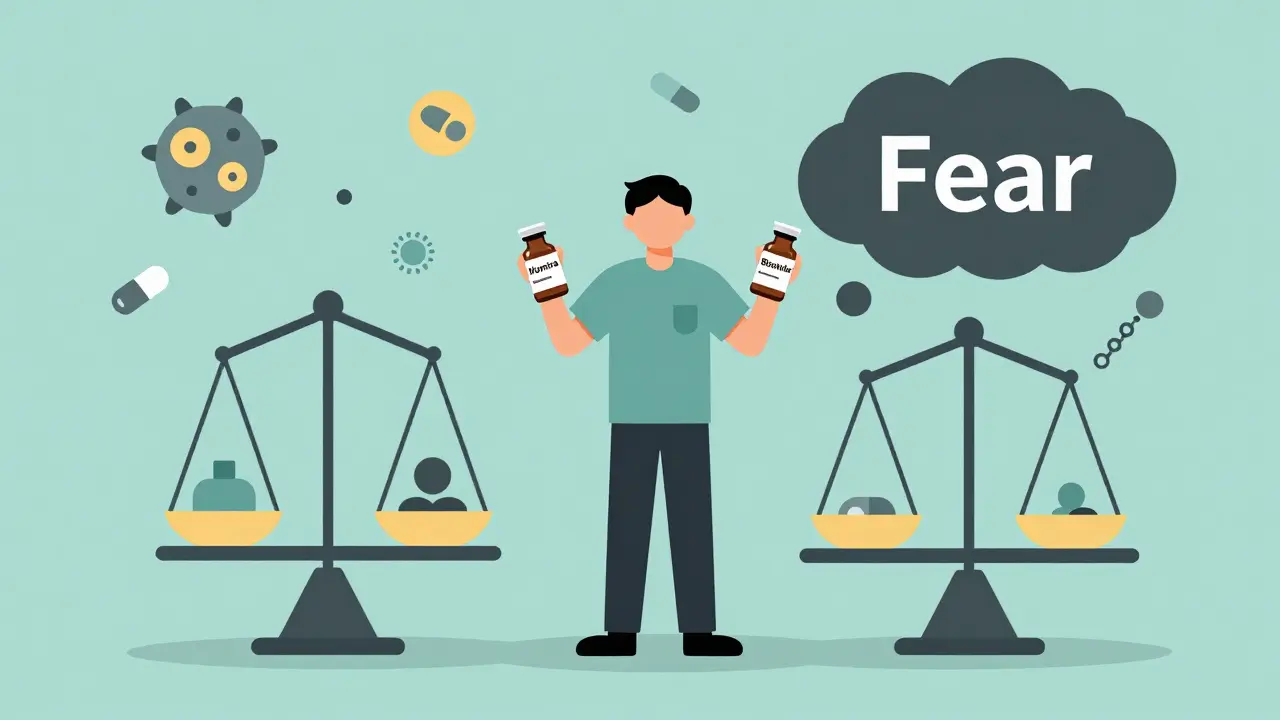

When you’ve been on a biologic drug like Humira or Remicade for years, switching to a biosimilar isn’t just a change in medication-it’s a shift in how you feel about your treatment. Many patients wonder: What happens when you change from originator? Will your disease flare? Will you feel worse? Or is this just a cost-saving move with no real impact on your life?
The short answer: for most people, nothing changes. But the details matter. And the fear? That’s often the biggest hurdle.
What Exactly Is a Biosimilar?
Biosimilars aren’t generics. That’s the first thing to understand. Generics are exact copies of small-molecule drugs like aspirin or metformin. Biosimilars are copies of complex biological drugs made from living cells-like antibodies used to treat rheumatoid arthritis, Crohn’s disease, or psoriasis. Because they come from living systems, they can’t be identical. But they don’t need to be.
The U.S. Food and Drug Administration (FDA) and the European Medicines Agency (EMA) require biosimilars to show no clinically meaningful differences from the original drug in safety, purity, and potency. That means if your doctor prescribes an infliximab biosimilar instead of Remicade, your body should respond the same way. Over 37 biosimilars have been approved in the U.S. as of 2023, mostly targeting TNF inhibitors like infliximab and adalimumab.
These drugs aren’t new. The first one, Omnitrope, was approved in Europe in 2006. In the U.S., Zarxio (filgrastim-sndz) hit the market in 2015. Since then, the data has piled up-and it’s consistent.
Switching Doesn’t Increase Risk of Flares
The NOR-Switch study, one of the largest and most rigorous trials on this topic, followed 481 patients with inflammatory arthritis or IBD who switched from originator infliximab to its biosimilar, CT-P13. After one year, 52.6% were still on the biosimilar. The group that stayed on the original drug? 60%. The difference? Not statistically significant. No increase in flares. No rise in serious infections. No surge in hospitalizations.
Other studies back this up. In psoriasis patients switching from adalimumab to its biosimilar GP2017, drug retention after 12 months was nearly identical: 79% vs. 81.3%. In inflammatory bowel disease, switching from one biosimilar to another-say, from CT-P13 to SB2-showed 90.6% of patients maintained remission. Fecal calprotectin levels, a key marker of gut inflammation, stayed steady.
Even when patients switched multiple times-originator to biosimilar, then biosimilar to another biosimilar-immunogenicity (the body making antibodies against the drug) didn’t spike. A 2022 study tracked 140 patients through three switches. The rate of anti-drug antibodies? Just 3 per 100 patient-years. That’s lower than the background rate in some untreated populations.
But Why Do Some People Stop Taking It?
If the science says it’s safe, why do 4-18% of patients discontinue after switching? The answer isn’t medical-it’s psychological.
Patients often report feeling different after a switch. Fatigue. Joint stiffness. Skin irritation. But lab tests? Normal. Trough levels? On target. Inflammation markers? Unchanged. This is the nocebo effect-the opposite of placebo. If you believe a change will make you worse, your brain can start to make you feel worse.
A 2021 study in Frontiers in Psychology found that 32.7% of patients reported new or worsening symptoms after a non-medical switch, even when their disease activity hadn’t changed. Online communities like Reddit’s r/rheumatoidarthritis are full of posts like: “I felt fine on Remicade. On the biosimilar? I felt like I was going backwards.”
But here’s the catch: when patients are properly educated before switching, discontinuation drops dramatically. The PERFUSE study showed that with a 20-minute counseling session, shared decision-making tools, and a 3-month follow-up check, dropout rates fell from 18% to just 6.4%. Knowledge reduces fear.

Cost Is the Real Driver-And It Matters
Biosimilars cost 15-35% less than the originator. In 2023, Humira biosimilars launched at a 35% discount. That’s billions saved across health systems. In Europe, 67% of filgrastim prescriptions are for biosimilars. In the U.S., it’s only 24% for infliximab-partly because of complex rebate deals that favor originators.
But savings aren’t just for insurers. They mean more patients can get treatment. Before biosimilars, many people skipped doses or skipped care entirely because they couldn’t afford biologics. Now, those same patients are getting full doses. That’s not just economics-it’s health equity.
When Switching Might Be Risky
Switching works best when your disease is stable. If your DAS28 score (a rheumatoid arthritis activity measure) is under 3.2, or your Crohn’s disease is in remission with normal calprotectin levels, switching is low-risk.
But if you’re in a flare, recently changed drugs, or have a history of losing response to biologics, switching isn’t advised. One Spanish study found a higher discontinuation rate (15.3%) when switching between biosimilars in active IBD patients. Not because the drug failed-but because the body was already under stress.
Also, multiple switches in a short time aren’t recommended. While the NOR-SWITCH II study showed 89.2% retention after two years of multiple switches, most experts agree: stick with one product unless there’s a compelling reason to change.
Interchangeability: The Next Step
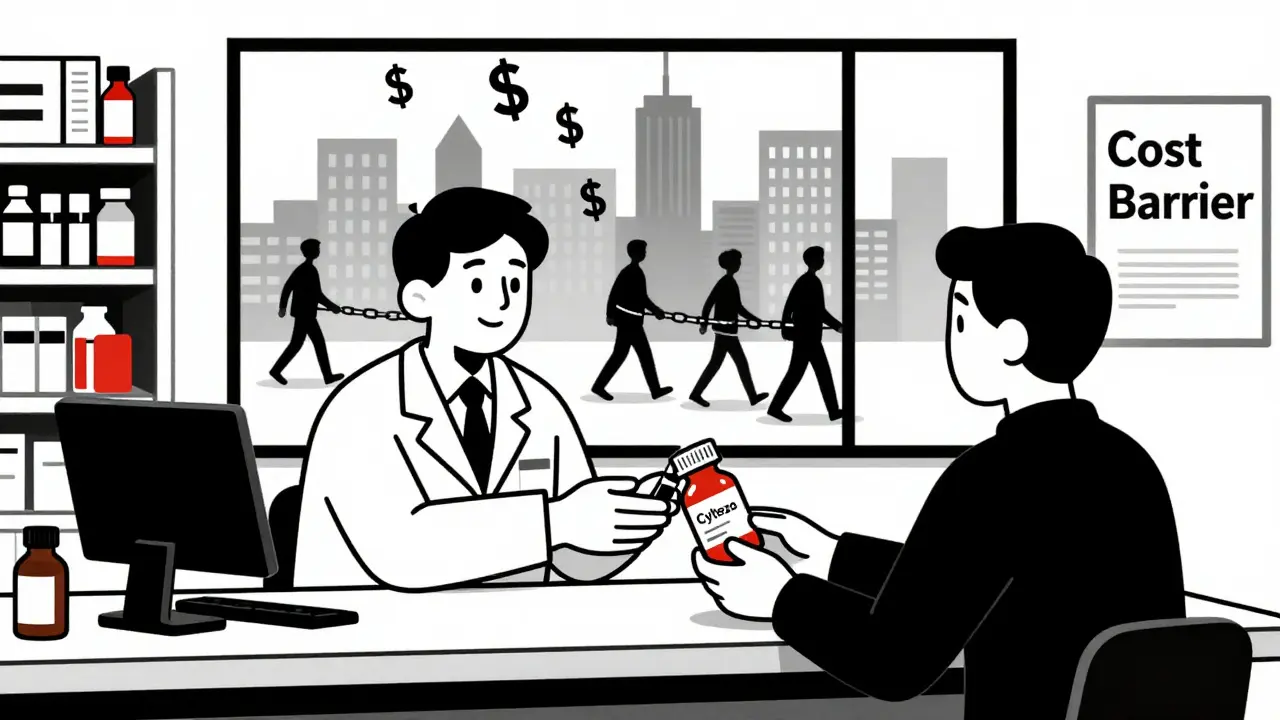
In 2024, the FDA approved the first interchangeable adalimumab biosimilar, Cyltezo. That means pharmacies can substitute it for the originator without asking the doctor. It’s like generics at the pharmacy counter.
But interchangeability isn’t automatic. It requires extra data showing that switching back and forth between originator and biosimilar doesn’t increase risk. The FDA now requires pharmacokinetic studies for this designation. The EMA doesn’t require it-and doesn’t even use the term “interchangeable.”
So if you’re in the U.S., you might see your prescription automatically switched at the pharmacy. In Europe, your doctor usually decides. That’s a big difference in how patients experience the change.
What Doctors Need to Do
Switching isn’t just a pharmacy transaction. It’s a clinical process. Good practice includes:
- Discussing the switch with the patient before it happens-not the day before, but weeks ahead.
- Explaining that biosimilars aren’t “cheap versions,” but scientifically validated alternatives.
- Checking disease activity before and after the switch using validated tools like DAS28 or PASI.
- Monitoring trough levels and anti-drug antibodies if there’s concern about loss of response.
- Giving patients a clear plan: “If you feel worse in the next 4 weeks, call us. We’ll check your labs and decide together.”
Most rheumatologists and gastroenterologists now see biosimilar switching as routine. But they’re not rushing it. They wait for stability. They listen to concerns. And they don’t dismiss feelings-even if the numbers look fine.
The Bottom Line
Changing from an originator biologic to a biosimilar is safe for the vast majority of patients. The data is clear: efficacy, safety, and retention rates are nearly identical. The real challenge isn’t science-it’s perception.
Patients aren’t resisting biosimilars because they’re dangerous. They’re resisting because they’re uncertain. And uncertainty breeds fear.
The solution? Education. Transparency. Time. A good conversation with your doctor before the switch can make all the difference. If you’re being asked to switch, ask: “Why now?” “What’s the evidence?” “What happens if I feel worse?”
You’re not just changing a drug. You’re taking control of your treatment. And that’s something worth understanding-not fearing.


