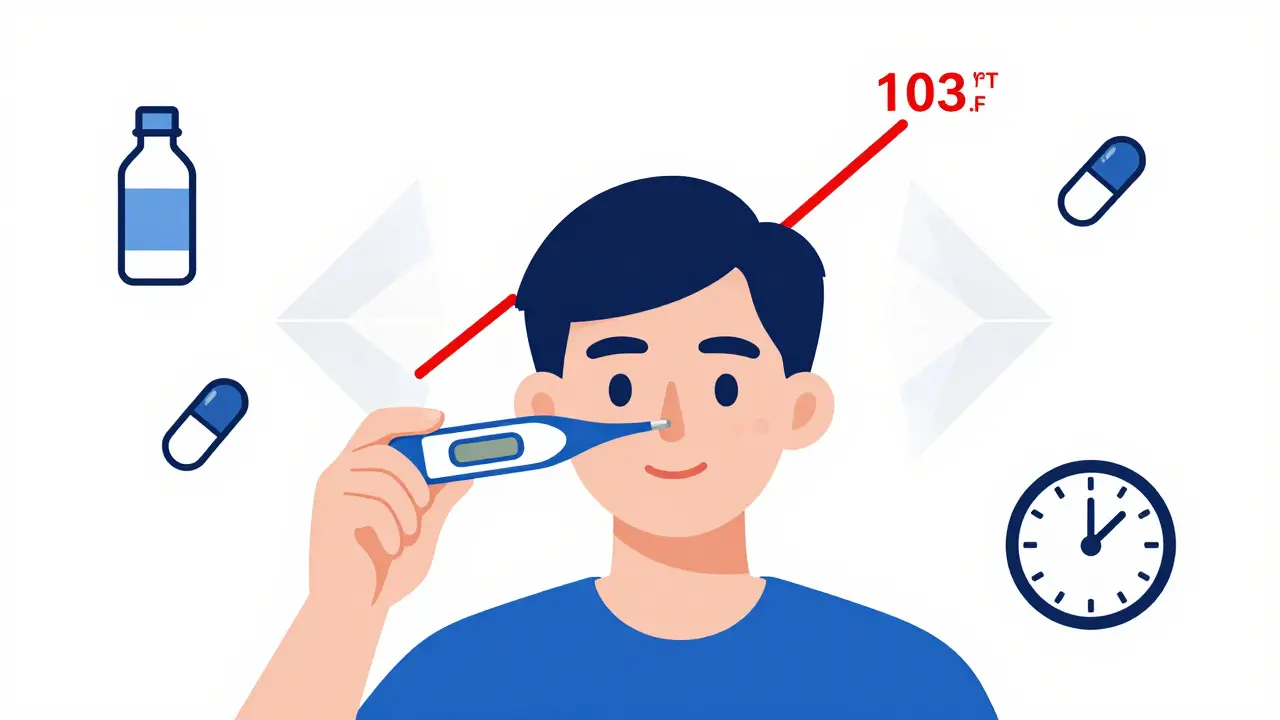

Most adults know that a fever means something’s off. But how high is too high? How long is too long? And when should you really worry - not just pop another ibuprofen and wait it out?
A fever isn’t just a number on a thermometer. It’s your body fighting back. When your temperature hits 100.4°F (38°C) or higher, your brain - specifically the hypothalamus - is raising the heat on purpose. It’s trying to make your body too hot for viruses or bacteria to survive. That’s normal. That’s protective. But when that defense system goes too far or lasts too long, it can signal something dangerous.
What Counts as a Fever - and What Doesn’t
Forget the old 98.6°F standard. That number was based on 19th-century measurements and doesn’t reflect how real people actually run. Some folks naturally sit at 97.5°F. Others run at 99.2°F. That’s normal. So don’t panic if your temperature is 99.1°F and you feel a bit off. That’s a low-grade fever - not an emergency.
Here’s the real breakdown:
- Low-grade fever: 99.1°F to 100.4°F (37.3°C to 38.0°C) - common with colds, mild flu, or minor infections.
- Moderate fever: 100.6°F to 102.2°F (38.1°C to 39.0°C) - more serious, often from flu, sinus infections, or urinary tract infections.
- High fever: 102.4°F to 105.8°F (39.1°C to 41°C) - needs attention. Could be bacterial, like pneumonia or strep.
Don’t just rely on the number. How you feel matters just as much. A 101°F fever with chills, sweating, and body aches? That’s different from a 101°F fever where you’re still able to drink water and walk to the kitchen.
When to Call Your Doctor - Not Wait It Out
Most fevers go away on their own in 2 to 3 days. That’s the rule. If yours lasts longer, it’s time to call. Not tomorrow. Not after the weekend. Now.
Here’s when to act:
- Fevers lasting more than 72 hours - even if it’s just 100.8°F. If it doesn’t drop with rest, fluids, and OTC meds like acetaminophen or ibuprofen, something’s not resolving. That’s a red flag.
- Temperature at or above 103°F (39.4°C) - especially if it keeps climbing or won’t come down. This isn’t just "bad flu." It’s a signal your body is overwhelmed.
- Recurrent fevers - if you get a fever, it breaks, you feel okay for a day, then it comes back - for a week or more. That’s not normal. It could mean a hidden infection like endocarditis, abscess, or even a chronic inflammatory condition.
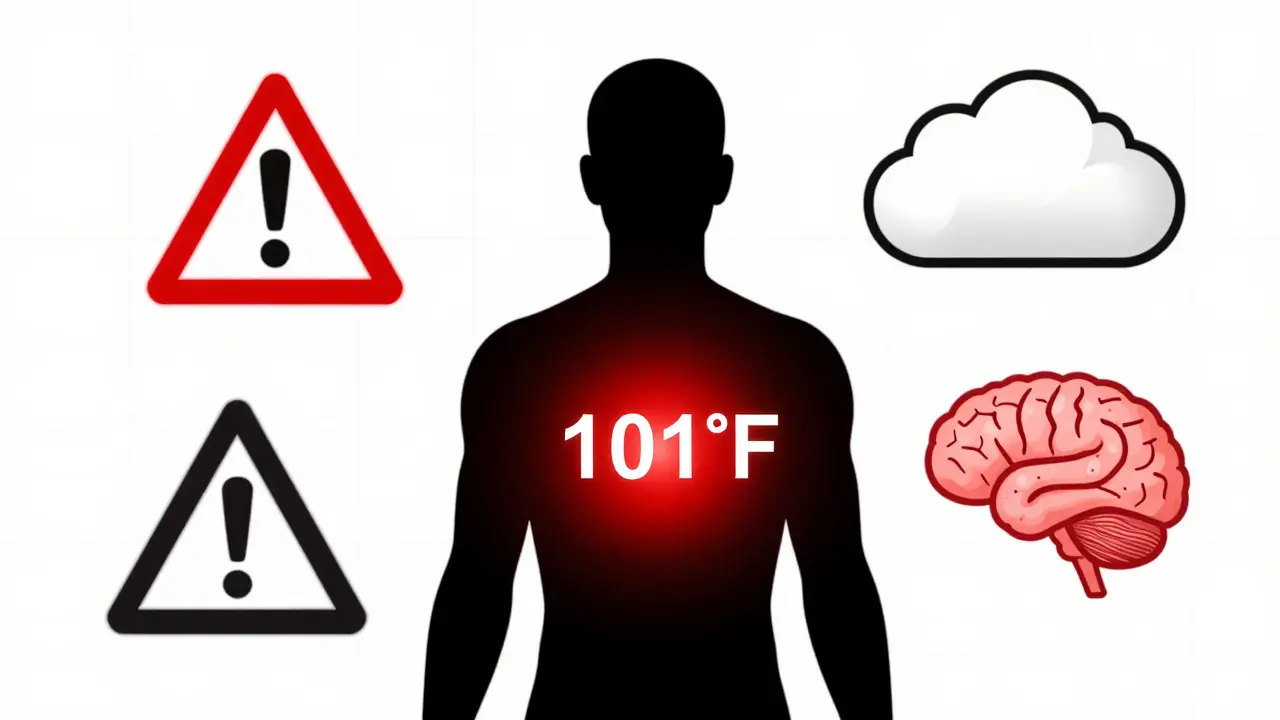
And if you’re over 65, or your immune system is weakened - whether from chemotherapy, HIV, organ transplant, or long-term steroid use - you don’t wait until 103°F. At 101°F (38.3°C), you call your doctor. Your body can’t fight as hard, so the infection can spread faster. Delaying care in this group is one of the most common reasons for preventable hospitalizations.
Red Flags - Don’t Ignore These Symptoms
A fever alone is often harmless. But a fever with certain symptoms? That’s an emergency.
Go to the ER or call 911 immediately if you have a fever and:
- Confusion, trouble waking up, or seizures - your brain is affected. This could be meningitis or encephalitis.
- Stiff neck - especially with light sensitivity or vomiting. Meningitis doesn’t always start with a raging fever. Sometimes it starts with a headache and stiffness.
- Difficulty breathing - even after clearing your nose. If you’re gasping, your lips are turning blue, or you can’t catch your breath, this could be pneumonia, sepsis, or a blood clot.
- Severe pain - in your abdomen, chest, or joints. A fever with sharp belly pain could mean appendicitis. Pain in your lower back with fever? Could be a kidney infection.
- Rash that doesn’t fade when you press on it - especially if it looks like tiny red or purple spots. This could be meningococcal disease or toxic shock syndrome. Both are life-threatening within hours.
- Painful urination or unusual vaginal discharge - fever with these symptoms often means a serious pelvic or urinary tract infection that’s spreading.
- Inability to urinate - this means your body is shutting down. Dehydration? Maybe. But it could also be sepsis.
These aren’t "maybe" signs. They’re emergency signals. Waiting 24 hours could mean the difference between a quick antibiotic and an ICU stay.
Who’s at Higher Risk - And Why
Not everyone with a fever needs the same level of care. Risk isn’t just about age. It’s about your health history.
If you have:
- Diabetes - your immune system doesn’t respond well to infection.
- Heart disease or COPD - your body is already under strain. A fever adds stress that can trigger heart failure or respiratory collapse.
- Sickle cell disease - fever can signal a life-threatening crisis.
- Chronic kidney or liver disease - your body can’t clear toxins or fight infection effectively.
Even if your fever is only 100.5°F, if you have one of these conditions, call your doctor. Don’t wait. Don’t check online forums. Don’t try to tough it out. Your risk of complications is 3 to 5 times higher than someone without these conditions.
How to Measure Fever Accurately
Temperature matters - but only if you measure it right.
Oral digital thermometers are the gold standard for adults. Place it under your tongue, close your lips, and wait. Don’t take it right after drinking hot coffee, eating ice cream, or exercising. Wait 30 minutes. Ambient heat, physical activity, or even a hot shower can temporarily spike your reading by 1-2°F. That’s not a fever. That’s a false alarm.
Forehead (temporal artery) thermometers are okay for quick checks, but they’re less accurate. If the reading seems off - like a sudden 102°F after you just walked in from the cold - recheck with an oral thermometer.
And please - no armpit or ear thermometers unless you have no other option. They’re unreliable. Don’t trust them when your health is on the line.
What to Do While You Wait
If you’re not in emergency territory but still unsure, here’s what to do:
- Hydrate. Fever makes you lose fluids fast. Drink water, broth, or electrolyte drinks. Don’t wait until you’re thirsty.
- Rest. Your body needs energy to fight. Don’t push through work or workouts.
- Use OTC meds wisely. Acetaminophen (Tylenol) or ibuprofen (Advil) can bring the fever down and help you feel better. But they don’t cure the cause. Don’t use them to mask symptoms so you can ignore them.
- Monitor. Take your temperature every 4 hours. Write it down. Note how you feel. Are you more tired? Confused? Breathing harder? That info helps your doctor.
If you’re unsure whether to call, call. Most doctors’ offices have nurse lines. Telehealth services like HMH 24/7 or similar platforms let you speak to a provider in minutes. You don’t need to drive to the ER unless you’re having red flag symptoms.
Why People Wait Too Long - And Why It’s Dangerous
A 2022 study found that 30% of adults who went to urgent care for fever waited more than 72 hours. Many thought, "It’s just a virus," or "I’ll wait until tomorrow."
Here’s the truth: People who waited past 96 hours were 2.3 times more likely to need hospitalization. Why? Because infections don’t wait. Bacteria multiply. Inflammation spreads. What starts as a sore throat can become sepsis in 48 hours.
And here’s another stat: 42% of adults wait until their fever hits 104°F before doing anything. That’s like waiting for a house fire to spread to the next room before calling 911. By then, the damage is already done.
There’s no shame in calling early. Doctors see this all the time. They’d rather you call too soon than too late.
Is a fever of 103°F dangerous for a healthy adult?
A fever of 103°F is high and should be taken seriously, even for healthy adults. While some people can tolerate short spikes up to 104°F without lasting harm, it’s a sign your body is fighting a strong infection. If it doesn’t come down with medication, lasts more than 24 hours, or is accompanied by other symptoms like headache or chills, contact a healthcare provider. Don’t wait for it to get worse.
Can stress or anxiety cause a fever?
Stress or anxiety alone won’t cause a true fever - defined as a core body temperature above 100.4°F. You might feel hot, sweaty, or flushed, but your thermometer won’t show a medically recognized fever. If you have a confirmed fever, something else is going on - usually an infection. Don’t assume it’s "just stress." Get it checked.
Should I take my temperature if I feel feverish but my thermometer reads normal?
Yes. If you feel feverish - chills, sweating, body aches, fatigue - but your thermometer reads below 100.4°F, take it again later. Thermometers can be inaccurate, especially if used incorrectly. Try an oral reading after resting for 30 minutes. If symptoms persist and you still feel unwell, contact a provider. Your symptoms matter more than one number.
Is it safe to let a fever run its course without medication?
For most healthy adults, yes - if the fever is under 102°F and you’re staying hydrated and resting. Fever is a natural response. Medication doesn’t cure the infection; it just makes you feel better. But if the fever is above 102°F, you’re dehydrated, or you’re in pain, taking acetaminophen or ibuprofen is fine and even helpful. Don’t suffer unnecessarily.
Can I use a smartwatch to check for fever?
No. Smartwatches and fitness trackers measure skin temperature, not core body temperature. They can detect trends - like a rise over hours - but they’re not accurate enough to diagnose a fever. Rely on a digital oral thermometer for medical decisions. Don’t trust a wrist device when your health is at stake.
What’s the difference between a fever and hyperthermia?
A fever is your body raising its temperature to fight infection. Hyperthermia is when your body overheats from outside heat - like heatstroke from being in a hot car or exercising in extreme weather. Hyperthermia doesn’t involve the hypothalamus changing the set point. It’s a medical emergency that requires rapid cooling. Fever can be managed with rest and meds; hyperthermia needs emergency treatment.
Is it normal for a fever to come and go?
Yes - especially with viral infections like flu or COVID-19. But if the fever returns every day for more than 5 to 7 days, even if it’s low-grade, it’s not normal. This pattern can signal a hidden infection like tuberculosis, abscess, or Lyme disease. Don’t ignore recurring fevers.
Should I go to the ER if I have a fever and a rash?
Yes - especially if the rash is red, purple, or doesn’t fade when you press on it. A fever with a non-blanching rash can mean meningococcemia or toxic shock syndrome - both can kill within hours. Don’t wait. Go to the ER immediately.
Can I have a fever without being sick?
Rarely. Fever is almost always a sign your body is responding to something - infection, inflammation, medication reaction, or rarely, cancer. If you have a persistent fever with no clear cause, you need medical testing. Don’t dismiss it as "unexplained."
When should I get tested for COVID-19 or flu if I have a fever?
Test as soon as possible if you have a fever, especially during flu season or if you’ve been exposed. Early testing helps you isolate, protect others, and start antiviral treatments like Paxlovid if needed. Don’t wait for symptoms to worsen. If you’re high-risk (over 65, chronic illness), test immediately - even with a low-grade fever.
Final Takeaway: Listen to Your Body - And Don’t Delay
Fever is your body’s alarm system. It’s not the problem - it’s the warning. The real danger isn’t the heat. It’s ignoring the signal.
If you’re over 65, immunocompromised, or have chronic illness - act at 101°F. If you’re young and healthy - call your doctor if it hits 103°F or lasts beyond 72 hours. If you have confusion, rash, trouble breathing, or stiff neck - go to the ER. Now.
Waiting to see if it gets worse is the biggest mistake people make. Infections don’t wait. Neither should you.


