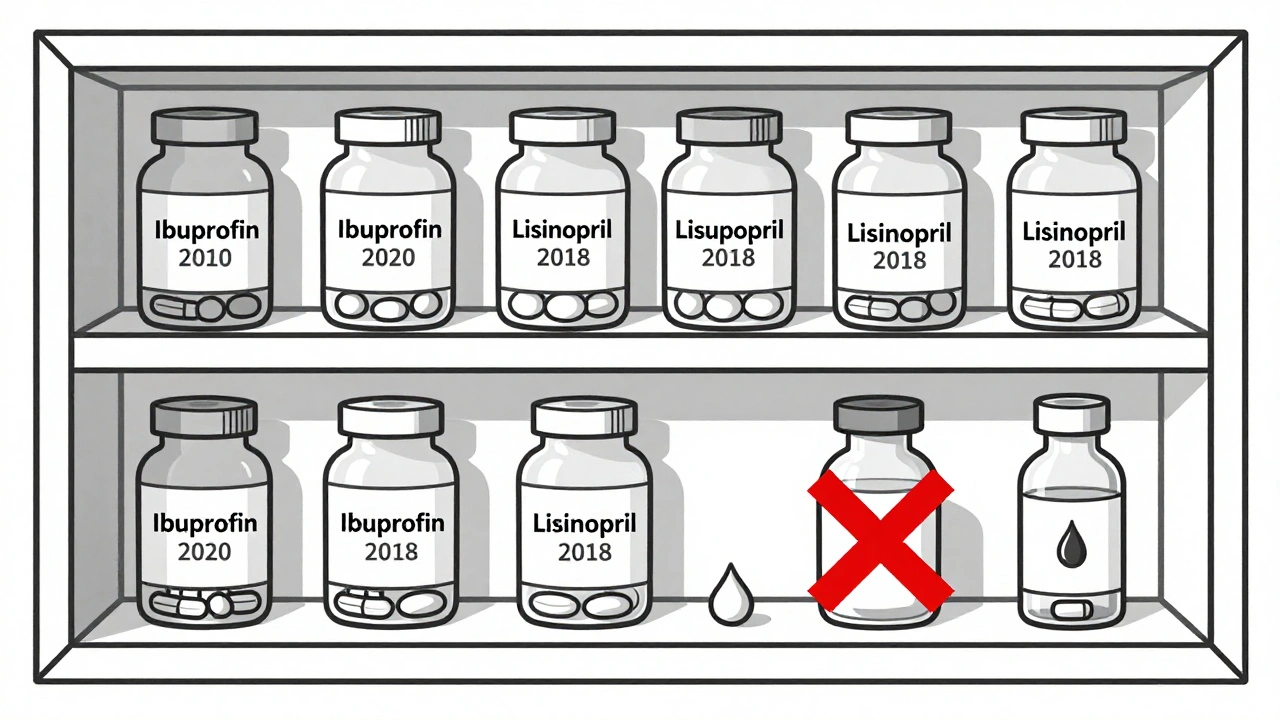

Most people toss out expired medications the moment the date on the bottle passes. But what if that date isn’t really the end of the line? What if your old ibuprofen, allergy pill, or blood pressure tablet is still perfectly fine to use - even years later?
The Truth About Expiration Dates
Expiration dates on medications aren’t magic death clocks. They’re not based on when the drug stops working. They’re based on when the manufacturer guarantees it will still be at least 90% potent. That’s it. The FDA requires drug companies to test their products for stability, but only for 12 to 60 months after production. After that? No one’s required to check. A 2012 study by the University of California-San Francisco looked at pills and capsules that had expired 28 to 40 years earlier. They found that 12 out of 14 medications still had full potency - meaning they contained at least 90% of the active ingredient listed on the label. Eight of them were still at 100% potency after 40 years. That’s not a fluke. It’s science. The U.S. Department of Defense has been running a program called SLEP since 1986, testing stockpiled drugs in military warehouses. They found that 88% of the 122 drugs they tested could safely have their expiration dates extended - by an average of 66 months. Some lasted over 20 years beyond their original date. That’s not just safe. It’s cost-saving. For every dollar spent on testing, they saved $13 to $94 in replacement costs. So why do we throw out pills like they’re rotten milk? Because manufacturers set expiration dates based on short-term testing and legal liability, not long-term reality. They don’t have to prove how long a drug lasts - just that it works for a couple of years. The system isn’t broken. It’s just designed to protect companies, not consumers.Which Medications Still Work After Expiration?
Not all drugs are created equal. Some hold up like tanks. Others? They fade fast. Stable for years - even decades:- Tablets and capsules: Aspirin, ibuprofen, acetaminophen, codeine, hydrocodone, amoxicillin (dry form), and most prescription painkillers and antidepressants.
- Heart medications: Metoprolol, lisinopril, atorvastatin.
- Allergy meds: Loratadine, cetirizine, diphenhydramine.
Which Medications Should Never Be Used After Expiration?
Some drugs degrade quickly. Using them after expiration isn’t just risky - it can be dangerous.- Insulin: Loses potency fast. Using expired insulin can mean your blood sugar spikes dangerously.
- Nitroglycerin: Used for heart attacks. If it’s expired, it might not work when you need it most.
- Liquid antibiotics: Like amoxicillin suspension. Once mixed, they start breaking down within days. Even if the bottle says “use within 14 days,” don’t keep it longer.
- EpiPens: Epinephrine degrades over time. A study showed EpiPens past their expiration date delivered significantly less medication. In an allergic emergency, that could be life-threatening.
- Tetracycline: This old-school antibiotic can turn toxic after expiration, causing kidney damage.
- Mefloquine (antimalarial): Loses effectiveness quickly. Taking expired doses could leave you unprotected in high-risk areas.
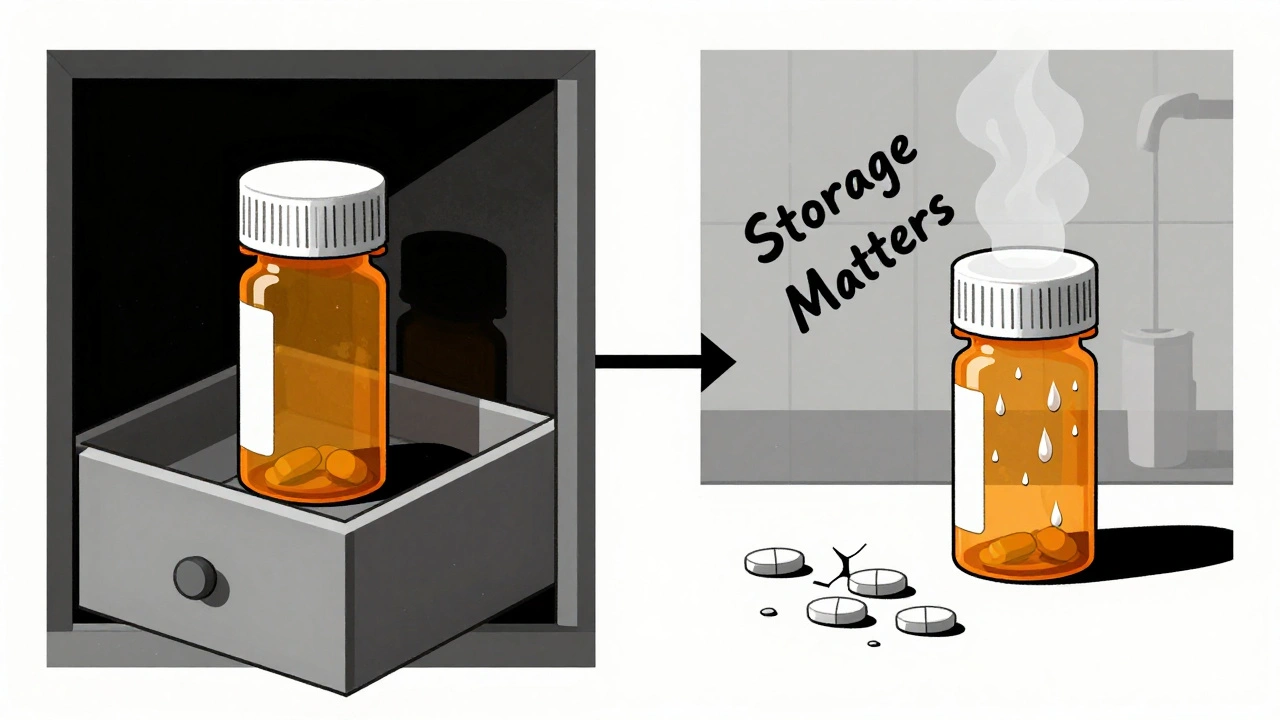
Storage Matters More Than You Think
Your medicine’s lifespan isn’t just about the date on the bottle. It’s about where you keep it. Bathrooms? Bad. Heat and moisture from showers ruin pills. Kitchens? Also risky - near the stove or dishwasher. The best place? A cool, dry, dark spot. A bedroom drawer. A cabinet away from windows. Original packaging? Crucial. Once you transfer pills to a pill organizer or a plastic bag, you expose them to air and humidity. That speeds up degradation. A 2006 study found that drugs kept in their original sealed containers lasted much longer than those moved to pharmacy bottles. Even if the bottle is old, if it’s sealed and stored right, the medicine inside might still be good.What About That Old Antibiotic in Your Cabinet?
You’ve got a bottle of amoxicillin from last year’s sinus infection. The date passed two months ago. Can you take it? If it’s a dry capsule or tablet, sealed, stored in a cool drawer? Probably yes. It’s likely still 90%+ potent. But if it’s a liquid suspension you mixed yourself? Throw it out. It’s been weeks since you mixed it. Bacteria could be growing. The dose could be off. Same with painkillers. If you’ve got leftover oxycodone or naproxen from a surgery, and it’s been two years? Still safe to use - as long as it looks normal. No discoloration. No strange smell. No crumbling. But here’s the catch: if you’re treating something serious - like high blood pressure, epilepsy, or a chronic condition - don’t risk it. Use fresh medication. The consequences of underdosing are too high.
Why Don’t Manufacturers Extend These Dates?
Simple: money. If every pill lasted 10 years instead of 2, people wouldn’t buy new ones as often. Drug companies make billions selling refills. Extending expiration dates cuts into profits. The FDA doesn’t force them to do long-term testing. There’s no financial incentive. So they test just enough to meet the minimum legal requirement - then stop. Meanwhile, Americans spend over $300 billion a year on prescription drugs. A lot of that gets thrown away because of arbitrary dates. The Department of Defense saved millions by extending expiration dates. Why can’t the rest of us?What Should You Do With Expired Medications?
Don’t panic. Don’t flush. Don’t toss in the trash. First, sort your meds:- High-risk drugs: Insulin, EpiPens, nitroglycerin, liquid antibiotics - replace them.
- Stable solids: Painkillers, antihistamines, blood pressure pills - check the condition. If they look fine, store them properly and use them if needed.
- Uncertain? Throw it out. If you’re not sure, or the pill looks weird - cracked, sticky, smelly - don’t risk it.
Final Reality Check
The science is clear: most medications don’t suddenly turn toxic or useless on their expiration date. They slowly lose strength - over years, not days. You can safely use many expired pills if they’re stored right and aren’t one of the high-risk types. But you shouldn’t go digging through old medicine cabinets for life-saving drugs. Use your judgment. Know the difference between a harmless leftover ibuprofen and a failing EpiPen. The system is flawed. But you don’t have to be. Understand what’s really going on. Store your meds properly. Know which drugs are safe and which aren’t. And stop wasting money on replacements you don’t need.Can expired medication make you sick?
Most expired medications won’t make you sick - they just might not work as well. The real danger comes from drugs that break down into harmful chemicals, like tetracycline, or lose potency when they’re critical, like insulin or EpiPens. For most pills - tablets and capsules stored properly - the risk of toxicity is extremely low. The bigger risk is taking a dose that’s too weak to help.
How can I tell if a pill is still good?
Look at it. Smell it. Check the texture. If it’s discolored, cracked, sticky, smells weird, or has powder falling out, throw it out. If it looks exactly like it did when you bought it - no changes - and it’s a stable drug like ibuprofen or amoxicillin capsules, it’s likely still fine. But if you’re unsure, don’t risk it.
Is it safe to take expired allergy medicine?
Yes, for most people. Antihistamines like loratadine or cetirizine are very stable in tablet form. Even if they’re 3-5 years past expiration, they’re likely still effective. You might need a slightly higher dose, but you won’t get worse symptoms from taking them. Still, if you’re having a severe reaction, use a fresh dose.
Do liquid medications expire faster than pills?
Yes, dramatically. Liquid antibiotics, insulin, eye drops, and syrups break down faster because water encourages chemical reactions and bacterial growth. Even if the bottle says “use within 14 days,” that’s not a suggestion - it’s a safety limit. Don’t use them past that point.
Should I keep expired medications just in case?
It depends. For non-critical, stable drugs like painkillers or allergy pills, keeping a small supply past expiration can be practical - if stored properly. But don’t stockpile drugs you’ll need in emergencies, like EpiPens or heart medications. Always replace those on time. Keep a small stash of basic OTC meds, but check them yearly and toss anything that looks off.


