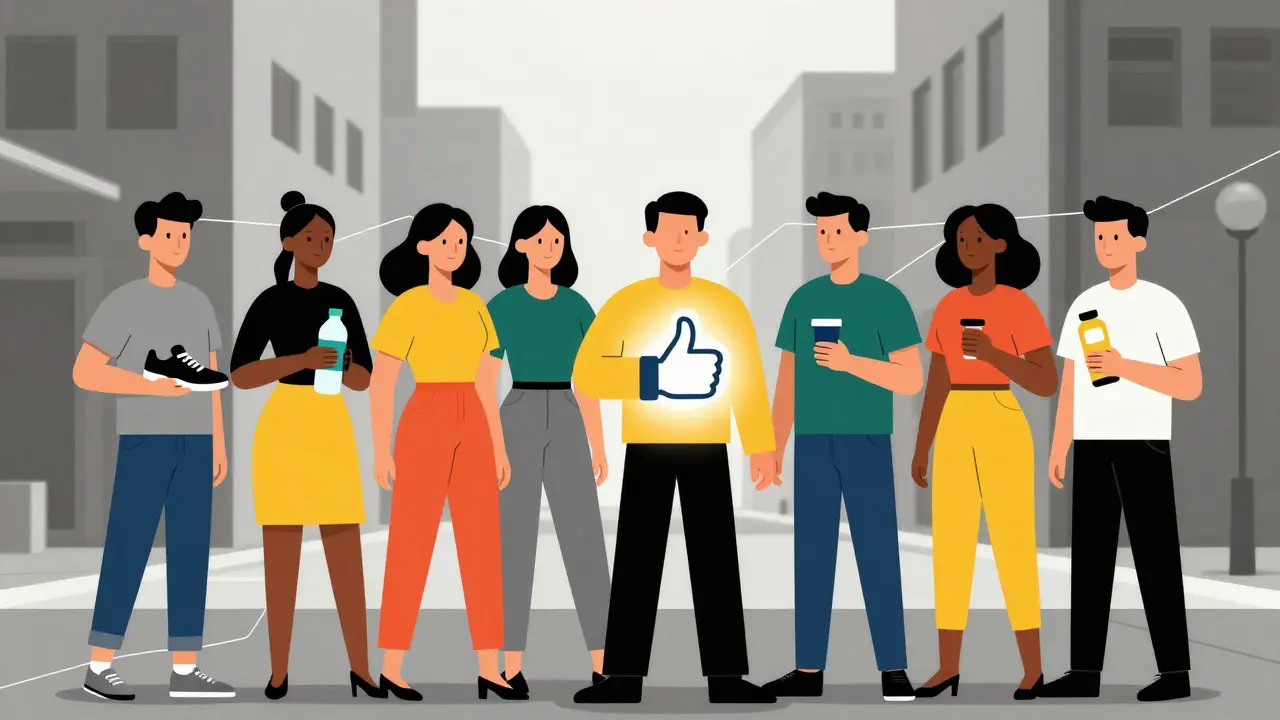

Think about the last time you bought something just because everyone else was doing it. Maybe it was a new snack, a style of sneakers, or even a brand of bottled water. You didn’t need a review. You didn’t compare prices. You just… went with it. That’s not random. That’s social influence-the quiet, powerful force that makes your choices mirror the people around you, even when you don’t realize it.
Why You Follow the Crowd (Even When You Know Better)
We like to think we make decisions based on logic: price, quality, personal taste. But research shows something else is at work. In one classic experiment from the 1950s, Solomon Asch asked people to match line lengths. When everyone else in the room gave the wrong answer-even though it was obviously wrong-76% of participants went along with the group at least once. They weren’t lying. They weren’t confused. Their brains literally started seeing the lines differently. That’s the power of peer attitudes. It’s not just about being told what to do. It’s about wanting to belong, to be liked, to feel like you’re on the same page. And your brain rewards that. Neuroimaging studies from Princeton show that when you agree with your peers, your ventral striatum-the part of your brain linked to reward-lights up 33% more than when you stick to your own opinion. You’re not just following the crowd. You’re getting a dopamine hit for doing it.It’s Not Just Teens-It’s Everyone
People often assume peer pressure is a teenage thing. But it doesn’t stop at 18. Adults conform, too. You choose a restaurant because your coworkers love it. You buy a phone because your friends switched. You start drinking oat milk because your Instagram feed is full of people doing it. These aren’t random trends. They’re social signals. Studies tracking over 250 million Facebook users found that conformity rates vary wildly by culture. In individualistic societies like the U.S., people conform about 9% of the time. In collectivist cultures like Japan, that number jumps to 23%. Why? Because in some places, fitting in isn’t optional-it’s survival. Even in the U.S., people overestimate how much others drink, smoke, or use social media by 20% or more. That misperception fuels behavior. You think everyone’s doing it, so you do it too.The Two Needs Behind Every Conformity
Not all social influence is the same. Research from 2022 breaks it down into two core drivers:- Being liked (34.7% of conformity): You change your behavior because you want approval. You laugh at a joke you don’t find funny. You wear clothes you hate because your group thinks they’re cool.
- Belonging (29.8% of conformity): You change because you want to feel part of something. You join a fitness trend not because you want to get fit, but because you want to say, “I’m one of them.”

Who Has the Most Influence?
Not everyone in your circle has equal power. Status matters. Studies show that when a peer you see as higher status-someone popular, confident, or respected-makes a choice, you’re 38% more likely to follow than if someone your own level does. But here’s the twist: influence peaks at moderate status gaps. If someone is way above you, you might feel intimidated and tune out. If they’re too similar, you don’t see them as a guide. The sweet spot? Someone just a little ahead of you. That’s why school programs targeting “opinion leaders” work. The CDC’s “Friends for Life” program trained popular students to model healthy behaviors. In schools where vaping was already common, it cut 30-day use by nearly 20%. Why? Because those students weren’t teachers. They weren’t authority figures. They were peers-people others looked up to, not down at.When Influence Turns Toxic
Social influence isn’t always good. It can push people toward risky behavior. Longitudinal studies of 1,245 Dutch teens found that peer attitudes directly increased depressive symptoms and substance use. But here’s the catch: it’s not the peer group itself that’s dangerous. It’s the mismatch. If you’re a quiet kid in a group that values rebellion, you might start smoking or skipping class-not because you want to, but because you think that’s what acceptance looks like. The brain doesn’t distinguish between good and bad influence. It just wants to fit in. That’s why interventions that focus on correcting misperceptions work so well. When teens learned that most of their peers actually didn’t vape, their own use dropped. The problem wasn’t peer pressure. It was peer perception.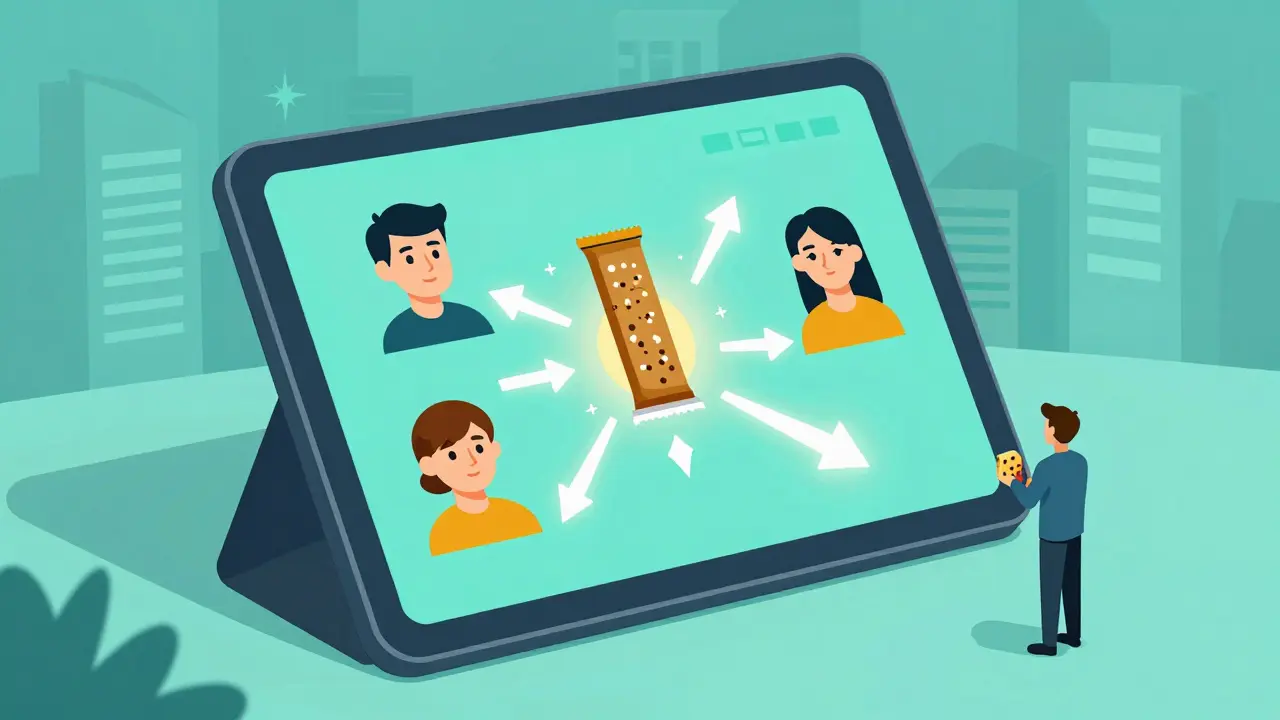
How to Spot It-and Use It Wisely
You can’t stop social influence. You shouldn’t even try. It’s how we learn, how we bond, how we adapt. But you can become aware of it. Ask yourself before making a choice:- Am I doing this because I want it-or because I think everyone else is?
- Who am I trying to impress?
- Would I still do this if no one else was watching?
The Digital Age Made It Stronger-And Harder to See
Before social media, influence happened in classrooms, cafeterias, and neighborhoods. Now, it’s 24/7. Algorithms show you what your “people” like. You see 500 people using the same protein bar. You think it’s a trend. It’s not. It’s a curated feed. Platforms like Facebook and TikTok now use social influence to reduce harm. In 2021, Facebook started promoting posts from users who shared positive, prosocial content. Result? Harmful content sharing dropped by 19%. They didn’t ban anything. They just made the right behavior more visible. But there’s a dark side. Companies are now selling “influence-as-a-service” tools that let advertisers target people based on their social networks. If you’re friends with someone who buys a certain product, you’re more likely to see an ad for it. That’s not marketing. That’s manipulation.What You Can Do
You don’t need to rebel against your peers to be yourself. You just need to know when you’re being pulled-and why.- Surround yourself with people whose values you admire, not just those who are popular.
- Question trends. Ask where they came from. Who benefits?
- If you’re trying to change behavior-your own or someone else’s-focus on visibility and status, not rules.
Why do I change my mind just because my friends think differently?
Your brain is wired to seek social connection. When your peers express a different opinion, your ventromedial prefrontal cortex-where your sense of self and value is processed-adjusts to match theirs. This isn’t weakness; it’s a survival mechanism. Studies show this neural shift happens even when you know the group is wrong. You don’t just pretend to agree-you start believing it.
Is peer influence always bad?
No. Peer influence can be one of the strongest forces for good. Research shows that when teens conform to peers who value academics, their grades improve by 0.35 standard deviations. When people follow peers who exercise, eat well, or volunteer, they’re more likely to adopt those habits too. The problem isn’t influence-it’s the quality of the example being set.
Can social influence be measured?
Yes. Researchers use network analysis to map how opinions spread through groups. They track changes in behavior over time and use statistical models to separate influence from selection (when people just choose friends who are already like them). Tools like the DeGroot model simulate how opinions evolve through weighted averages. In real-world studies, scientists measure influence by comparing behavior before and after exposure to peer norms, controlling for other variables.
Why do some people resist peer pressure better than others?
Susceptibility varies based on personality, brain chemistry, and life experience. People with strong self-identity, high self-esteem, or past experiences of independence tend to resist better. Neurologically, those who resist show higher activity in the amygdala and prefrontal cortex-areas linked to emotional regulation and decision-making. Age also matters. Adolescents are most vulnerable because their brains are still developing the ability to weigh long-term consequences.
How do companies use social influence to sell products?
They use social proof. Testimonials, influencer endorsements, and “bestselling” labels all tap into the same psychological trigger: “If others are doing it, it must be good.” Some platforms even show you how many people in your network bought a product. This isn’t just advertising-it’s engineered conformity. Companies now use AI to predict who’s most likely to be influenced by whom, creating hyper-targeted campaigns that feel personal, even when they’re algorithmic.
Can I use social influence to change my own habits?
Absolutely. Start by identifying one person in your circle who already does what you want to do. Not someone perfect-just someone consistent. Follow their lead. Share your goal with them. Ask them to model the behavior. You don’t need to join a group. Just connect with one person whose actions you respect. That’s often enough to shift your own behavior.


