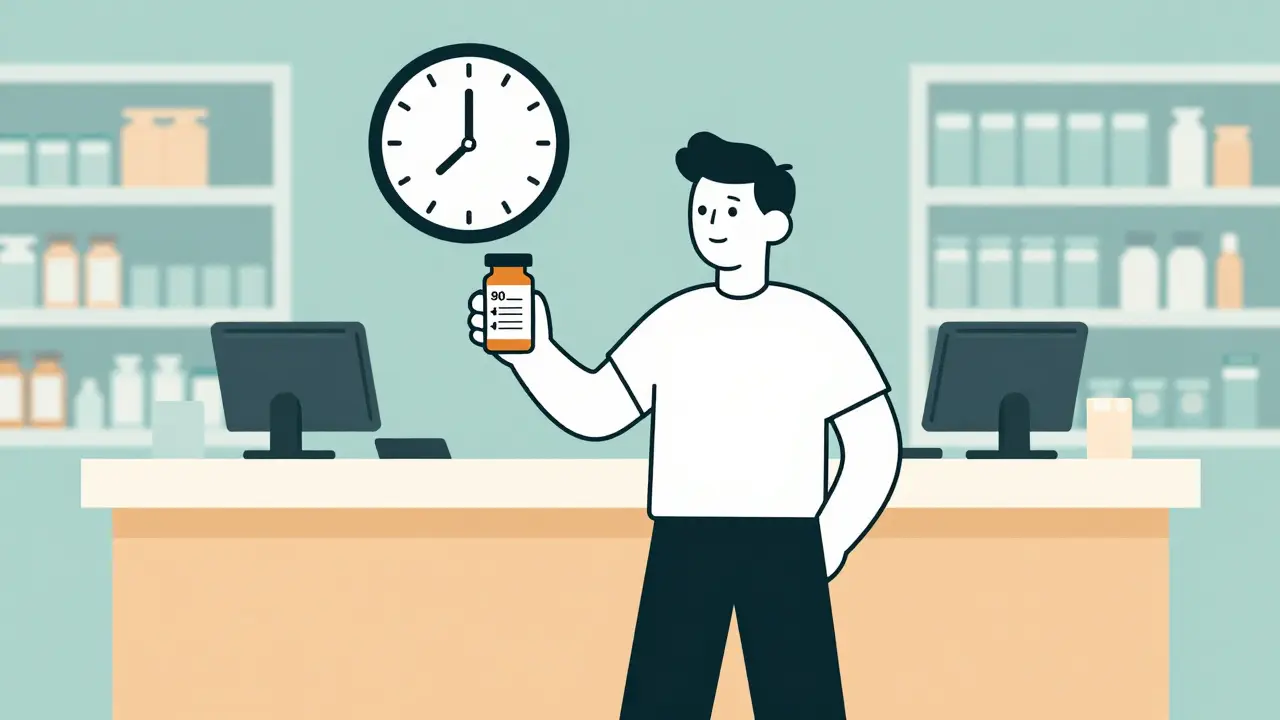

Going to the pharmacy every month for your blood pressure pill, diabetes medicine, or cholesterol drug isn’t just annoying-it’s a hidden barrier to staying healthy. If you’ve ever forgotten a refill, skipped a dose because you ran out, or wasted an hour waiting in line, you’re not alone. The good news? You can cut those trips down to just four times a year. All it takes is asking for a 90-day supply of your maintenance medications.
What Exactly Is a 90-Day Supply?
A 90-day supply means getting three months’ worth of your prescription in one go. Instead of 30 pills every month, you get 90. It’s not a special treatment or a luxury-it’s a standard benefit built into most private insurance plans, Medicare Part D, and even some pharmacy discount programs like Walmart’s.This isn’t just about convenience. Studies show people who get 90-day supplies are 27% more likely to take their meds as prescribed. That’s not a small boost. It’s the difference between your blood pressure staying under control or spiking again. It’s the difference between avoiding a hospital visit or ending up in one.
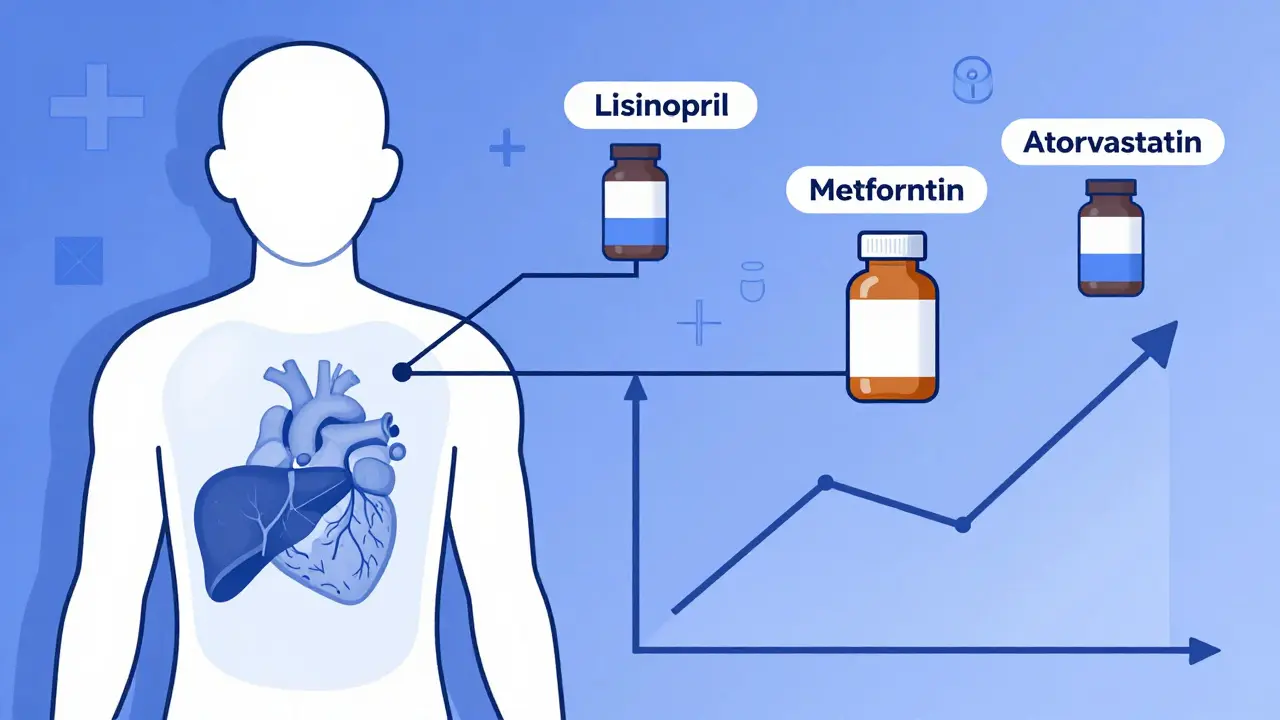
These programs work for chronic conditions only. That means medications you take every day, long-term: things like lisinopril for high blood pressure, metformin for diabetes, atorvastatin for cholesterol, or sertraline for depression. They don’t work for antibiotics, painkillers after surgery, or short-term treatments. If you’re taking it daily for months or years, it’s probably eligible.
Why It Saves Money (and Stress)
Most people assume a bigger prescription means a bigger bill. It’s the opposite.With a 90-day supply, your out-of-pocket cost often drops by 30%. For example, if your 30-day copay is $15, the 90-day version might be $35 instead of $45. That’s $10 saved every three months. Multiply that over a year, and you’re looking at $40 in savings-without changing your medication or your doctor.
Walmart’s prescription program makes this even clearer. For generic drugs, they charge $4 for a 30-day supply and just $10 for 90 days. That’s a 67% discount per pill when you buy in bulk. Other insurers like Cigna and Express Scripts offer similar pricing, especially for generics.
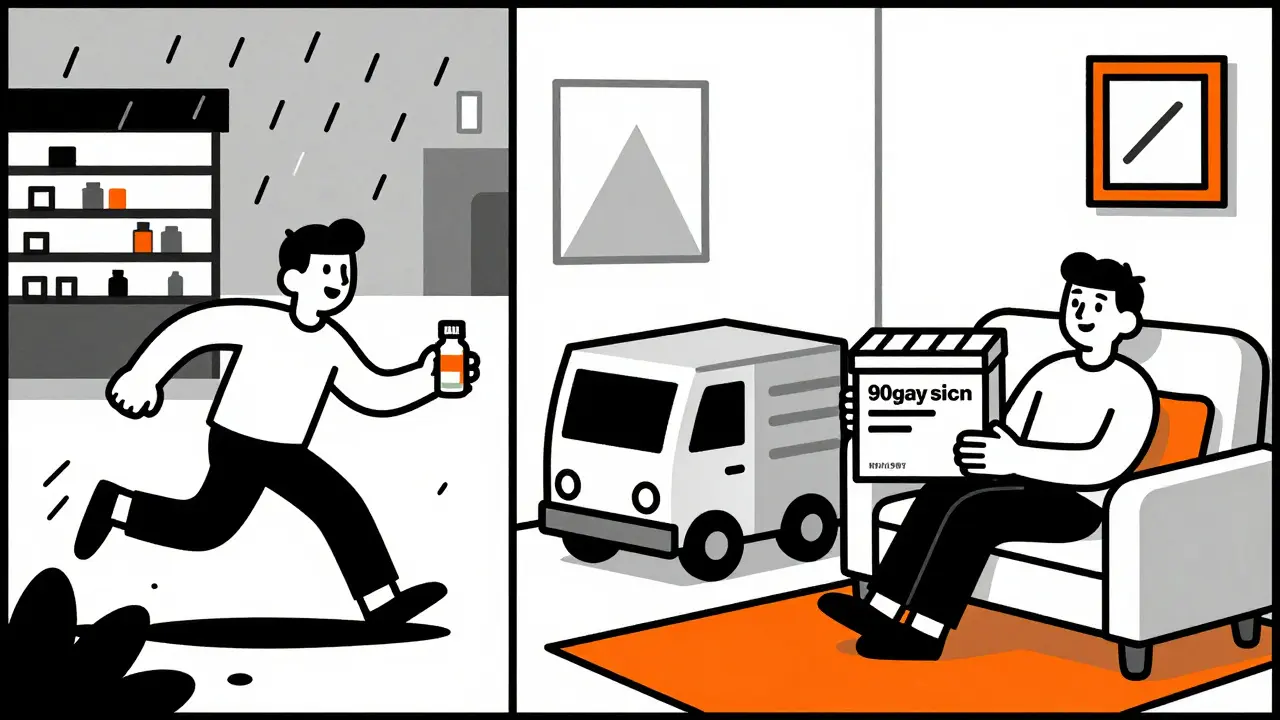
And let’s not forget time. Four pharmacy trips a year instead of twelve? That’s eight hours of your life back. No more rushing after work, waiting in line, or calling in a refill because you forgot. For people with mobility issues, busy schedules, or no car, this isn’t a perk-it’s a necessity.
How to Get Started
Getting a 90-day supply isn’t complicated, but it does require a few specific steps. Skip one, and you’ll end up right back where you started.- Check your plan. Log into your insurance website or call the number on the back of your card. Ask: "Do I have access to a 90-day supply program?" Some plans call it "mail order," "home delivery," or "90-day fill." If you’re on Medicare Part D, you’re almost certainly eligible.
- Confirm your meds qualify. Not every drug is allowed. Maintenance drugs for chronic conditions? Yes. Antibiotics? No. Specialty drugs like injectables for MS or rheumatoid arthritis? Sometimes-but only after three 30-day fills. Check your insurer’s list or ask your pharmacist.
- Talk to your doctor. This is the step most people miss. Your doctor has to write a new prescription for 90 days. Don’t assume they’ll automatically do it. Say: "I’d like to switch to a 90-day supply to reduce trips to the pharmacy. Can you write a prescription for that?" Most doctors agree-it’s easier for them too. They can send it electronically to a mail-order pharmacy or give you a paper script to fill.
- Choose your delivery method. You have two options: mail order or retail pharmacy.
Mail Order (Best for Most People)
Mail order is the most common route. Companies like CVS Caremark, Express Scripts, and Cigna 90 NowSM deliver your meds directly to your door. You sign up online, link your insurance, and they handle the rest. Delivery usually takes 7-10 business days. Some even offer free shipping, refill reminders, and drug interaction checks. Express Scripts even includes safety monitoring for high-risk meds.
It’s perfect if you’re on a fixed schedule, live far from a pharmacy, or hate waiting in line. Just make sure your address is current. If you move, update it online right away.
Retail Pharmacy (Best for Walmart Shoppers)
If you’re a Walmart customer, you can get 90-day generic prescriptions at the counter for $10. No mail order needed. Just ask the pharmacist: "Can I get a 90-day supply of my generic medication for $10?" They’ll check if it’s on their list and fill it right then. This works for common drugs like metformin, atorvastatin, and levothyroxine.
But here’s the catch: Walmart only does this for generics. If you’re on a brand-name drug, you’ll need to go through your insurer’s mail-order program.
What to Watch Out For
Not every program works everywhere. Some states block 90-day mail-order services. As of 2025, California, Minnesota, New Hampshire, Texas, and Washington still have restrictions on certain mail-order plans. If you live in one of these states, you may need to use a retail pharmacy that’s part of your plan’s network.
Also, don’t assume your doctor knows about this. Many still default to writing 30-day scripts out of habit. If they hesitate, say: "I’ve read that 90-day supplies improve adherence and cut costs. Can we make this change?" You’re not asking for a favor-you’re asking for a proven health strategy.
And if you’re on a specialty drug-like an injectable for rheumatoid arthritis or a high-cost cancer med-don’t panic. Most plans require three 30-day fills first. After that, you can switch. Ask your pharmacy or insurer for the exact process.
What Happens If You Run Out?
One common fear: "What if I run out before my next refill?" That’s why most mail-order programs let you order your next 90-day supply before you’re done. You can set up automatic refills online. Most will send you a reminder email or text 10-14 days before you run out. You can also log in and request a refill early if you’re traveling or expect delays.
If you do run out accidentally, call your pharmacy. Many will give you a one-time emergency 7-day supply-no questions asked.
Who Benefits Most?
This isn’t just for older adults. Younger people with chronic conditions benefit just as much. If you’re on insulin, antidepressants, birth control, or thyroid meds, a 90-day supply saves you time, money, and mental clutter.
It’s especially helpful for people who:
- Work irregular hours and can’t get to the pharmacy
- Have trouble remembering to refill
- Pay high copays each month
- Live in rural areas with limited pharmacy access
- Manage multiple medications and want to simplify
The data doesn’t lie: people on 90-day supplies refill more often, take more pills, and spend less. It’s one of the few healthcare changes that’s easy, free (or cheap), and backed by science.
Next Steps: What to Do Today
Don’t wait for your next refill. Here’s what to do right now:
- Check your current prescription. Is it for a chronic condition?
- Log into your insurance portal. Search for "90-day supply" or "mail order pharmacy."
- Call your doctor’s office. Ask if they can write a 90-day prescription.
- If you’re on a generic drug, visit your local Walmart or Costco pharmacy and ask about their $10 90-day program.
- Set up automatic refills once you get your first 90-day supply.
It takes less than 20 minutes. The payoff? Fewer trips, lower costs, and better health. You’re not just saving time-you’re protecting your future self.


