
Managing medications gets complicated fast when you see more than one doctor. One prescribes pain relief, another adds a blood pressure pill, and a third throws in a new antidepressant. None of them know what the others prescribed. By the time you get home, you’re holding five different pill bottles, unsure which one does what - or worse, whether they’re safe together. This isn’t rare. In fact, medication communication failures are one of the most common causes of preventable harm in healthcare.
Why Your Doctors Don’t Talk to Each Other (And What You Can Do)
It’s not that your doctors are careless. Most want to help. But the system doesn’t make it easy. Electronic health records (EHRs) often don’t talk to each other. A specialist at one hospital can’t see what your primary care doctor wrote in a different system. A pharmacist at your local pharmacy might have your full list, but your cardiologist doesn’t. A 2022 NIH study found that 68% of patients seeing multiple providers had at least one medication-related mistake because of poor communication. The result? Dangerous drug interactions, duplicate prescriptions, or side effects no one noticed until you ended up in the ER. One Reddit user shared: “Three specialists each gave me a new pain med. None knew what the others prescribed. I ended up in the hospital with a seizure.” That’s not an outlier. It’s the norm in fragmented care. You can’t fix the system overnight. But you can become the bridge between your providers - and stop being the middleman in your own care.The Four Essentials of a Complete Medication List
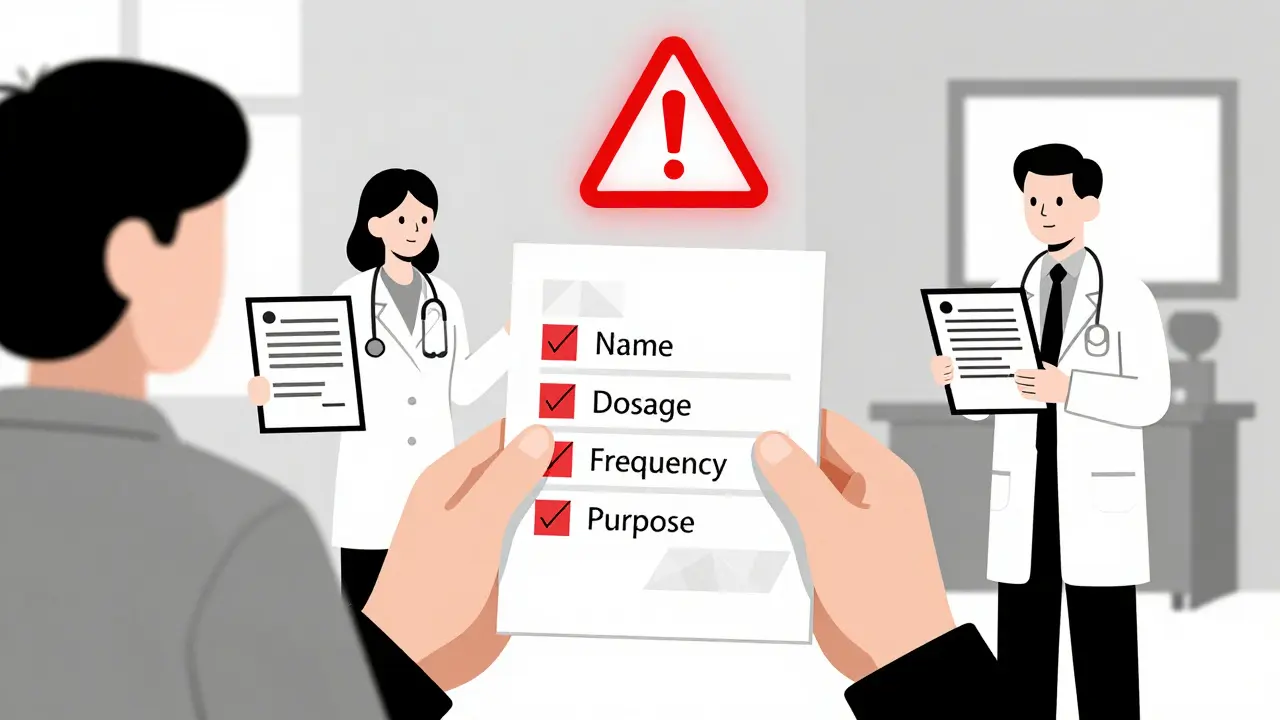
The single most powerful tool you have is a clear, updated, and accurate list of everything you take. Not just names. Not just doses. Four key pieces of information make a list actually useful:- Name - The full name of the drug, including brand and generic if applicable
- Dosage - How much you take (e.g., 10 mg, 500 mg)
- Frequency - How often (e.g., once daily, twice a week, as needed)
- Purpose - Why you’re taking it (e.g., “for high blood pressure,” “for anxiety,” “for joint pain”)
Who Should Be on Your Medication Team
You’re not alone in this. Your care team includes more than just your doctor.- Your primary care provider - Should be the central hub. They know your full history and overall health goals.
- Your pharmacist - Often the most overlooked but most powerful ally. Pharmacists review all your meds at once. They catch interactions your doctor might miss. A 2023 analysis by Asteroid Health found patients who worked directly with a clinical pharmacist had 32% higher adherence and 63% more confidence in their regimen.
- Specialists - Cardiologists, neurologists, endocrinologists - they treat specific conditions but may not see the big picture. Always ask: “Is this new med safe with what I’m already taking?”
- Nurses and care coordinators - Especially in ACOs or larger health systems. They’re trained to track medication changes across providers.
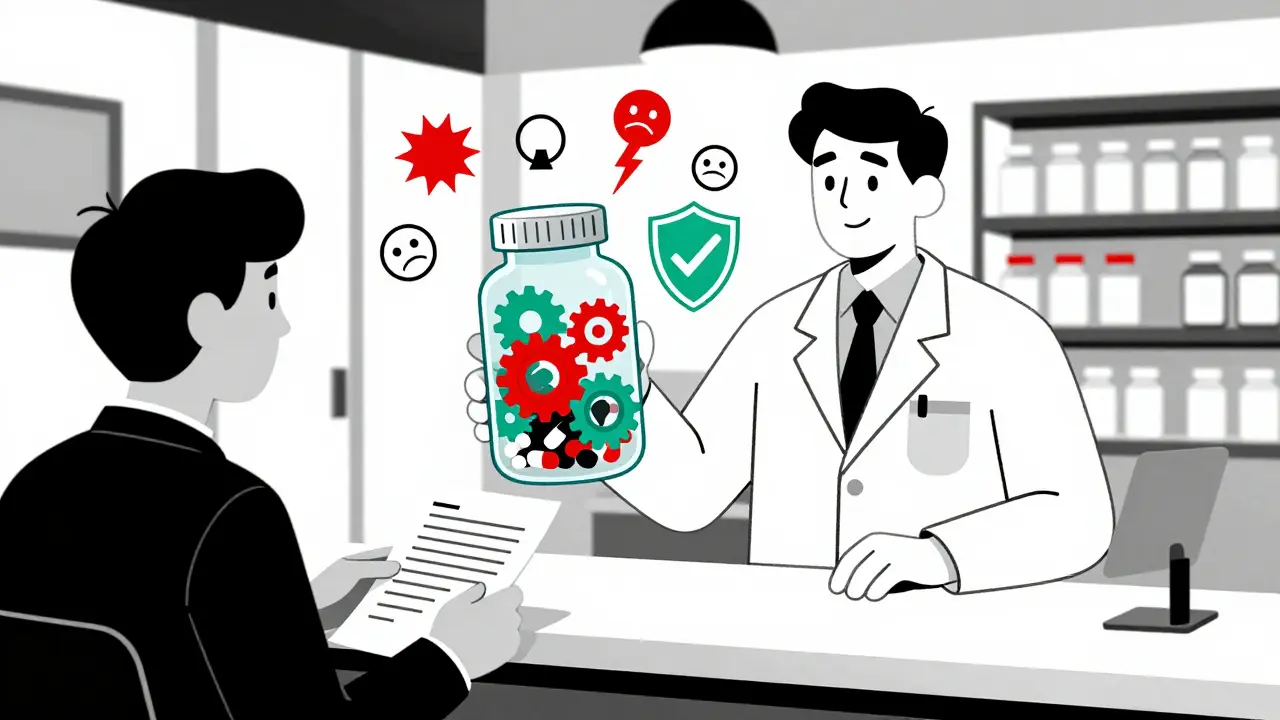
How to Ask the Right Questions
Most patients don’t know how to ask for clarity. They nod along, afraid they’ll sound stupid. But here’s what you should say - word for word:- “Can you tell me why you’re adding this medication? What problem is it solving?”
- “Is this replacing something I’m already taking, or is it new?”
- “Could this interact with my other meds? Can you check my full list before prescribing?”
- “Who should I call if I have side effects - you, my pharmacist, or my primary doctor?”
- “Can you send a copy of this change to my other providers?”
The Teach-Back Method: Make Sure You Understand
Doctors give instructions fast. You leave the office feeling confused. That’s normal. The Teach-Back Method fixes this. After your provider explains how to take a new medication, say: “Just to make sure I got it right - can you let me explain it back to you?” Then, in your own words, repeat what they told you. “Okay, so I take this pill once a day with food, right? And if I feel dizzy, I should skip it and call you - not stop cold turkey?” Studies by the Agency for Healthcare Research and Quality show this simple trick reduces misunderstandings by 45%. It doesn’t just help you. It helps your provider know if they were clear.Track Your Symptoms - Not Just Your Pills
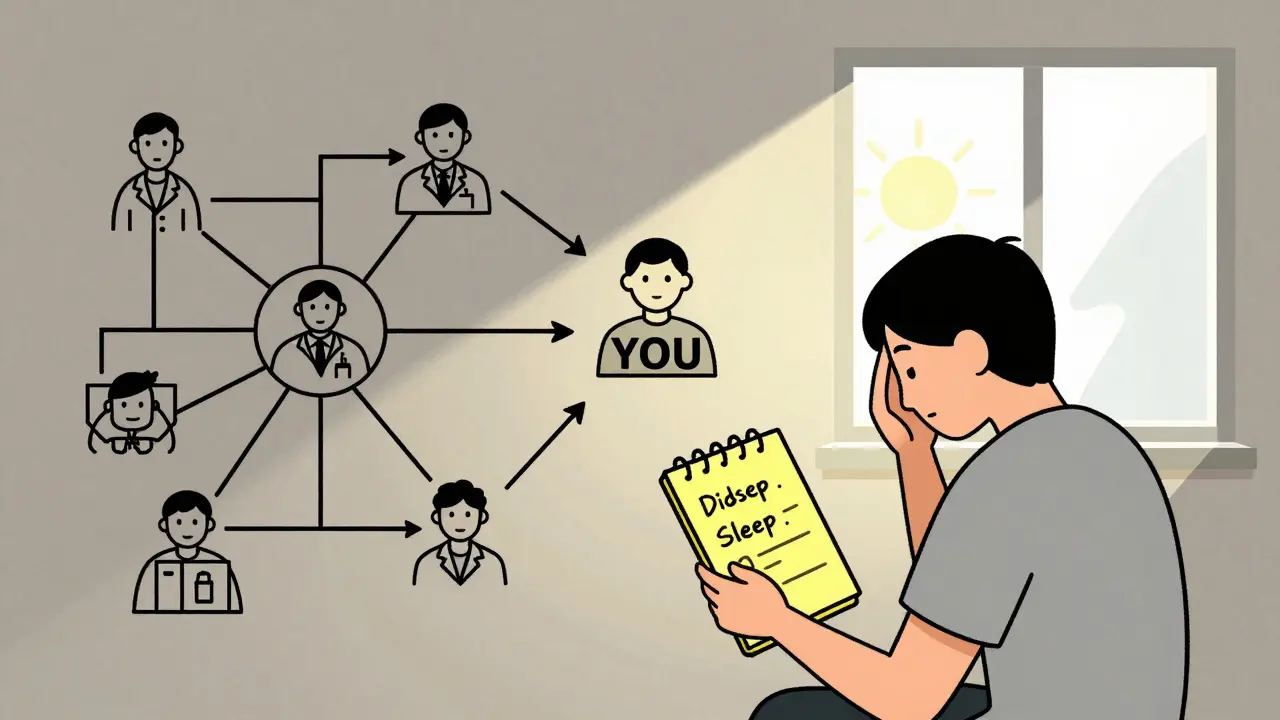
Medications don’t just change how you feel physically. They affect your mood, sleep, energy, appetite. Keep a simple health journal. Every day, note:- Any new side effects (dizziness, nausea, rash, confusion)
- Changes in sleep or mood
- Any missed doses
- How you’re feeling overall
When You’re Seeing Too Many Providers
If you’re seeing four or more specialists, you’re at high risk. A 2022 NIH study found patients with three or more providers were 3.2 times more likely to have conflicting prescriptions. Specialists often start new meds without checking with your primary doctor - and 57% of patients reported this happened to them. What to do:- Ask your primary care provider to be the “quarterback.” Say: “I want you to coordinate my meds. Can you review what the specialists are prescribing?”
- Request a medication reconciliation at every hospital visit or transition of care. This is a formal process where your meds are reviewed and corrected - but it doesn’t happen unless you ask.
- Look for an Accountable Care Organization (ACO) or integrated health system. Patients in ACOs had 27% fewer hospital readmissions due to medication issues, according to CMS data.
What’s Changing - And How It Helps
The system is slowly improving. CMS now requires participating practices in its Primary Care First model to implement structured medication reconciliation by January 2024. That means more doctors will be legally required to check your full list before prescribing. AI tools are starting to help too. At Mayo Clinic, new software can scan your entire medication history and flag conflicts in under a minute - down from 15 minutes. And by 2025, 78% of independent pharmacies in the U.S. will offer formal medication reviews - up from just 42% in 2022. But technology won’t fix this alone. People still need to talk. And you need to lead the conversation.Your Action Plan - Start Today
Here’s what to do right now:- Make your complete medication list - name, dose, frequency, purpose - and print two copies.
- Take one to your next appointment with your primary care doctor. Ask: “Can you review this with me and make sure nothing conflicts?”
- Call your pharmacy. Ask: “Do you offer Medication Therapy Management? Can you review all my meds for interactions?”
- Start a simple journal. Write down any new side effects or changes in how you feel.
- Next time a specialist prescribes something new, say: “Can you please send a summary to my primary care doctor and pharmacist?”
Medication safety isn’t just your doctor’s job. It’s yours too. And you’re the only one who knows exactly what’s in your body - and how you’re feeling.
What should I do if my doctors don’t talk to each other?
You become the link. Keep a current, detailed list of every medication you take - including names, doses, frequencies, and why you take them. Bring this list to every appointment. Ask each provider: “Can you please check this list before prescribing anything new?” Also, ask them to share updates with your primary care doctor and pharmacist. Don’t wait for them to communicate - make it your responsibility.
Can my pharmacist really help with medication conflicts?
Yes - and they’re often better at it than doctors. Pharmacists are trained to review all your meds at once, including over-the-counter drugs and supplements. Many pharmacies now offer free Medication Therapy Management (MTM) services. In one 2023 study, patients who used this service had 32% higher adherence and 63% more confidence in their regimen. Ask your pharmacist: “Can you review all my medications for interactions and suggest changes?”
How do I know if a new medication is safe with my others?
Always ask two things: “Is this replacing something I’m already taking?” and “Could this interact with my other meds?” Then, check your updated medication list. If you’re unsure, take your list to your pharmacist. They can run a drug interaction check in seconds. Never assume a new prescription is safe just because it came from a specialist. Always verify.
What’s the most common mistake patients make with multiple medications?
Assuming their providers are talking. A 2022 NIH study found that 83% of patients believed their doctors regularly communicated about their medications - but in reality, most didn’t. The biggest risk isn’t taking too many pills - it’s taking conflicting ones without anyone noticing. That’s why keeping your own list and asking questions is critical.
Should I tell my doctor about vitamins and supplements?
Absolutely. Many people think supplements are harmless, but they can interact badly with prescription drugs. For example, St. John’s Wort can reduce the effectiveness of blood thinners and antidepressants. Garlic and ginkgo can increase bleeding risk. Always include every pill, powder, or drop you take - even if you think it’s “natural” or “not medicine.”
What if I can’t remember all my medications?
Don’t guess. Go home and open your pill bottles. Write down everything - even the ones you haven’t taken in months. If you’re overwhelmed, call your pharmacy. They can print you a full list of everything they’ve dispensed. Or ask your primary care provider’s office to pull your records. It’s better to have a long list than to miss something important.


