

When a brand-name drug’s patent runs out, generics should step in-cheaper, faster, and just as effective. But in reality, many of these drugs stay expensive for years longer than they should. Why? Because patent litigation has become a tool to block competition, not just protect innovation. The system was designed to balance innovation and access, but today, it’s often tilted heavily in favor of big pharma.
The Hatch-Waxman Act: A System Built to Fail
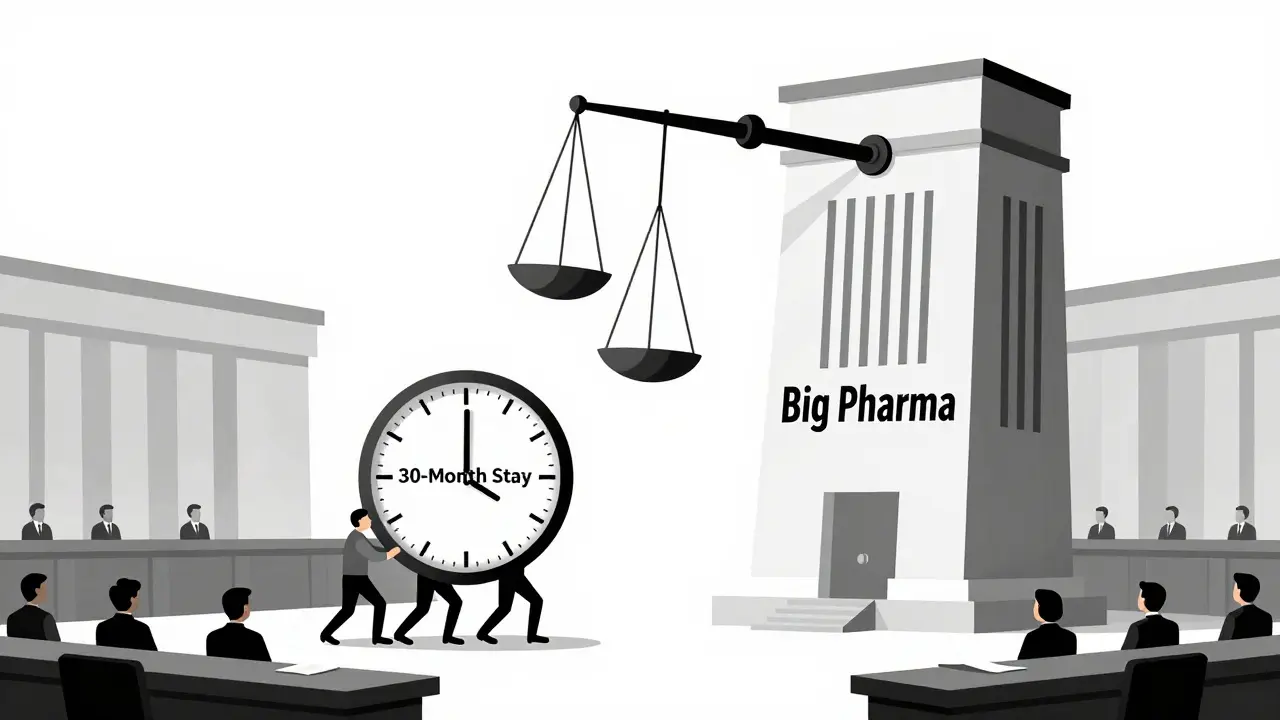
The Drug Price Competition and Patent Term Restoration Act of 1984, better known as the Hatch-Waxman Act, was meant to fix this. It created a clear path: generic companies could file an Abbreviated New Drug Application (ANDA) and challenge existing patents with a Paragraph IV certification. If they did, the brand company had 45 days to sue. If they did, the FDA couldn’t approve the generic for 30 months-regardless of whether the patent was valid. That’s not a safeguard. It’s a delay tactic.That 30-month clock is the choke point. It doesn’t mean the patent is strong. It doesn’t mean the generic is infringing. It just means the brand company can buy time. And they do. In 2024, over 2,500 patent cases were filed in the U.S.-a 22% jump from the year before. The Eastern District of Texas became the go-to court for these fights, handling 38% of all cases. Why? Because its judges are experienced, its procedures favor plaintiffs, and its reputation makes defendants nervous. That’s not justice. It’s forum shopping.
The Orange Book: A Weapon, Not a Directory
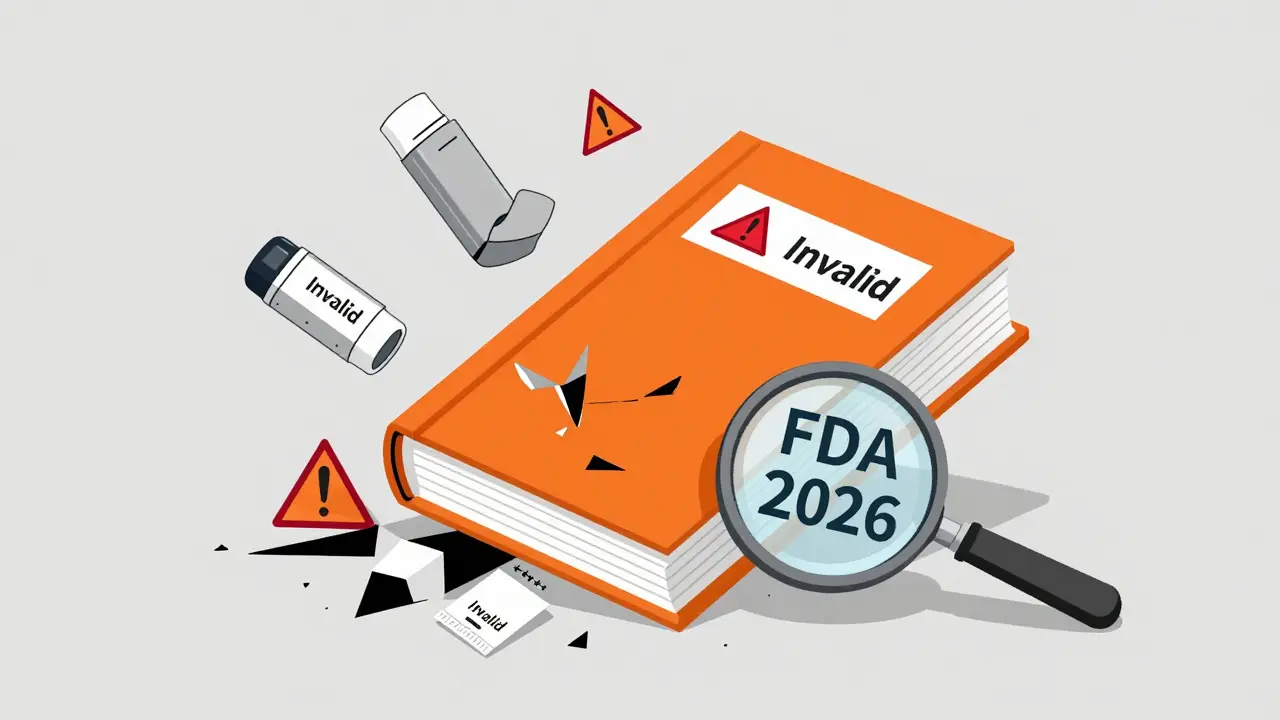
The FDA’s Orange Book is supposed to list only patents that cover the actual drug-its active ingredient, formulation, or approved use. But in practice, it’s become a dumping ground for anything remotely related. Inhalers. Dose counters. Packaging. Manufacturing equipment. In 2025, a New Jersey judge ruled in Teva v. Amneal that six patents on a ProAir® HFA inhaler’s dose counter were improperly listed. The drug was albuterol sulfate. The counter wasn’t. The court said: “You can’t list a patent that doesn’t claim the drug.”That ruling matters. It’s the first major crack in the wall. Skadden’s analysis estimates 15-20% of Orange Book listings could be invalid under this standard. But brand companies aren’t waiting for courts to fix this. They’re exploiting it. The Association for Accessible Medicines found cases where companies filed patent after patent-each one just a little different-each one triggering a new 30-month stay. One drug saw delays of 7 to 10 years after its original patent expired. That’s not innovation. That’s legal obstruction.
Pay-for-Delay? The Truth Is More Complicated
The FTC says patent settlements between brand and generic companies are “pay-for-delay” schemes: the brand pays the generic to stay off the market. But data from IQVIA tells a different story. Their 2025 analysis found that settlements actually brought generics to market over five years earlier than they would have if the lawsuits dragged on. Why? Because litigation is expensive. Both sides know that. Settling-even if the brand pays a little-is cheaper than a decade-long court battle.But here’s the catch: the FTC still challenges over 300 improper patent listings every year. In May 2025 alone, they sent warning letters targeting 200 patents across 17 drugs. They’re not just going after settlements. They’re going after the entire structure. Because the real problem isn’t just the payments. It’s the number of patents. One drug, Eliquis, has 67 patents. Semaglutide products (Ozempic, Wegovy, Rybelsus) have 152. Oncology drugs average 237. That’s not protection. That’s a patent thicket-designed to confuse, delay, and deter.
Who Pays the Price?
The cost isn’t just legal fees. It’s money patients lose. The FTC estimates improper patent listings delay generic entry for about 1,000 drugs each year. That costs the U.S. healthcare system $13.9 billion annually. That’s not a small number. That’s enough to cover insulin for millions of Americans who can’t afford it. Or cancer treatments for people who have to choose between rent and medicine.And the delays are getting worse. In 2005, generics entered the market an average of 14 months after patent expiry. By 2024, that had doubled to 28 months. For oncology drugs? It’s now 5.7 years. Five years. After the patent expired. That’s not a glitch. That’s the system working as intended-for the companies that designed it.
The Rise of the PTAB and the Supreme Court’s Shadow
Generic companies aren’t just fighting in court anymore. They’re turning to the Patent Trial and Appeal Board (PTAB) for inter partes reviews (IPRs). These are faster, cheaper ways to challenge patent validity. IPR filings against pharma patents jumped 47% from 2023 to 2024. But then came the Supreme Court’s April 2025 decision in Smith & Nephew v. Arthrex. It made it harder for generic manufacturers to file IPRs unless they’re directly threatened by the patent. That’s a major setback. It means even if a patent is clearly weak, a generic company might not have standing to challenge it unless they’re already selling-or about to sell-the drug.What’s Changing? And What’s Next?
The FDA is finally stepping in. They’re proposing new rules requiring brand companies to certify under penalty of perjury that every patent they list in the Orange Book meets the legal standard. That’s a big deal. Right now, there’s no real penalty for listing junk patents. That will change in Q2 2026. If a company lies, they could face criminal charges.Meanwhile, Congress is hearing from generic manufacturers who say serial litigation is crushing patient access. The FTC and DOJ held joint listening sessions in March 2025. Twelve generic companies testified. They didn’t ask for more lawsuits. They asked for fewer. They asked for clarity. They asked for the rules to be enforced.
The future? More litigation. Lex Machina predicts 25-30% annual growth in pharmaceutical patent cases through 2027. Biosimilars are the new battleground. They’re more complex than small-molecule generics. They come with an average of 78 patents per product-nearly double what small molecules face. The stakes are higher. The legal costs are higher. And the delays? They’re going to be worse.
But here’s the truth: the system doesn’t need to be overhauled. It needs to be enforced. The Hatch-Waxman Act had the right structure. The problem isn’t the law. It’s the abuse. The Orange Book isn’t broken. It’s being gamed. The courts aren’t failing. They’re being flooded with cases designed to drain resources, not resolve disputes.
Patients don’t need more laws. They need fewer patents. Fewer delays. And a system that actually works for the people it’s supposed to serve-not just the ones who can afford to litigate for a decade.


