
Prednisone Mood Swing Risk Calculator
Calculate Your Risk
Your Results
Click "Calculate Risk" to see your results
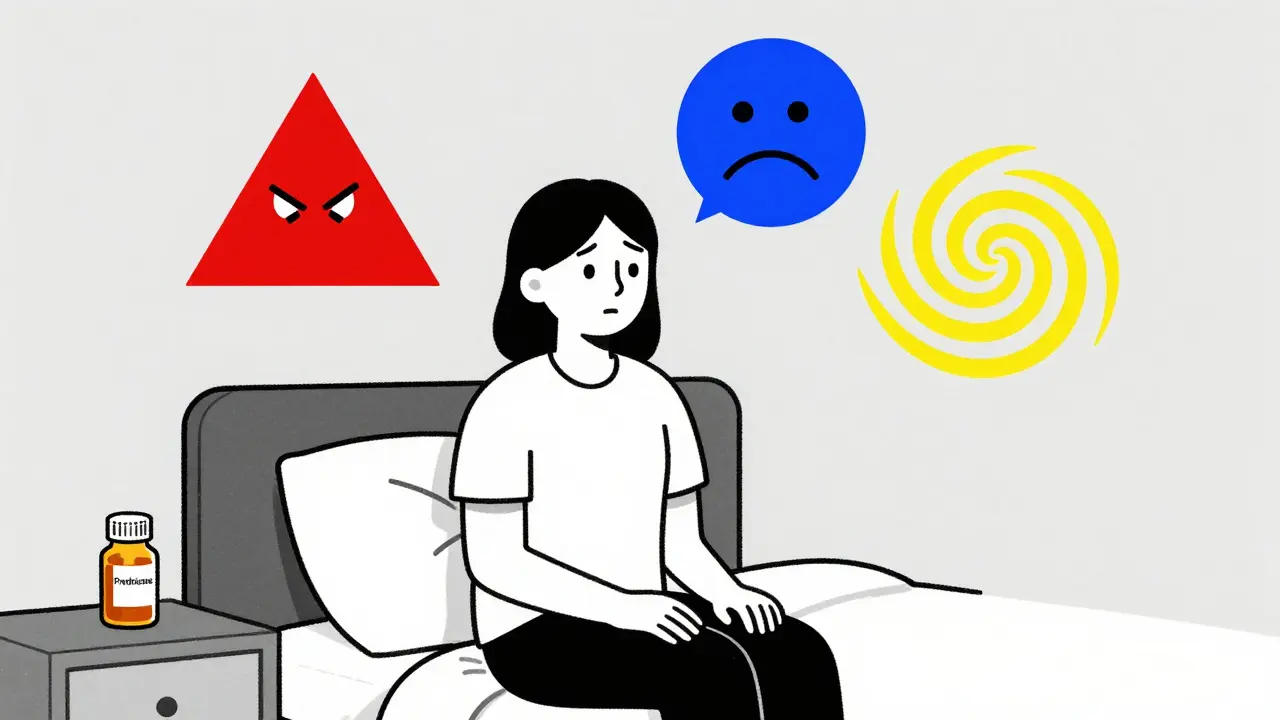
When you start taking prednisone, you might expect swelling, weight gain, or trouble sleeping. But few people warn you about the prednisone mood swings-the sudden anger, crushing sadness, or unexplained panic that can hit out of nowhere. If you’ve been on prednisone and felt like you’re not yourself, you’re not alone. Between 18% and 47% of people on this medication experience noticeable changes in mood. It’s not weakness. It’s chemistry.
Why Prednisone Changes Your Mood
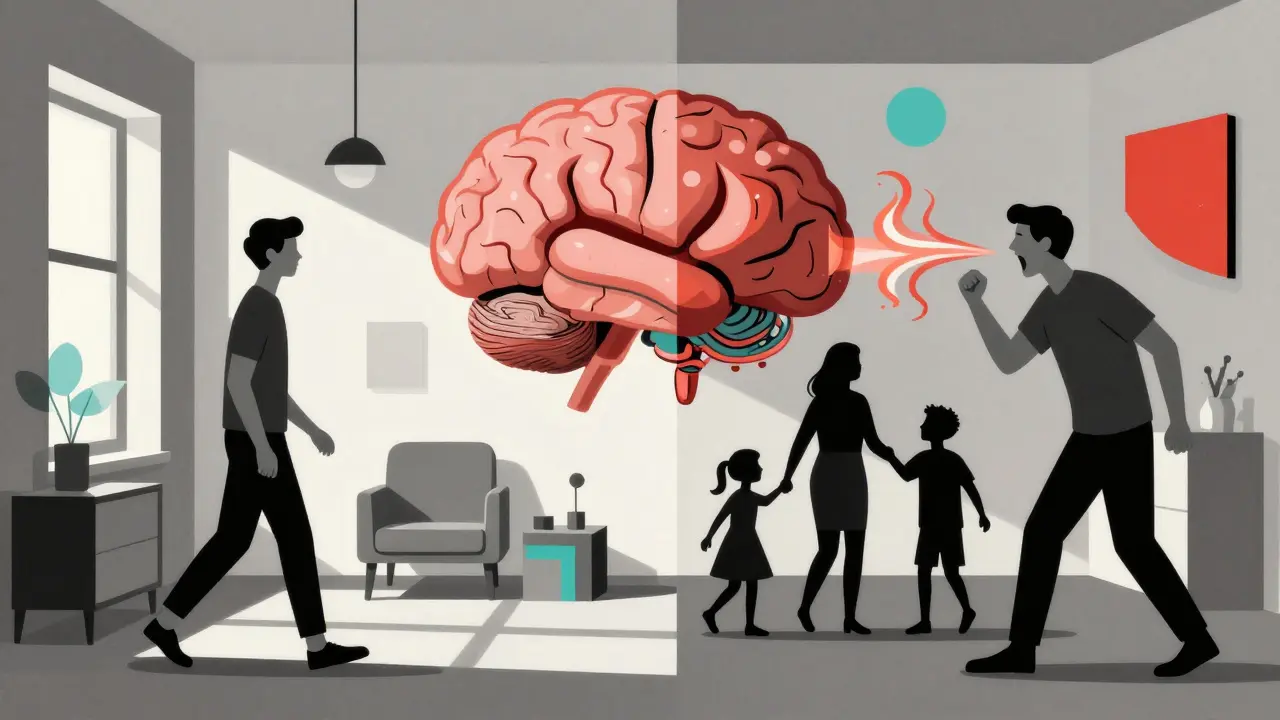
Prednisone isn’t just an anti-inflammatory drug. It’s a synthetic version of cortisol, your body’s natural stress hormone. When you take it, your brain doesn’t know the difference. It floods your system with cortisol-like signals, and that directly affects the parts of your brain that control emotion: the amygdala and prefrontal cortex. Studies show these changes can happen within 72 hours of starting the medication.The higher your dose, the worse it gets. At 40mg a day, you’re over three times more likely to have mood swings than at 10mg. Even after you stop taking it, the effects can linger for up to two weeks. Some people report panic attacks, irritability, or deep depression days after finishing their course. That’s because prednisone stays in your system for 18 to 36 hours per dose, and your brain takes time to reset.
If you already have a history of depression, anxiety, or bipolar disorder, your risk goes up even more-nearly five times higher. That’s why doctors are supposed to ask about your mental health before prescribing prednisone. But here’s the problem: only about 32% of primary care providers actually talk to patients about these risks. Most people are blindsided when they start feeling off.
What Prednisone Mood Swings Actually Feel Like
It’s not just "feeling down." People describe very specific, intense experiences:- Sudden, uncontrollable rage-yelling at loved ones over small things, then feeling guilty right after.
- Extreme anxiety, like a constant tightness in your chest or panic attacks with no trigger.
- Feeling euphoric one minute and completely numb the next, with no reason why.
- Insomnia even when exhausted, racing thoughts that won’t shut off.
- Loss of interest in everything you used to enjoy, even food or family.
- Thoughts of hopelessness or self-harm, which can be terrifying because you don’t understand why they’re happening.
One woman on Reddit, on a 10mg daily dose for a flare-up, wrote: "I’ve never been this angry in my life. I screamed at my kid for spilling juice. I cried afterward. I didn’t recognize myself." Another person on MyCrohnsAndColitisTeam said, "I’ve been on steroids before and felt fine. This time, I’m a different person. I hate everyone. I hate myself."
These aren’t just "bad days." They’re biological reactions. The DSM-5 classifies them as "substance-induced mood disorders," meaning they’re directly caused by the medication, not your personality or life circumstances.
What to Do When Mood Swings Hit
The first step is simple: talk to your doctor. Don’t wait. Don’t think it’s "all in your head." Tell them exactly what you’re feeling-when it started, how intense it is, and if you’ve had thoughts of self-harm. They need to know.Here’s what else helps, backed by research and real patient experiences:
- Keep a mood journal. Write down your mood each morning and night. Note sleep quality, energy levels, and any triggers. This helps you spot patterns. Many people find their worst mood swings happen in the afternoon or evening. That’s because prednisone disrupts your natural cortisol rhythm.
- Talk to someone you trust. Tell your partner, parent, or close friend: "I’m on prednisone, and it’s making me irritable or sad. This isn’t me. If I snap, I need your patience." One study found that patients who communicated openly with family reported 43% less emotional distress.
- Move your body every day. Even a 30-minute walk reduces cortisol levels by 27%, according to a 2022 study. You don’t need to run a marathon. Just get outside. Sunlight helps regulate your sleep cycle, which prednisone messes up.
- Stick to a sleep schedule. Take your prednisone in the morning if you can. Avoid caffeine after noon. No screens an hour before bed. Sleep deprivation makes mood swings worse. Aim for 7-8 hours.
- Try mindfulness. Fifteen minutes of deep breathing or meditation twice a day can calm the nervous system. Apps like Insight Timer or free YouTube guided meditations work. One patient said, "It didn’t stop the mood swings, but it stopped me from acting on them."
When to Get Professional Help
Not every mood swing needs a therapist-but some do. Call your doctor or go to urgent care if you experience:- Thoughts of hurting yourself or others
- Delusions or hallucinations (seeing or hearing things that aren’t real)
- Manic episodes: feeling invincible, needing only 2 hours of sleep, spending recklessly, talking nonstop
- Depression so severe you can’t get out of bed, eat, or shower for days
These aren’t normal side effects. They’re medical emergencies. Your doctor may adjust your dose, add a short-term anti-anxiety medication, or refer you to a psychiatrist. In some cases, doctors now prescribe low-dose SSRIs (like sertraline) before starting long-term prednisone therapy. A 2024 study showed this reduced mood swings by 58%. It’s not FDA-approved for this use, but it’s being used successfully in clinics.
Support Isn’t Optional-It’s Essential
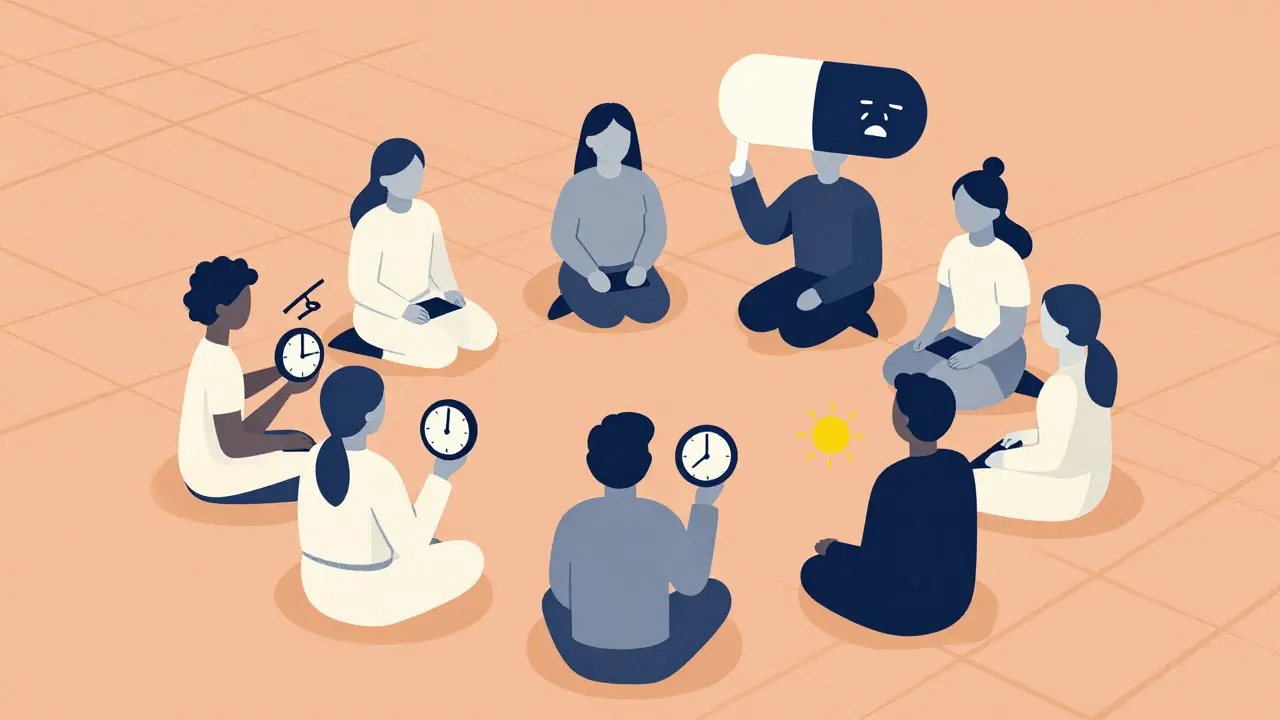
Prednisone doesn’t just treat your body. It affects your mind, your relationships, and your sense of self. That’s why support matters as much as the medicine.Online communities like MyCrohnsAndColitisTeam and Reddit’s r/prednisone are full of people who get it. They share tips like: "I schedule hard conversations for 9 a.m.-that’s when my mood is clearest," or "I tell my boss I’m on steroids so they don’t take my mood personally." These aren’t just coping tricks-they’re survival strategies.
And if your doctor dismisses your concerns? Get a second opinion. You deserve to be heard. The American College of Rheumatology, the FDA, and the NHS all agree: psychological side effects are real, common, and serious. You’re not overreacting. You’re responding to a powerful drug.
How Long Will This Last?
The good news? Once you’re off prednisone, most mood changes fade. For most people, symptoms begin to lift within 5-10 days after stopping. But if you were on a high dose for weeks or months, it can take longer. Your brain needs time to relearn how to regulate emotions without artificial cortisol.Don’t rush the taper. Stopping too fast can trigger rebound inflammation or even withdrawal depression. Work with your doctor to reduce the dose slowly. And if mood symptoms linger beyond two weeks after your last pill, see a mental health professional. You might need short-term therapy to reset your emotional baseline.
What You Can Do Today
You don’t have to wait for your next appointment. Start now:- Write down your current mood and rate it from 1 to 10.
- Text someone you trust: "I’m on prednisone. I’ve been feeling off. Can we talk?"
- Go for a 20-minute walk before dinner.
- Set a phone reminder to sleep at the same time tonight.
- Call your doctor’s office and ask: "Can we talk about mood side effects? I need help."
These small steps don’t fix everything-but they give you back some control. And that’s the first step to feeling like yourself again.


