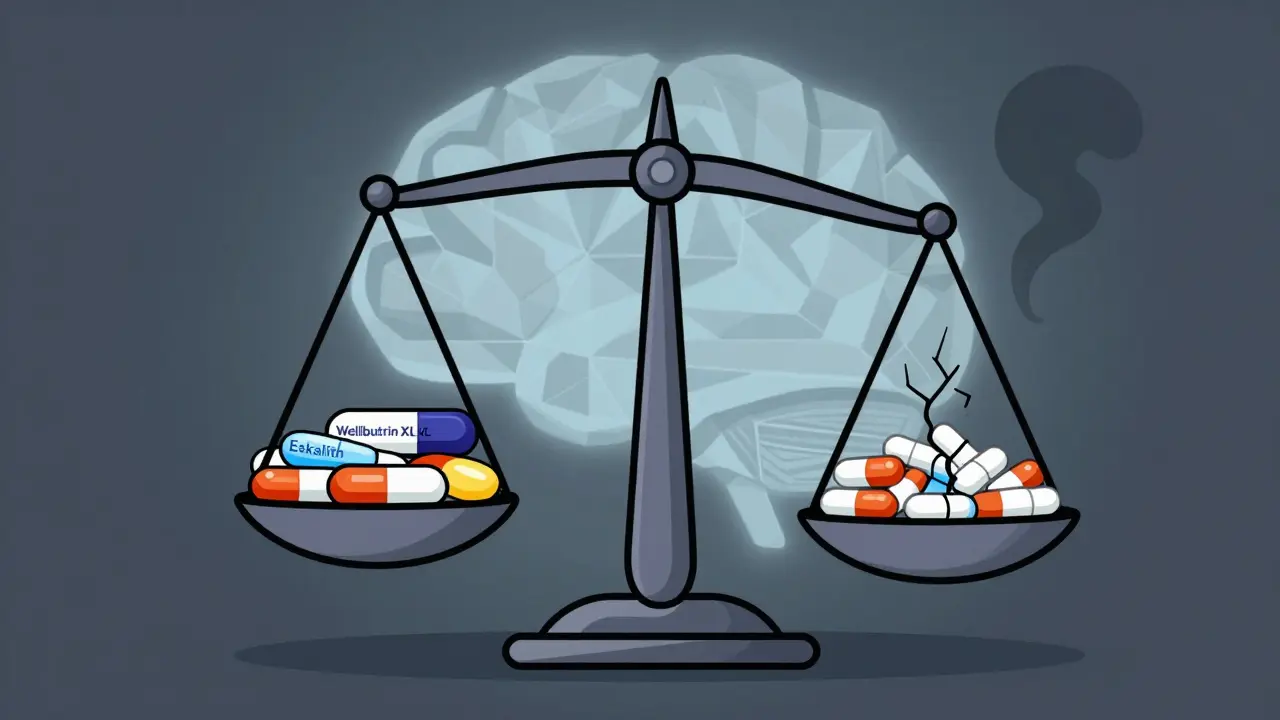

When a single psychiatric medication doesn’t do enough, doctors often add another. This isn’t guesswork-it’s a well-studied strategy for treatment-resistant depression, bipolar disorder, or severe anxiety. But here’s the catch: switching from brand-name drugs to generics in these combinations can quietly undo years of progress. You might not notice until your sleep gets worse, your anxiety spikes, or your mood crashes without warning. And if you’re on more than one psychotropic drug, the risk isn’t just theoretical-it’s documented, measured, and real.
Why Combine Psychiatric Medications?
Combining medications isn’t about overtreating. It’s about filling gaps. A 2006 study by the National Institute of Mental Health (NIMH) found that nearly 40% of people with major depression didn’t improve after trying one antidepressant. That’s not rare. It’s common. So clinicians began layering treatments: adding a low dose of an antipsychotic like aripiprazole (an atypical antipsychotic used as an augmenting agent in depression) to an SSRI like escitalopram (a selective serotonin reuptake inhibitor commonly prescribed for depression and anxiety), or pairing bupropion (an atypical antidepressant that affects dopamine and norepinephrine, often used to counteract sexual side effects of SSRIs) with sertraline to fix libido issues caused by the SSRI. The FDA approved Symbyax (a fixed-dose combination of olanzapine and fluoxetine for treatment-resistant depression) back in 2003 specifically because it worked better than either drug alone. These aren’t random mixes-they’re evidence-backed pairings designed to target multiple brain pathways at once.Generic Substitution: The Hidden Risk
The FDA says generics are just as good. And technically, they’re right. Generics must contain the same active ingredient and fall within an 80-125% bioequivalence range. Sounds fair, right? But for psychiatric drugs, that window is dangerously wide. Think of it like driving with a gas gauge that can be off by 20%. You might think you’re full, but you’re running on fumes. A 2019 study in the Journal of Clinical Psychiatry tracked nearly 29,000 people with depression. Those switched to generics had a 22.3% higher chance of treatment failure. That’s not a small uptick. That’s a major spike. Some generics are worse than others. The FDA issued a warning in 2012 about certain generic versions of bupropion XL (an extended-release form of bupropion used for depression and smoking cessation). Patients reported sudden anxiety, mood swings, and even suicidal thoughts after switching. There were 137 adverse event reports tied to just one manufacturer’s version. The problem? Different bead-release technologies. Brand-name Wellbutrin XL (the original brand-name extended-release bupropion) uses a precise system to release medication slowly. Some generics don’t. That means your body gets a spike, then a crash-instead of steady levels all day.When Bioequivalence Isn’t Enough
It gets worse with drugs that have a narrow therapeutic index. That’s a fancy way of saying: the difference between working and being toxic is tiny. Lithium carbonate (a mood stabilizer used primarily for bipolar disorder, requiring strict blood level monitoring) is a prime example. Doctors aim for blood levels between 0.6 and 1.2 mmol/L. Go below 0.6? Depression returns. Go above 1.2? You risk tremors, confusion, even kidney damage. A 2018 case series from the University of British Columbia showed three bipolar patients who went from brand-name Eskalith (the original brand-name lithium formulation) to a generic version. Same dose. Same doctor. But within two weeks, their lithium levels dropped from 0.85 to 0.55. They relapsed into mania. One had to be hospitalized. Same story with venlafaxine ER (an extended-release serotonin-norepinephrine reuptake inhibitor used for depression and anxiety). Its efficacy relies on a precise 2:1 ratio of serotonin to norepinephrine inhibition. Different generic manufacturers use different bead systems. One might release more serotonin early. Another might delay norepinephrine. That changes how the drug works-and if you’re combining it with something like buspirone (a non-benzodiazepine anxiolytic that acts on serotonin receptors) or lamotrigine (an anticonvulsant also used as a mood stabilizer in bipolar disorder), even small shifts can destabilize your whole regimen.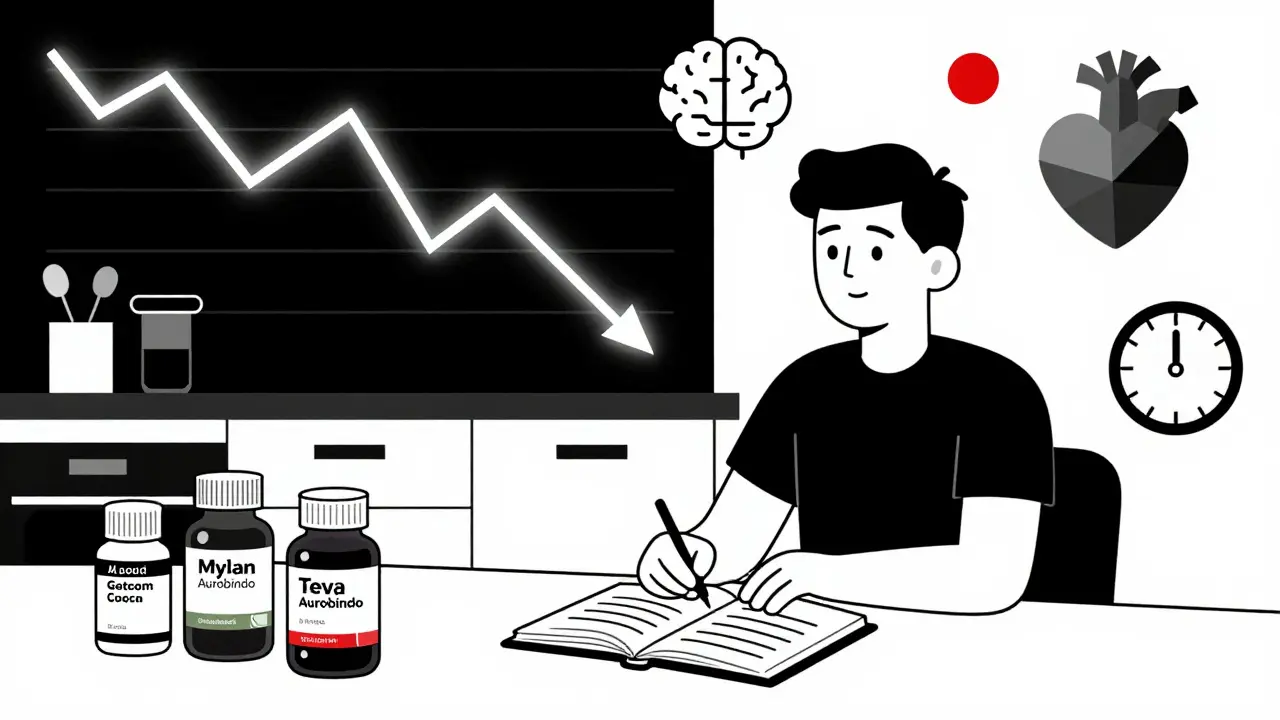
What Patients Are Saying
Online forums don’t lie. On Reddit’s r/depression, a top thread from May 2023 titled “Generic switch ruined my carefully balanced med cocktail” had over 1,200 upvotes and nearly 300 comments. People wrote: “Switched from brand Lamictal to Apotex generic-my Zoloft stopped working.” “After switching my Abilify, my obsessive thoughts came back.” One nurse on GoodRx described a patient who developed severe akathisia-inner restlessness so intense it led to hospitalization-just 10 days after switching to a generic fluoxetine while on Seroquel. PatientsLikeMe data shows 38.7% of people on combination therapy reported worsened symptoms after switching to generics. Only 12.3% of those on single meds did. That’s a threefold difference. On WebMD, 68% of negative reviews for generic bupropion XL mention “inconsistent effects” and “mood swings.” Meanwhile, the CCHR forum documented 147 cases of emotional destabilization after switching mood stabilizers in combo with antipsychotics-78% of those patients ended up in emergency care within 30 days.How to Protect Yourself
You don’t have to accept this risk blindly. Here’s what works:- Ask for the brand name if your meds are working. You’re not being difficult-you’re being smart.
- Know your manufacturer. If you’re on a generic, write down the name on the pill bottle (e.g., Mylan, Teva, Aurobindo). Switching between generic brands can be just as risky as switching from brand to generic.
- Never switch during a crisis. Wait until you’re stable. A 2022 survey of psychiatrists found that substitutions during acute episodes led to 3x more relapses.
- Request therapeutic drug monitoring. For lithium, valproate, or carbamazepine, ask for a blood test 7-14 days after any switch. Levels can change even with the same dose.
- Track your symptoms. Use a simple journal: mood, sleep, energy, anxiety. Note any changes within 10 days of a switch.
What’s Changing Now
The tide is turning. In January 2023, California passed AB 1477, requiring pharmacists to notify your doctor before switching your psych meds if you’re on multiple drugs. Michigan saw a 22% drop in ER visits after a similar law. The FDA is now considering narrowing the bioequivalence range for extended-release psych drugs from 80-125% to 90-111%-a move backed by 127 petitions from psychiatric groups. The Department of Veterans Affairs now requires patients on stable combo therapy to stay on the same generic manufacturer for at least 12 months. Their data? An 18.7% drop in hospitalizations. And now, 43% of combination therapies have “authorized generics”-the exact same drug as the brand, sold without the brand name. Symbyax’s authorized generic, for example, is chemically identical to the original.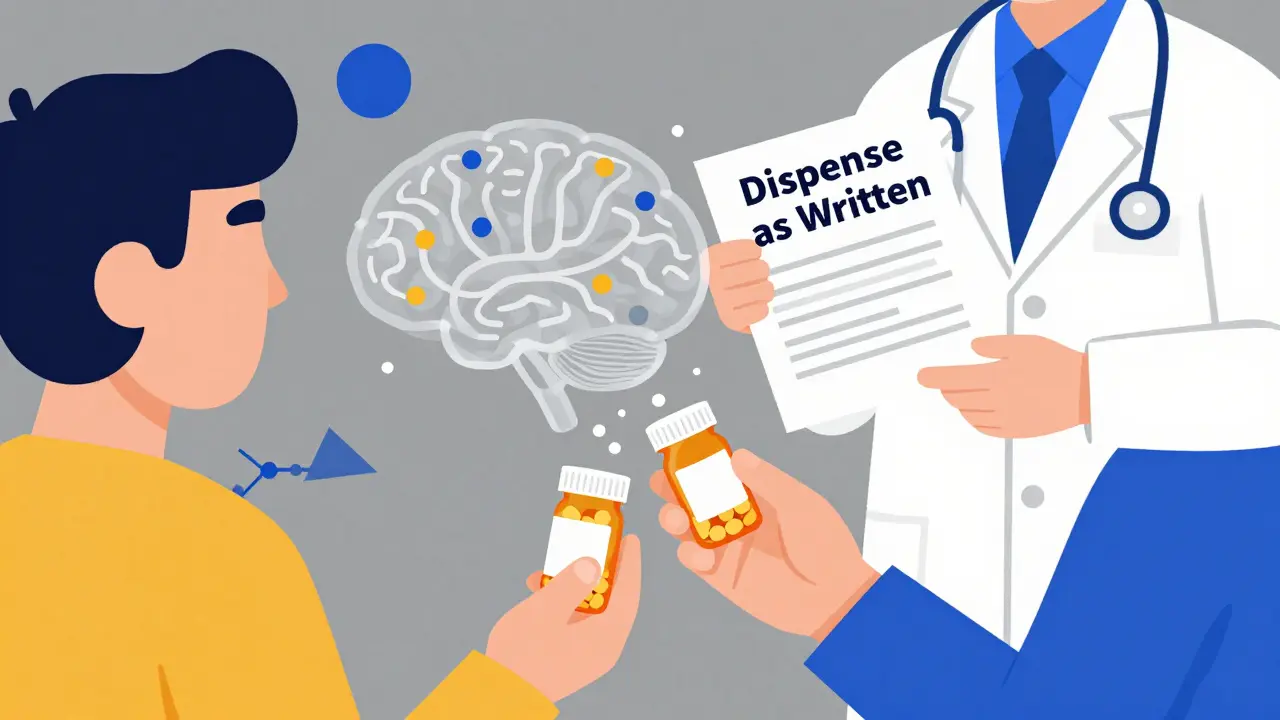
Who Should Be Extra Careful?
Some people are at higher risk:- Those on lithium or valproate
- Anyone taking more than two psychotropic drugs
- People with a history of relapse after medication changes
- Those using extended-release formulations like bupropion XL or venlafaxine ER
- Patients on clozapine, which has a narrow safety margin and complex metabolism
The Bigger Picture
Generics save money-$18.7 billion in 2022 alone. But when a patient relapses, the cost skyrockets: ER visits, hospital stays, lost work days. The Congressional Budget Office estimates avoidable hospitalizations from bad generic switches will cost $2.4 billion a year by 2027. That’s not savings. That’s a system failure. The American Psychiatric Association and the College of Psychiatric and Neurologic Pharmacists agree: one-size-fits-all substitution doesn’t work for psychiatric combinations. It’s not about being anti-generic. It’s about being pro-safety. Your brain isn’t a vending machine. You don’t get the same result every time you press the button.What’s Next?
The future lies in precision. Pharmacogenetic testing-analyzing how your genes affect drug metabolism-is already being used in some clinics. By 2025, the FDA plans to release product-specific bioequivalence guidelines for 27 high-risk psychiatric combinations. That means generics won’t just be “close enough.” They’ll be tested specifically for how they work with other drugs in your regimen. Until then, stay informed. Ask questions. Document everything. And never assume a pill that looks the same works the same.Can I switch from brand-name to generic psychiatric meds safely?
It depends. For single medications, many people switch without issues. But in combination therapy-especially with lithium, valproate, bupropion XL, or venlafaxine ER-the risk of relapse or side effects increases. Always consult your prescriber before switching. Never let a pharmacist substitute without your knowledge if you’re on multiple psych drugs.
Why do generics sometimes cause problems when used together?
Psychiatric drugs often have narrow therapeutic windows, meaning tiny changes in blood levels can affect how well they work. When you combine them, small differences in how each generic is absorbed can throw off the balance. For example, one generic venlafaxine might release serotonin faster than another, changing how it interacts with your other meds. This isn’t a flaw in generics-it’s a flaw in the current approval system, which doesn’t test combinations.
How do I know if my generic is causing problems?
Watch for subtle changes: worse sleep, increased anxiety, mood swings, brain fog, or return of old symptoms. If you notice any of these within 7-14 days of a switch, contact your doctor. Keep a symptom journal. Bring it to your appointment. Many doctors don’t ask-so you have to speak up.
Is there a list of high-risk generic psych meds?
Yes. The FDA has flagged generic bupropion XL for inconsistent release. Generic venlafaxine ER varies by manufacturer. Lithium carbonate generics have caused relapses in bipolar patients. Lamotrigine and carbamazepine generics also carry higher risk in combination therapy. Always ask your pharmacist which manufacturer makes your generic-and write it down.
Can I request the brand name even if it’s expensive?
Absolutely. Your doctor can write “Dispense as Written” or “Do Not Substitute” on your prescription. Some insurance plans require prior authorization for brand-name psych meds-your doctor can help with that. If cost is a barrier, ask about authorized generics. They’re the same drug as the brand, just cheaper.
Are there laws protecting me from automatic substitution?
In California, AB 1477 (effective 2023) requires pharmacists to notify your prescriber before substituting psych meds if you’re on multiple drugs. Other states are following. In some cases, you may need to ask for protection. Always check your state’s pharmacy laws. If you’re on Medicaid, you may be more likely to get automatic substitutions-so be proactive.
What should I do if I think my meds aren’t working after a switch?
Don’t wait. Contact your prescriber immediately. Bring your pill bottles and symptom journal. Request a blood test if you’re on lithium, valproate, or carbamazepine. Many patients recover quickly when switched back to their original formulation. Delaying can lead to hospitalization.
Is it safe to switch between different generic manufacturers?
No. Switching between generic brands can be just as risky as switching from brand to generic. Different manufacturers use different fillers, coatings, and release systems. One study found patients on multiple generics had higher relapse rates than those on a single consistent generic. Stick with the same manufacturer unless your doctor approves a change.


