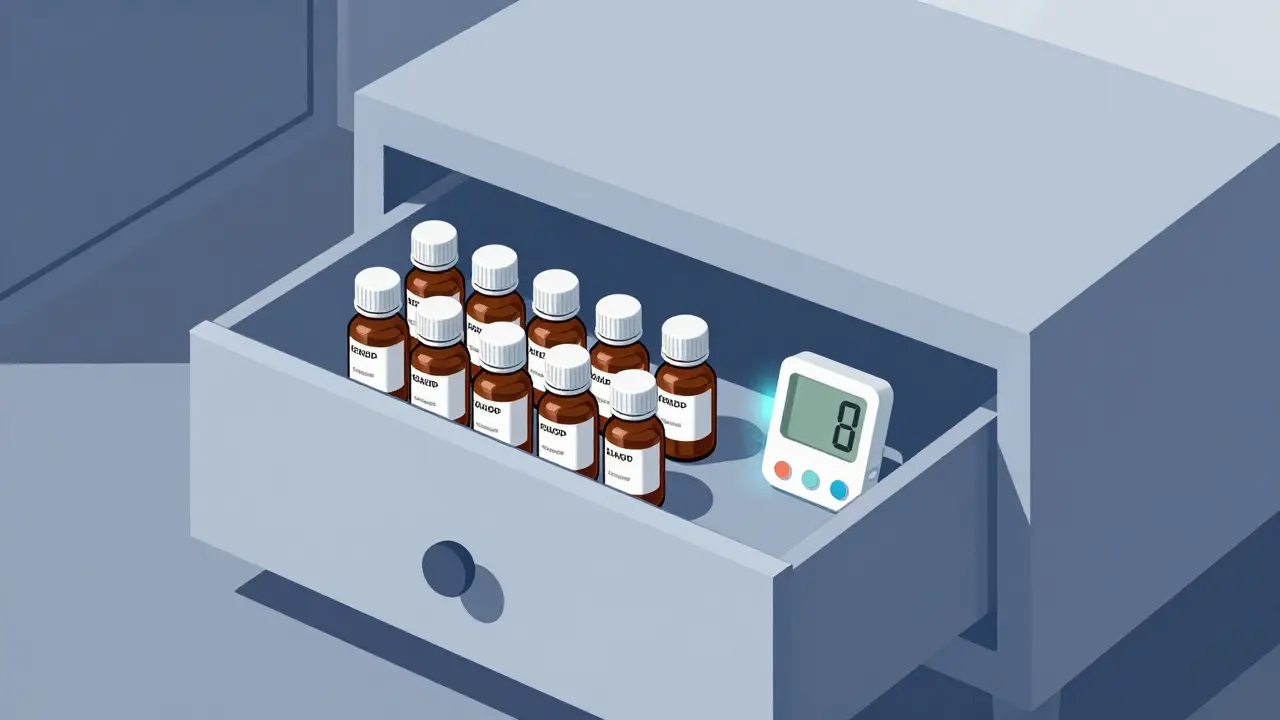

Storing your medicines wrong could make them useless-or even dangerous. It’s not just about keeping them out of reach of kids. If the temperature or humidity is off, your pills, injections, or inhalers might lose their power long before the expiration date. This isn’t speculation. In 2022, 78% of all pharmaceutical recalls in the U.S. were tied to temperature problems during storage or transport. That’s not a glitch. That’s a system failure-and it’s happening in homes, clinics, and pharmacies every day.
Why Temperature and Humidity Matter
Medications aren’t like canned food. They’re complex chemical formulas, often built around delicate proteins or active ingredients that break down when exposed to heat, moisture, or both. Insulin, for example, can clump and become ineffective if frozen-even once. Antibiotics like amoxicillin degrade faster in humid air, reducing their ability to fight infections. Birth control pills and chemotherapy drugs are especially sensitive; even a few hours outside their ideal range can cut their effectiveness by 23% to 37%, according to research from Baystate Health. The World Health Organization estimates that 15-20% of all medications worldwide are wasted because of poor storage. That’s $35 billion lost every year-not just money, but access to treatment. In low-income areas, where monitoring is rare, medication ineffectiveness rates are 35% higher than in places with proper controls.The Official Storage Zones
There’s no guesswork here. Regulators like the U.S. Pharmacopeia (USP) and the FDA have clear definitions for what counts as safe storage:- Room Temperature: 20°C to 25°C (68°F to 77°F). This is where most pills, tablets, and oral liquids go. Brief excursions to 15°C-30°C (59°F-86°F) are allowed, but not for long.
- Controlled Cold: 2°C to 8°C (36°F-46°F). This is for insulin, many vaccines, injectables, and some biologics. Never freeze unless the label says so.
- Frozen: -25°C to -10°C (-13°F to 14°F). Used for specific biologics and long-term storage of certain vaccines.
- Deep Frozen: Below -20°C (-4°F). Rare, but required for some gene therapies and specialized treatments.
Humidity? Keep it around 50%. Too dry, and some tablets crack. Too wet, and powders clump, liquids grow mold, and capsules dissolve early. The WHO says it plainly: store meds in a cool, dry place. That means no bathrooms, no kitchen counters near the stove, and definitely not on a windowsill.
Where Not to Store Medications
People think their medicine cabinet is fine. It’s not. Bathroom cabinets are humid from showers. Kitchens get hot from ovens and dishwashers. Car gloveboxes? In summer, they hit 60°C (140°F). A 2023 study found that 18.7% of pharmacies had at least one temperature spike above 77°F during summer months-with each incident lasting an average of 4.2 hours. Here’s what to avoid:- Bathrooms: Steam raises humidity fast. Moisture ruins tablets and capsules.
- Kitchens: Heat from appliances can push temperatures beyond safe limits.
- Windowsills and sunlit shelves: UV light and direct heat degrade drugs quickly.
- Refrigerator doors: Temperature swings every time you open it. The center is safest.
- Freezers (unless labeled): Freezing insulin or some antibiotics can permanently damage them.
Even your drawer under the bed might be too warm. If your home hits 30°C (86°F) in summer, your meds are at risk.
Monitoring Isn’t Optional-It’s Required
If you’re a pharmacy, hospital, or home caregiver for someone on critical meds, you need a real temperature monitor-not just a cheap thermometer from the hardware store. FDA and USP standards require:- Data logging devices with buffered probes (not bare sensors)
- Alarms that alert when temps go out of range
- Calibration certificates updated yearly
- Logging every 30 minutes or less
- Minimum ±1°F accuracy
Most pharmacies still use outdated gear. A 2023 study of 120 pharmacies found that 73% had inadequate monitors. Worse, 41% used non-buffered probes that gave false readings during door openings-making it look like everything was fine when it wasn’t.
For home use, you don’t need a $1,000 system. But you do need something reliable. Look for a digital logger with a display that shows min/max temps, battery status, and alerts. Plug it in near your meds. Check it once a week. If it’s been above 77°F for more than a few hours, call your pharmacist. Don’t risk taking a dose that might not work.
Temperature Stratification: The Hidden Problem
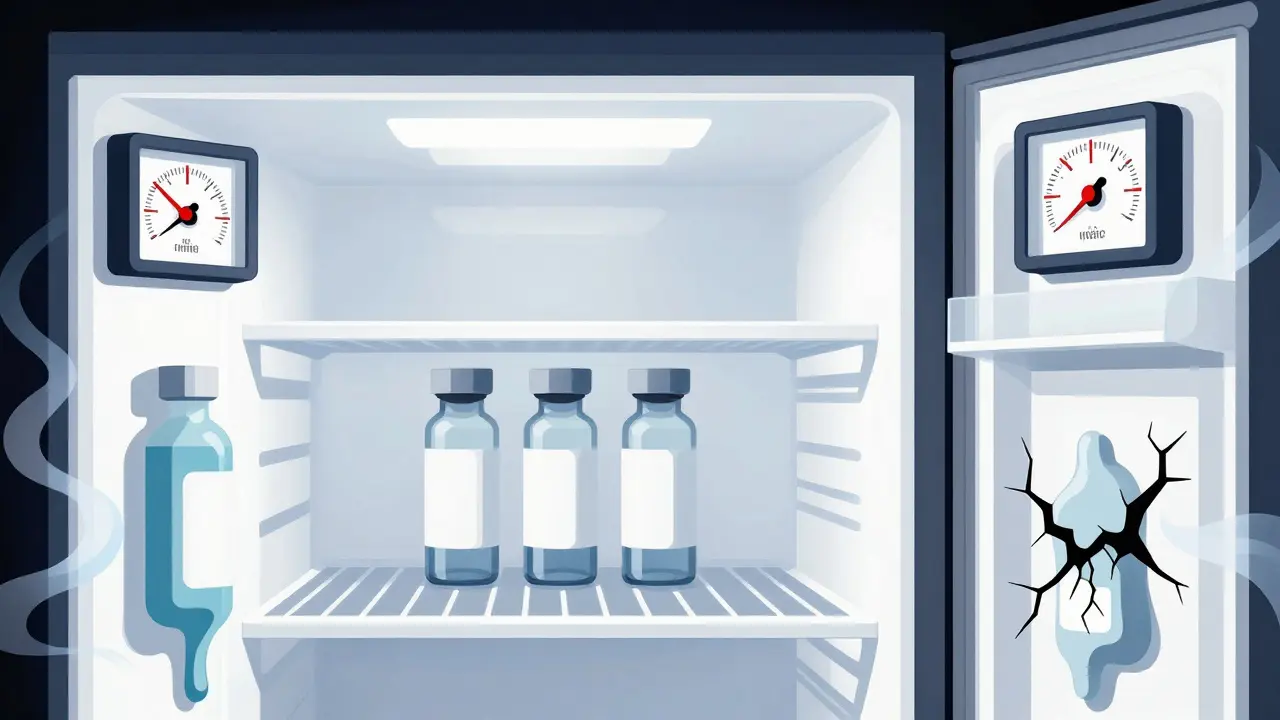
Even in a fridge labeled “2°C-8°C,” the temperature isn’t the same everywhere. Helmer Scientific’s 2022 study showed a 3.5°C (6.3°F) difference between the top and bottom shelves in standard pharmacy fridges. That’s huge. If your insulin is on the top shelf and the fridge runs cold on the bottom, you could be storing it at 10°C-outside the safe range. The CDC’s rule? Store vaccines and temperature-sensitive meds in the center of the fridge. Not on the door. Not against the back wall. The center stays most stable. Door shelves swing ±2.8°C every time someone opens it. That’s enough to ruin a vaccine.Training and Compliance Save Lives
It’s not just about the equipment. People make mistakes. A nurse grabs insulin from the wrong shelf. A caregiver moves meds to the kitchen because they’re “easier to reach.” A pharmacy tech doesn’t know how to read a log. The American Society of Health-System Pharmacists found that facilities with formal staff training reduced temperature excursions by 63%. That’s not a small win. It means fewer failed treatments, fewer hospitalizations, fewer deaths. The Joint Commission doesn’t require you to document every temp reading-but they do require you to follow manufacturer instructions. And in 2022, 62% of survey deficiencies in healthcare facilities were linked to improper storage of sterile supplies. That’s not negligence. That’s lack of training.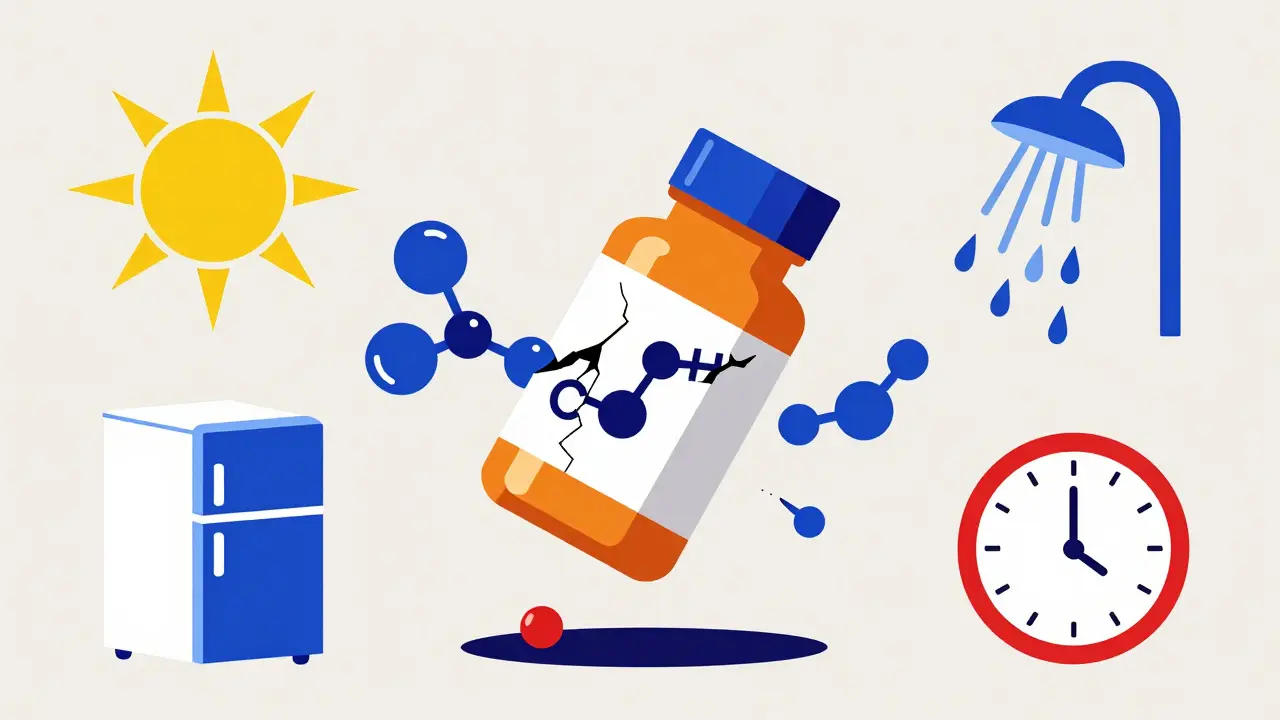
What’s Changing in 2025?
Regulations are catching up to technology. The FDA’s January 2024 update requires all healthcare facilities to have real-time remote monitoring for temperature-sensitive drugs by December 2025. No more manual logs. No more hoping you caught a spike. USP is tightening humidity rules too. The new draft of Chapter 1079 will limit relative humidity to 45% ± 5% for moisture-sensitive drugs. That’s stricter than before. New tech is helping:- Blockchain monitoring: Used by Pfizer and Moderna. Every temp reading is timestamped and locked-no tampering.
- AI prediction: Systems now forecast excursions before they happen, adjusting cooling or alerting staff.
- Phase-change materials: These are in coolers that keep vaccines at 2-8°C for up to 120 hours without power.
By 2027, the International Pharmaceutical Federation predicts 85% of storage facilities will use IoT sensors. Right now, it’s only 42%. The gap is closing fast.
What You Can Do Today
You don’t need to be a pharmacist to keep meds safe. Here’s your simple checklist:- Read the label. If it says “store at room temperature,” don’t put it in the fridge.
- Find a cool, dry spot. A bedroom drawer, a closet shelf away from heat sources.
- Use a digital logger. Get one that shows min/max temps. Under $50 online.
- Check it weekly. If the max temp hit 80°F or higher, call your pharmacy.
- Never freeze unless told to. Insulin, epinephrine, and many biologics are ruined by freezing.
- Dispose of expired or compromised meds. Don’t take chances. Return them to a pharmacy take-back program.
If you’re caring for someone on insulin, chemotherapy, or critical antibiotics, this isn’t optional. It’s life-or-death.
Final Thought: It’s Not Just About the Drug
Medication safety isn’t just about the pill in the bottle. It’s about the journey-from factory to shelf to your hand. Every temperature shift, every humidity spike, every ignored alarm chips away at its power. We’ve spent decades perfecting drugs. We shouldn’t let poor storage undo that work. Whether you’re a patient, a caregiver, or a provider, you have a role to play. Get the right storage. Monitor it. Train others. Speak up.Your life-or someone else’s-could depend on it.
Can I store my insulin in the fridge door?
No. The fridge door experiences the biggest temperature swings-up to 5°F every time it’s opened. Insulin should be stored in the center of the refrigerator, where the temperature stays stable between 2°C and 8°C (36°F-46°F). Never freeze it, and always check the label for specific instructions.
What happens if my pills get too hot?
Heat can break down active ingredients, making the medication less effective or even unsafe. Antibiotics, hormones, and heart medications are especially vulnerable. For example, exposure above 77°F for several hours can reduce effectiveness by up to 37%. If your meds were left in a hot car or near a window in summer, don’t use them-take them to a pharmacy for safe disposal.
Is a regular thermometer enough to monitor medication storage?
No. Regular thermometers don’t log data or alert you when temperatures go out of range. You need a data logger with a buffered probe, ±1°F accuracy, and a battery indicator. These cost under $50 and are essential for any medication that requires strict temperature control, like insulin or vaccines.
How do I know if my medication has gone bad from heat or humidity?
Signs include: tablets that crumble, capsules that stick together, liquids that change color or smell odd, or powders that clump. But sometimes, there’s no visible change-even when the drug has lost potency. If you suspect exposure to extreme heat or humidity, contact your pharmacist. Never guess-when in doubt, dispose of it safely.
Are there special rules for storing vaccines at home?
Yes. Most vaccines must be kept between 2°C and 8°C (36°F-46°F). Store them in the center of the fridge-not the door. Use a calibrated data logger to monitor temperature. If the vaccine has been above 8°C for more than an hour or below 2°C (even slightly frozen), it may be ineffective. Contact your provider immediately. Do not administer it.
Can I store my medications in the garage?
No. Garages are not temperature-controlled. In winter, they can freeze. In summer, they can exceed 40°C (104°F). Even if the weather seems mild, humidity and temperature swings can ruin medications. Store them indoors, in a dry, cool place away from direct sunlight and appliances.
What’s the best way to dispose of expired or damaged medications?
Never flush them or throw them in the trash. Take them to a pharmacy with a take-back program, or use a DEA-authorized collector. Many communities have drop-off boxes at police stations or clinics. If no option is available, mix pills with coffee grounds or cat litter in a sealed bag before throwing them away-but this is a last resort. Always check local guidelines.


