
What is Tinnitus Retraining Therapy?
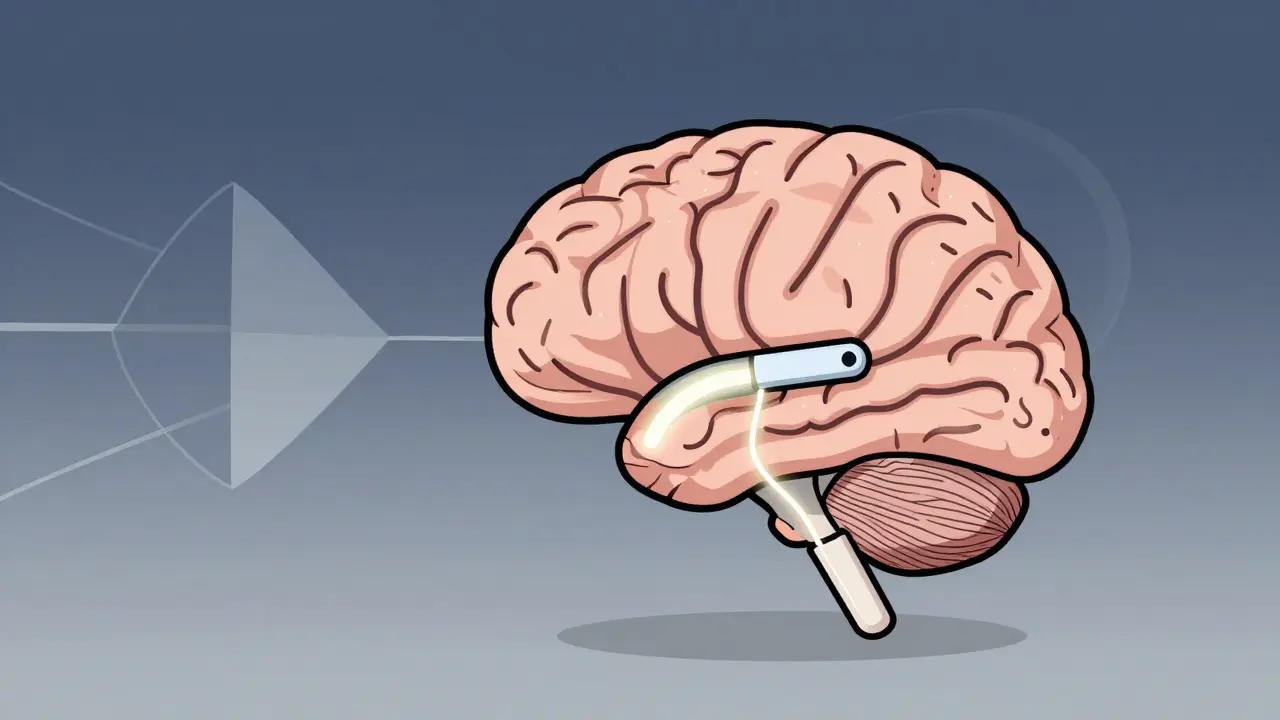
Tinnitus Retraining Therapy is a clinically proven, two-part treatment designed to help your brain stop reacting to tinnitus as a threat. Unlike hearing aids or masking devices that try to drown out the ringing, TRT works by changing how your brain processes the sound. Developed by Dr. Pawel Jastreboff in the early 1990s, it’s based on the idea that tinnitus isn’t just a problem in your ears-it’s a problem in how your brain interprets it.
Most people with tinnitus hear a constant noise-ringing, buzzing, hissing-that doesn’t go away. At first, your brain treats it like a warning signal. Your amygdala (the fear center) and autonomic nervous system kick in, making you anxious, irritable, or unable to sleep. Over time, this creates a loop: the louder you notice the tinnitus, the more stressed you get, and the louder it seems. TRT breaks that loop.
The Two Pillars of TRT: Counseling and Sound Therapy
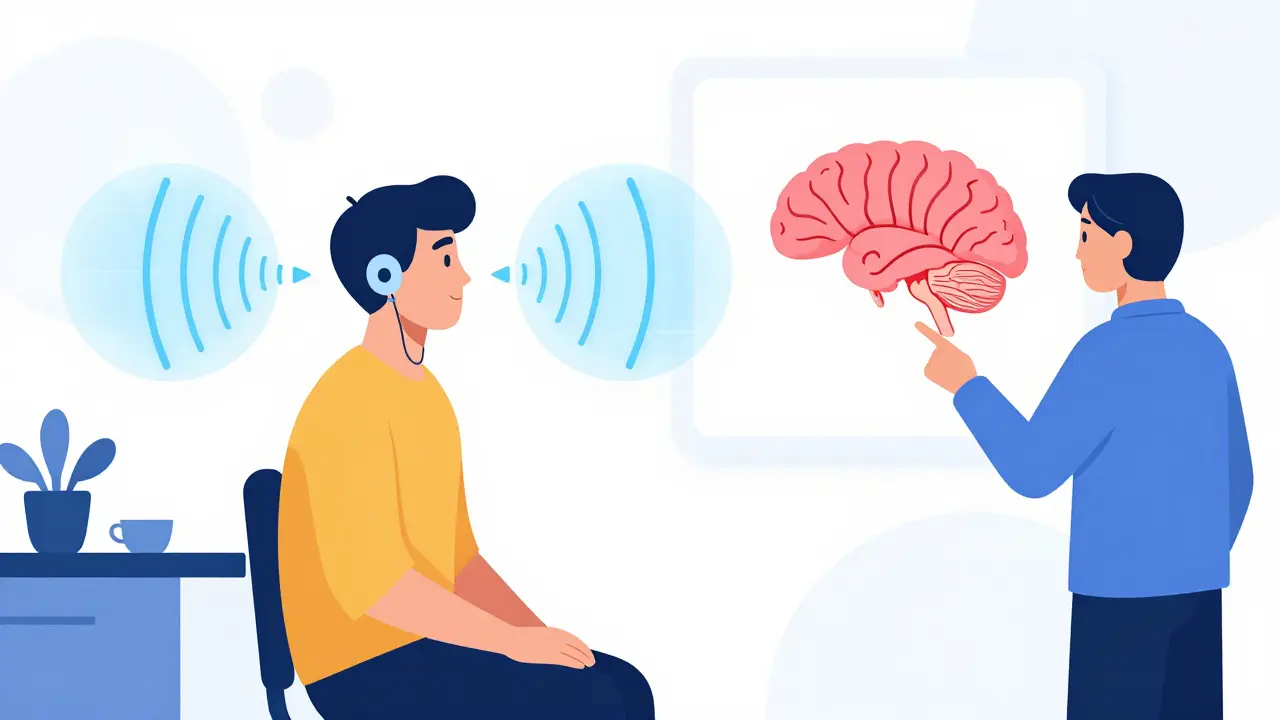
TRT isn’t one thing-it’s two tightly linked parts. The first is specialized counseling. This isn’t just a chat about your symptoms. It’s a detailed, science-based lesson on how your hearing system works. You’ll learn how sound travels from your ear to your brain, how tinnitus forms in the auditory pathways, and why your brain keeps reacting to it. The goal? To reclassify tinnitus from something dangerous to something harmless-like the hum of a refrigerator.
The second part is sound therapy. This involves wearing small, low-level sound generators (like tiny hearing aids) for 6 to 8 hours a day. These devices don’t silence your tinnitus. Instead, they play a soft, steady noise-usually broadband noise, similar to static or rainfall-at a volume just below your tinnitus level. This reduces the contrast between the tinnitus and background sound, making it easier for your brain to ignore it.
Think of it like turning down the volume on a radio that’s always on. You don’t turn it off-you just make it quieter so you stop noticing it. Over months, your brain learns that tinnitus isn’t important. It stops tagging it with fear or urgency. That’s habituation.
How Habituation Really Works
Habituation isn’t magic. It’s your brain’s natural ability to filter out things that aren’t urgent. You don’t notice your clothes anymore. You don’t hear your fridge running after a few minutes. Your brain filters these out because they’re constant and harmless. TRT trains your brain to do the same with tinnitus.
Studies using brain scans show that people with severe tinnitus have stronger connections between their auditory cortex and the limbic system-the part that handles emotion. TRT weakens those connections. After 12 to 24 months of consistent therapy, fMRI scans show reduced activity in the amygdala and anterior cingulate cortex when patients hear their tinnitus. Their brains literally stop treating it as a threat.
Success isn’t measured by whether the sound disappears. It’s measured by whether you care about it anymore. People who complete TRT often say: “I still hear it, but I don’t think about it.” Some report noticing it only 5-15% of their waking hours, down from 80-100% before treatment.
Who Is TRT For? The Four Patient Groups
TRT isn’t one-size-fits-all. Jastreboff’s protocol divides patients into four groups based on hearing ability and tinnitus characteristics:
- Group 1: Normal hearing, tinnitus present → Uses sound generators only.
- Group 2: Hearing loss, but tinnitus isn’t noticeable in quiet → Uses hearing aids only.
- Group 3: Hearing loss with tinnitus → Uses both hearing aids and sound generators.
- Group 4: Has tinnitus plus hyperacusis (extreme sensitivity to sound) → Gets modified sound therapy to gradually increase tolerance.
This precision matters. Giving someone with normal hearing the wrong type of sound therapy won’t work. That’s why TRT requires a trained professional. A general audiologist might offer sound therapy, but only a certified TRT provider knows how to match the protocol to your specific brain response.
How Long Does TRT Take? The Timeline
TRT isn’t a quick fix. It’s a long-term rewiring process. Most people need 12 to 24 months to see full results. The first three months involve monthly 60-90 minute counseling sessions. After that, visits drop to every 3-6 months. The sound therapy, however, must be used daily-no exceptions.
Dropout rates are high. About 30-40% of people quit before the 12-month mark because it feels tedious. Wearing sound generators all day, going to appointments every month, and resisting the urge to focus on the tinnitus takes discipline. But those who stick with it have the best outcomes.
One patient in Bristol, a 52-year-old teacher, started TRT in 2023 after 5 years of severe tinnitus. She wore her sound generators during lectures and while grading papers. After 14 months, she said: “I used to panic when I woke up. Now I hear it, but I just go about my day. It’s like a background noise I don’t even notice anymore.”
How Effective Is TRT? The Evidence
TRT has some of the strongest evidence of any tinnitus treatment. A 2002 study in the Journal of the American Academy of Audiology found that 80% of patients improved significantly after TRT, defined as a 20-point drop on the Tinnitus Handicap Inventory. A 2019 review in JAMA Otolaryngology showed TRT patients improved 13.2 points more on the Tinnitus Functional Index than those receiving standard care.
But effectiveness depends on who delivers it. A 2020 study in the International Journal of Audiology found that certified TRT providers achieved 85% success rates. Non-certified providers using modified versions only reached 55%. That’s a huge difference.
The American Tinnitus Association and the American Academy of Otolaryngology both list TRT as a Level A (strongest) recommendation. It’s one of only two treatments with that rating-alongside Cognitive Behavioral Therapy.
The Downsides: Cost, Access, and Challenges
TRT isn’t perfect. It’s expensive. In the U.S., the full course costs $2,500-$4,000, not including the sound generators ($500-$1,200 each). In the UK, NHS access is extremely limited-most people pay privately.
There are only about 500 certified TRT practitioners in the U.S. and far fewer in Europe. Finding one can take months. Telehealth programs launched in 2021 have helped, but many patients still struggle to find qualified providers.
Some critics, like Dr. Richard Tyler from the University of Iowa, argue that the counseling component doesn’t add much beyond general education. But proponents say the structure, timing, and depth of Jastreboff’s protocol are what make it work. The counseling isn’t just information-it’s a carefully timed retraining of emotional responses.
TRT vs. Other Treatments
Here’s how TRT stacks up against common alternatives:
| Treatment | Goal | Time to Results | Success Rate (Certified Providers) | Requires Daily Use? |
|---|---|---|---|---|
| Tinnitus Retraining Therapy (TRT) | Habituate brain to ignore tinnitus | 12-24 months | 80-85% | Yes (6-8 hours/day) |
| Cognitive Behavioral Therapy (CBT) | Change thoughts and reactions to tinnitus | 8-12 weeks | 70-75% | Yes (homework, exercises) |
| Noise Masking | Hide tinnitus with louder sounds | Immediate | 50-60% | Yes (constant use) |
| Medications (e.g., antidepressants) | Reduce anxiety/depression linked to tinnitus | 4-8 weeks | 30-40% | Yes (daily pills) |
TRT is slower than CBT, but it targets the root cause-the brain’s wiring-not just the emotional response. CBT helps you cope. TRT helps your brain forget.
What’s New in TRT?
Research is evolving. A 2023 clinical trial (NCT04567891) combined TRT with transcranial magnetic stimulation (TMS). Early results showed 92% of patients improved within 6 months-compared to 78% with TRT alone. This could cut treatment time in half.
Also, more hearing aid manufacturers now build TRT-compatible sound therapy into their devices. You no longer need separate generators. Some hearing aids can now deliver the exact low-level noise needed, making the process simpler and more discreet.
Still, the core hasn’t changed. TRT remains grounded in Jastreboff’s 1990 neurophysiological model. It’s not trendy. It’s science.
Is TRT Right for You?
TRT works best if:
- You’ve had tinnitus for more than 6 months
- You’re tired of trying quick fixes
- You’re willing to commit to daily sound therapy
- You can find a certified TRT provider
If you’re looking for instant relief, TRT isn’t it. But if you’re ready to stop fighting your tinnitus and let your brain relearn how to ignore it, it might be the best path forward.
Start by asking your audiologist: “Are you certified in TRT?” If not, ask for a referral. The Jastreboff Foundation maintains a global provider list. Don’t settle for a generic sound therapy program. TRT’s power is in its precision.
Can TRT make tinnitus disappear completely?
No. TRT doesn’t eliminate the sound. It helps your brain stop reacting to it. Most people still hear their tinnitus, but they don’t notice it unless they focus. The goal is to reach a point where tinnitus is no longer bothersome-not gone.
How long do I need to wear the sound generators each day?
You need to wear them for 6 to 8 hours a day during waking hours. You can remove them while sleeping, showering, or during quiet moments. The key is consistent, daily use. Skipping days slows progress.
Is TRT covered by insurance?
In the U.S., some private insurers cover part of the cost if it’s deemed medically necessary. Medicare and Medicaid typically do not. In the UK, TRT is rarely available on the NHS. Most patients pay out-of-pocket. Check with your provider and ask for a letter of medical necessity from your audiologist.
Can I do TRT at home without a provider?
Not effectively. The counseling component is the most important part-and it’s highly structured. Generic sound apps or white noise machines won’t give you the same results. TRT requires a trained professional to match the therapy to your specific brain response. DIY versions have very low success rates.
What happens if I stop TRT early?
If you stop before 12 months, you’re unlikely to see lasting results. Habituation takes time. The brain needs consistent, repeated exposure to the new signal. Stopping early means the old fear response can return. Most people who quit early say they didn’t see results-but they didn’t give it enough time.
Are sound generators uncomfortable to wear all day?
They’re small, discreet, and designed to be worn for hours. Most people get used to them within a week. The sound is very quiet-like a faint breeze. It’s not annoying. If it feels too loud, your provider can adjust it. The goal is for you to forget you’re wearing them.
Next Steps
If you’re considering TRT, start by finding a certified provider. Visit the Jastreboff Foundation website or ask your audiologist for a referral. Don’t wait for tinnitus to get worse. The sooner you start, the sooner your brain can begin to unlearn the fear response. TRT isn’t a cure-but for many, it’s the only thing that brings real peace.


