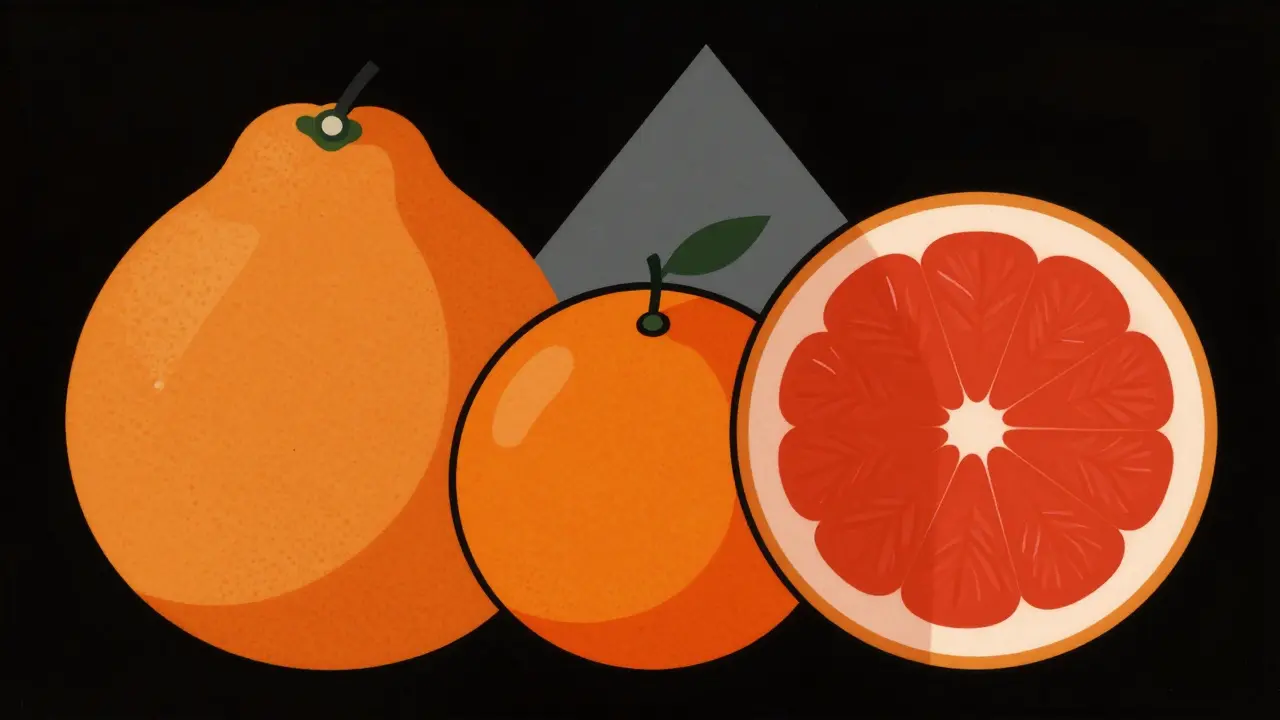

You might think you are safe from citrus-drug interactions because you never touch a glass of grapefruit juice. But hiding behind that assumption could be risky. There are two other fruits sitting in your grocery store or pantry that share the same biochemical profile and can mess with your medication just as badly. We are talking about Pomelo, the massive Asian citrus often mistaken for a large grapefruit, and Seville orange, the bitter orange used almost exclusively in traditional marmalades. Both contain compounds that stop your body from breaking down certain medicines, leading to dangerously high levels of drugs in your blood.
Quick Takeaways
- Pomelo contains furanocoumarins like bergamottin at concentrations comparable to or exceeding those in grapefruit.
- Seville orange (bitter orange) found in marmalade poses a unique breakfast risk due to concentrated peel oils.
- The interaction effect lasts up to 72 hours after eating the fruit, requiring strict avoidance periods.
- Affected medications include statins, calcium channel blockers, and immunosuppressants.
- Sweet oranges, lemons, and limes remain safe alternatives for most patients.
The Hidden Chemistry: Why These Fruits Break Your Enzymes
To understand why these specific fruits cause trouble, you have to look at what happens inside your intestines. Your body uses enzymes to process medicines so they can work correctly and then leave your system. One of the busiest workers in this factory is an enzyme called CYP3A4. When you eat grapefruit, pomelo, or Seville orange, chemicals called furanocoumarins slip in and lock this enzyme down. Specifically, compounds known as bergamottin and 6',7'-dihydroxybergamottin attach themselves to the enzyme and prevent it from functioning.
This isn't a temporary slowdown; it is often irreversible until your liver makes brand new enzymes. Research published in the Journal of Agricultural and Food Chemistry indicates that pomelo contains these inhibitors at concentrations ranging from 1.5 to 2.5 μM. For context, grapefruit usually sits around 1.0 to 2.0 μM. This means a bowl of pomelo segments could potentially shut down more of your metabolic machinery than a glass of grapefruit juice ever could. The result is that when you take a pill meant to be metabolized quickly, it stays active in your bloodstream longer and stronger than intended.
Pomelo: The Bigger, More Potent Cousin
Pomelo (Citrus maxima) is native to Southeast Asia and is physically the largest citrus fruit in the world. It looks very similar to a grapefruit but lacks the red blush often seen in Western varieties. Despite its sweet, less acidic taste, it hides a potent interaction profile. A publication from Medsafe in 2015 explicitly noted that pomelo contains significant levels of bergamottin, effectively putting it in the same danger category as grapefruit.
In 2018, a study in the British Journal of Clinical Pharmacology showed a worrying trend. When researchers gave participants pomelo juice alongside simvastatin, the total amount of drug exposure increased by 350%. Grapefruit juice typically raises this by about 300%. The difference sounds small on paper, but in clinical terms, that extra 50% represents a significant jump toward toxicity. This fruit is often mislabeled in markets as "Chinese grapefruit," which tricks consumers into thinking they are buying something completely different and safer.
| Fruit Type | Bergamottin Level (μM) | Drug Exposure Increase | Risk Profile |
|---|---|---|---|
| Grapefruit | 1.0 - 2.0 | ~300% | High |
| Pomelo | 1.5 - 2.5 | ~350% | Very High |
| Seville Orange | 3.0 - 4.0 | Up to 400% | Extreme |

The Seville Orange Marmalade Trap
If pomelo is a loud warning, Seville orange is a silent trap. Seville orange (Citrus aurantium) grows primarily in Spain and is too sour to eat raw. That is why it is mostly processed into jams and jellies. However, the peels-which hold the highest concentration of furanocoumarins-are cooked directly into the mixture. Analysis cited by Healthline in 2023 found bergamottin levels up to 30% higher in Seville orange compared to grapefruit.
This creates a scenario where a patient might be warned to avoid fruit entirely but still eats toast spread thick with marmalade every morning. There was a documented case report from Transplantation Proceedings (2011) where a transplant patient suffered tacrolimus toxicity after consuming Seville orange marmalade. Their drug levels spiked by 400%, leading to hospitalization. The issue here is recognition. Many people do not identify "bitter orange" or "Seville orange" on a label as a drug risk because they think of it only as a condiment, not a food source with pharmacological power.
Which Medications Are Dangerous?
Not every medicine reacts with citrus fruits. The problem arises specifically with drugs metabolized by the CYP3A4 pathway or transported by OATPs. If your prescription relies on these systems, pomelo and Seville orange become off-limits. Here are the major categories you need to check:
- Statins: Cholesterol medications like simvastatin and atorvastatin are highly susceptible. Increased levels can lead to muscle breakdown (rhabdomyolysis).
- Calcium Channel Blockers: Blood pressure drugs such as amlodipine or nifedipine may drop your heart rate too low or blood pressure too much.
- Immunosuppressants: Drugs like tacrolimus and cyclosporine, used by organ transplant recipients, have very narrow safety windows. Too much drug can damage kidneys; too little can reject the organ.
- Anxiety/Sleep Meds: Certain benzodiazepines and sedatives stay in the system longer, causing excessive drowsiness.
Conversely, these fruits generally do not affect drugs processed by CYP2D6 or other pathways. Always consult your pharmacist to see which list applies to you.
The 72-Hour Danger Zone
One of the biggest misconceptions is timing. You cannot simply skip breakfast one day to counteract a week of pomelo consumption. Because the inhibition is irreversible, your body needs to manufacture fresh enzymes. Shiew Mei Huang, Ph.D., from the FDA Division of Clinical Pharmacology, explains that the effect can last up to 72 hours after consumption.
This means you cannot just stop eating the fruit three hours before taking your pill. The safest protocol recommended by current guidelines is a minimum three-day avoidance period before and during treatment with sensitive medications. If you accidentally eat a piece of Seville orange marmalade, do not assume you are safe tomorrow morning. The clock resets based on ingestion, not mealtime.
Safe Citrus Alternatives
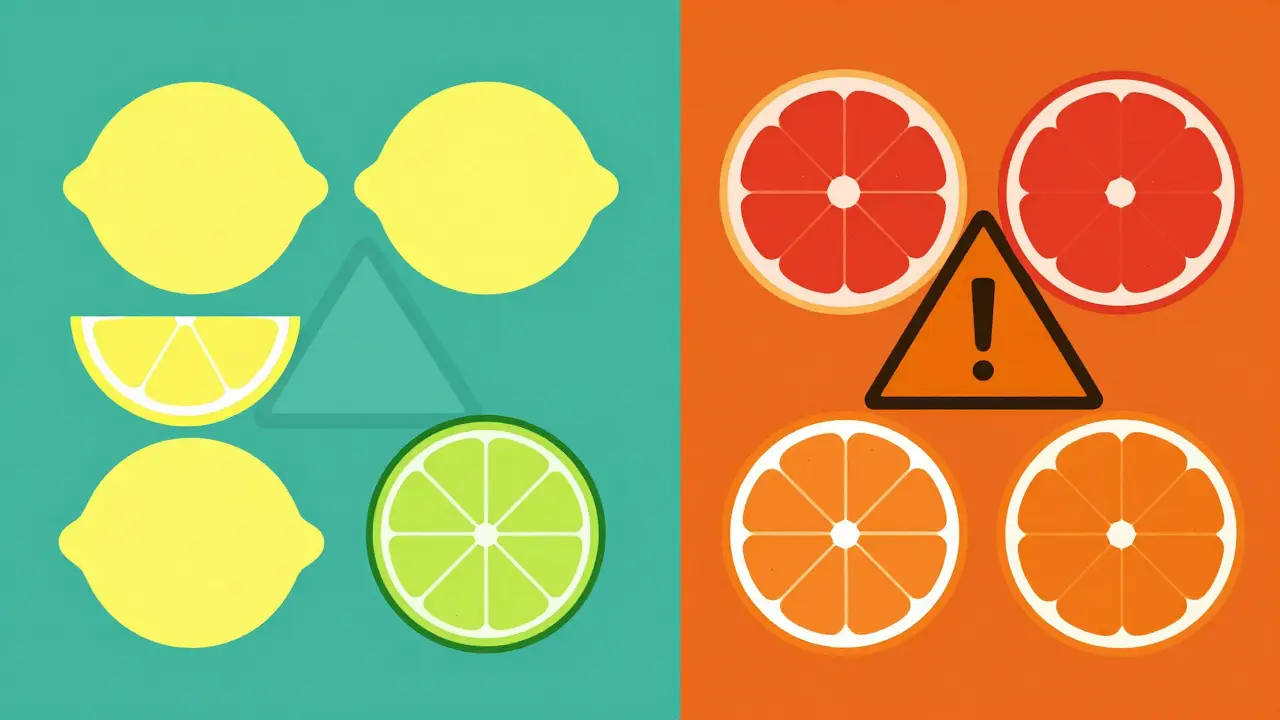
You do not need to abandon all citrus to protect your health. Sweet oranges, lemons, and limes lack significant amounts of the problematic furanocoumarins. The University of Florida Center for Pharmacogenomics maintains a list identifying specific interactions, and notably, these common fruits do not appear on the high-risk list. Even pink-fleshed varieties of regular oranges are generally considered safe, though you should always read labels for additives. If you enjoy the tartness of grapefruit but want safety, sticking to lemon water is a better choice than trying to find a "safe" type of grapefruit, as even white grapefruit carries the risk.
Frequently Asked Questions
Is pomelo the same as grapefruit?
No, they are different species. Pomelo is the ancestor of grapefruit and is larger with less acidity, but chemically it has equal or higher drug-interaction potential.
Can I eat Seville orange jam occasionally?
If you are on interacting medications, no. Even small amounts in marmalade can inhibit metabolism for up to 72 hours.
Does orange juice interact with my medication?
Standard sweet orange juice is generally safe. The interaction risk comes from grapefruit, pomelo, and Seville (bitter) orange.
How long do I wait after eating pomelo before taking meds?
You should avoid these fruits for at least 3 days prior to taking medications affected by CYP3A4 to ensure enzyme activity returns to normal.
What symptoms indicate a drug interaction occurred?
Signs can include extreme dizziness, severe muscle pain, irregular heartbeat, or confusion depending on the specific medication involved.
Take Action Now
The market context shows growing concern as pomelo consumption rises globally. Yet, many pharmacy systems still fail to flag these specific alerts automatically. As of 2023 audits, only 29% of major chains included pomelo in electronic drug interaction alerts. Because awareness is lagging, you must become your own advocate.
Start by checking the ingredient lists on any jams or juices you buy. Look for words like "bitter orange," "China melon," or "citrus grandis." Ask your doctor specifically about pomelo, not just grapefruit, during your next refill appointment. By treating these fruits with the same caution as grapefruit, you can prevent serious adverse events while still enjoying a healthy diet.


