

Bisphosphonate Administration Checker
Check Your Breakfast Safety
Determine if your morning food or drink will interfere with bisphosphonate absorption.
Select your food and time elapsed to see results.
Imagine this: You've been taking your osteoporosis medication faithfully for months. You wake up early, swallow the pill, and go about your day. Yet, your next bone density scan shows no improvement. It feels frustrating, doesn't it? The culprit might not be the drug itself, but what you had for breakfast.
Many patients unknowingly sabotage their treatment by pairing their medication with the very foods that make bones strong: dairy products. Milk, yogurt, and cheese are packed with calcium, which is excellent for your skeleton but terrible for your morning pill. This clash is the core issue we need to solve. If you are taking bisphosphonates, understanding this interaction is the difference between preventing a fracture and risking a fall.
The Hidden Chemistry of Your Morning Pill
To understand why dairy is a problem, we need to look at how Bisphosphonates are a class of antiresorptive medications primarily used to treat osteoporosis and prevent bone fractures by inhibiting osteoclast-mediated bone resorption. These drugs are designed to stick to your bone tissue and stop the cells that break down bone from working too fast. However, they are incredibly sensitive to their environment.
When you swallow a tablet like alendronate or risedronate, it has to travel through your stomach to your small intestine to be absorbed into your bloodstream. This journey is short, but the absorption rate is shockingly low on its own. Studies show that the body only absorbs about 0.6% to 1% of an oral bisphosphonate dose. That means 99% of the pill passes through you unused. This is already a precarious situation.
Now, add a glass of milk or a slice of cheese to the mix. Dairy products are rich in calcium, magnesium, and other divalent cations. These minerals act like magnets for the bisphosphonate molecules. Instead of being absorbed into your blood, the drug binds to the calcium in your gut. They form an insoluble complex that your body cannot use. Research indicates that consuming just 30 to 40 grams of cheese can bind up to 90% of a risedronate dose. Essentially, you are flushing money and protection down the toilet.
The Golden Rules of Administration
Because the chemistry is so unforgiving, the instructions for taking these medications are strict. It's not just a suggestion; it's a requirement for the drug to work. The National Osteoporosis Foundation and the FDA agree on a specific protocol that must be followed every single time you take your dose.
Here is the non-negotiable checklist for a successful dose:
- Empty Stomach Only: Take the pill first thing in the morning, before you eat or drink anything else.
- Plain Water Only: Use at least 6 to 8 ounces (about 200ml) of plain water. No coffee, no tea, no juice.
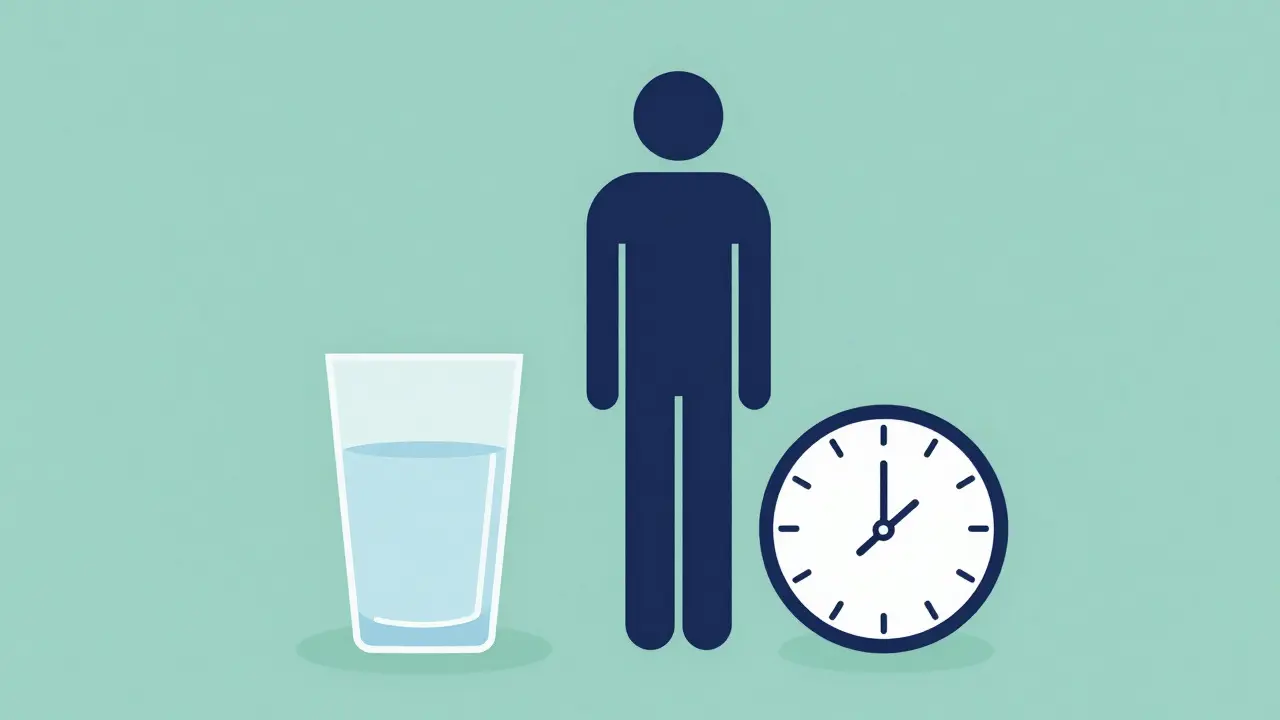
- Stay Upright: Sit or stand for at least 30 minutes after swallowing. Do not lie down. Lying down too soon can cause the acid from the pill to irritate your esophagus.
- The Waiting Period: Wait at least 30 to 60 minutes before eating breakfast or taking other medications.
Why the wait? Your stomach needs time to empty. Dr. Angela Cheung from Toronto General Hospital explains that the 30-minute window correlates with gastric emptying time. Once the stomach empties, the pH in your duodenum rises, which is the specific condition needed for the drug to finally absorb. If you drink coffee or eat yogurt before this window closes, you reset the clock and ruin the absorption process.
Common Breakfast Mistakes to Avoid
It is easy to think, "It's just a sip of coffee," or "I'll just have a yogurt with my pill." These small deviations are the most common reasons treatment fails. Let's break down the specific foods and drinks that cause interference.
| Item | Impact on Absorption | Safe Alternative |
|---|---|---|
| Milk (Cow, Goat) | High (Contains Calcium) | Plain Water |
| Coffee/Tea | High (Contains Caffeine/Cations) | Wait 30 mins, then drink |
| Orange Juice | High (Acid/Citrate) | Plain Water |
| Cheese/Yogurt | Very High (Calcium) | Wait 60 mins before eating |
| Cereal with Milk | Very High (Calcium) | Plain Toast (Wait 60 mins) |
Many people assume orange juice is safe because it isn't dairy. However, the acidity and citrate in orange juice can also reduce absorption by 50% to 60%. Even mineral water can be problematic if it contains high levels of calcium or magnesium. Stick to tap or bottled water that is low in minerals.
Another tricky area is supplements. If you take a calcium or vitamin D supplement for your bones, you must take it at a different time of day. Taking your bisphosphonate and your calcium pill together is like taking the drug and milk together. Space them out by at least two hours. A common routine is taking the bisphosphonate first thing in the morning and the calcium supplement with lunch or dinner.
When the Rules Are Too Hard: Alternatives
Let's be honest. Waking up at 5:00 AM, standing for 30 minutes, and waiting before eating is a burden. It's no surprise that studies show nearly 40% of patients stop taking oral bisphosphonates within the first year. The administration requirements are the second most common reason for quitting, right after stomach side effects.
If you find this routine impossible to maintain, you aren't failing. The medication might just be the wrong fit for your lifestyle. There are alternatives that do not have these food restrictions.
Injectable Options: Medications like denosumab (Prolia) or zoledronic acid (Reclast) are given as shots. Since they bypass the stomach, food interactions are non-existent. You don't need to fast, and you don't need to worry about your breakfast. The downside is cost and the need for a clinic visit, though some are monthly or yearly injections.
Newer Oral Formulations: There are newer drugs on the horizon, like delayed-release risedronate (Atelvia), which allows you to take the pill with food. However, even these often require avoiding calcium-rich foods for a short period. Always check the label.
While these alternatives are more expensive, the cost of a fracture is far higher. If you cannot stick to the strict fasting rules, talk to your doctor about switching. A drug you take correctly is better than a drug you take incorrectly.
Building a Routine That Works
Adherence is the key to success. You don't need to be perfect, but you need to be consistent. Many patients in Bristol and beyond have found ways to make this work without it disrupting their lives. Here are some practical strategies to help you build a habit.
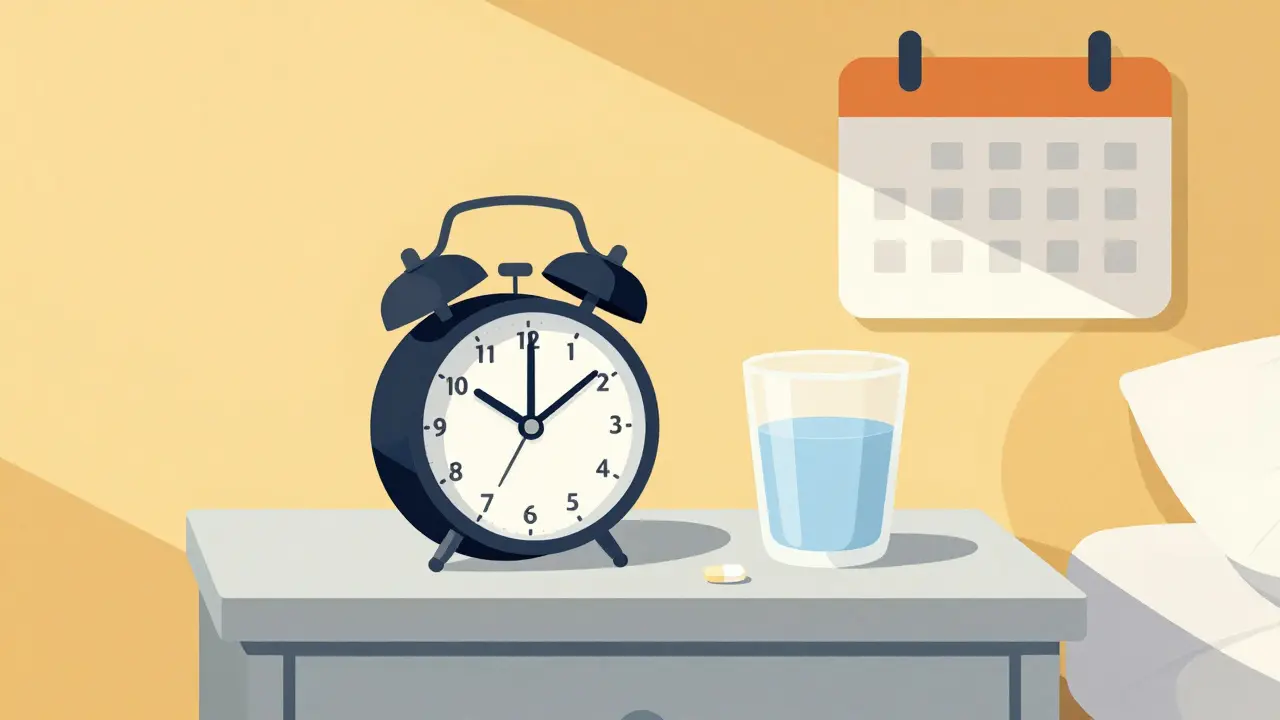
First, set a dedicated alarm. Label it "Pill Time" rather than "Wake Up." This creates a mental association that this is a medical task, not just getting out of bed. Second, keep a glass of water and your pill by your bedside. This removes the friction of walking to the kitchen before you've even brushed your teeth.
Third, use the waiting time productively. You need to stay upright for 30 minutes anyway. Use this time to brush your teeth, get dressed, or check your emails. Don't try to sneak a snack. If you get hungry, wait until the timer goes off. Over time, your body will adjust to this rhythm. Studies suggest it takes about two to three weeks to establish this routine firmly.
Finally, track your progress. If you have a DEXA scan coming up, ask your doctor to review your medication history. If you know you've been slipping up, be honest. They can adjust your plan rather than assuming the drug isn't working.
Summary of Key Takeaways
The interaction between dairy and bisphosphonates is a critical factor in treating osteoporosis. By understanding the chemistry, you can avoid wasting your medication. Remember that calcium binds the drug, making it useless. Stick to plain water, wait 30 to 60 minutes before eating, and stay upright. If the routine is too hard, ask for an alternative. Your bones depend on you getting this right.
Can I drink coffee with my bisphosphonate?
No. Coffee contains caffeine and other compounds that can reduce the absorption of bisphosphonates. You should wait at least 30 to 60 minutes after taking your pill before drinking coffee, tea, or any other beverage besides plain water.
Does orange juice interfere with bisphosphonates?
Yes, orange juice can reduce absorption by up to 50-60%. The acidity and citrate in the juice interfere with the drug's ability to enter your bloodstream. Stick to plain water for your morning dose.
Can I take calcium supplements at the same time?
Absolutely not. Calcium binds to bisphosphonates just like dairy products do. You must separate your calcium supplement from your osteoporosis medication by at least two hours. Take the bisphosphonate in the morning and the calcium with lunch or dinner.
What happens if I eat too soon after taking the pill?
If you eat or drink anything with calcium, magnesium, or acidity within 30 minutes, the drug may not be absorbed properly. Studies show that absorption can drop by 80-90%, making the dose ineffective for preventing fractures.
Are there bisphosphonates I can take with food?
Some newer formulations, like delayed-release risedronate (Atelvia), allow you to take the pill with food. However, you still need to avoid calcium-rich foods. Injectable options like Prolia have no food restrictions at all. Talk to your doctor about switching if the oral routine is too difficult.


