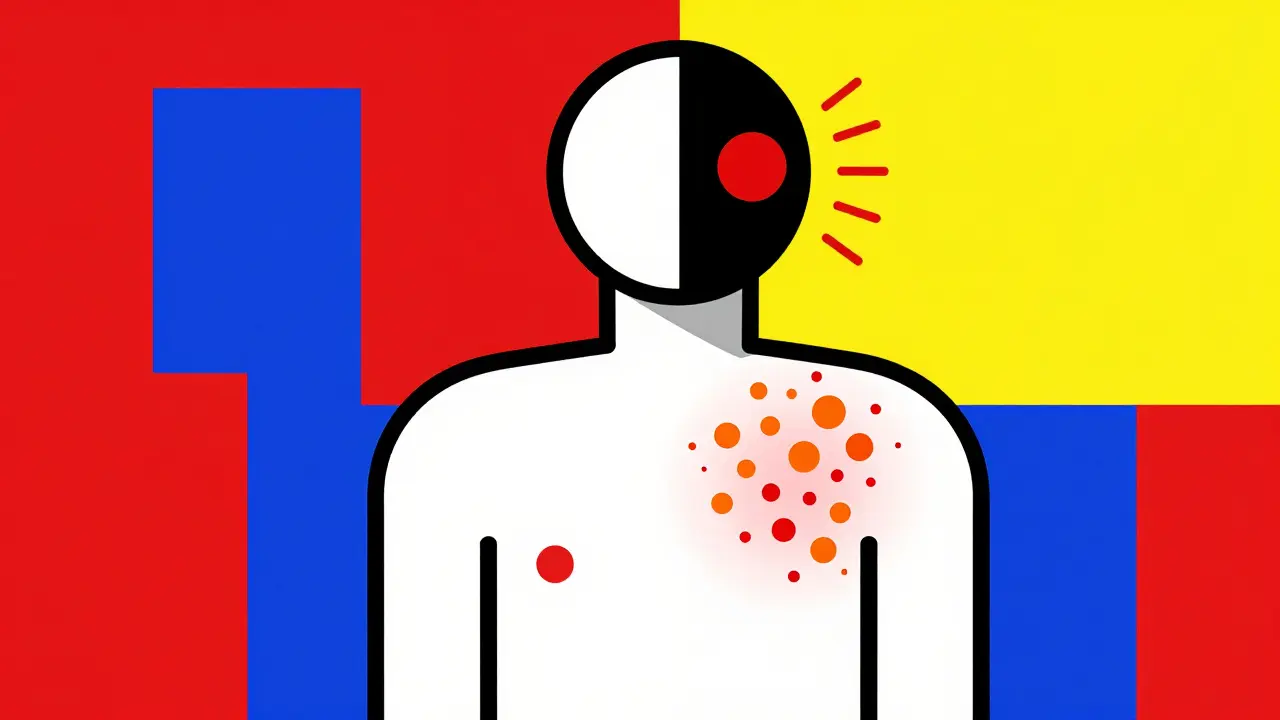

Imagine starting a new medication for high blood pressure or gout. Two weeks pass without issue. Then, you develop a fever and a rash that looks like measles. Most people might assume it’s just a mild allergy or a viral bug. But if that rash spreads, your lymph nodes swell, and your liver enzymes spike, you could be facing DRESS syndrome, formally known as Drug Reaction with Eosinophilia and Systemic Symptoms.
This is not a simple skin irritation. It is a rare, severe, and potentially life-threatening condition classified as a Severe Cutaneous Adverse Reaction (SCAR). With a mortality rate of around 10%, mostly due to liver failure, understanding what DRESS is-and how it differs from other drug reactions-can literally save your life.
What Is DRESS Syndrome?
DRESS is an idiosyncratic adverse drug reaction. "Idiosyncratic" means it doesn’t happen to everyone; it depends on your unique genetic makeup and immune system response. Unlike typical allergies that happen within minutes or hours, DRESS has a long latency period. Symptoms typically appear 2 to 8 weeks after you start taking the offending drug.
The condition was first recognized in the 1930s but wasn’t formally defined until the 1980s. Today, medical experts view it as a complex immunological event where the body’s T-cells and eosinophils (a type of white blood cell) attack healthy tissues, mistaking the drug for a threat. This attack isn’t limited to the skin; it often spills over into internal organs like the liver, kidneys, lungs, and heart.
Key Symptoms: The Classic Triad
Diagnosing DRESS can be tricky because its symptoms mimic many other conditions, including mononucleosis, serum sickness, or common viral exanthems. However, doctors look for a specific triad of symptoms:
- Fever: Usually higher than 38°C (100.4°F), often accompanied by flu-like malaise and sore throat.
- Skin Rash: In 75-90% of cases, this presents as a morbilliform (measles-like) rash. It starts on the face and upper body before spreading downward. Unlike other severe reactions, blistering and skin detachment are less common in early stages.
- Hematologic Abnormalities: Blood tests reveal elevated eosinophils (>700 cells/μL or >10% of total white blood cells) and atypical lymphocytes.
Beyond these three, systemic involvement is the hallmark of DRESS. You might experience swollen lymph nodes (lymphadenopathy) in more than half of cases. More critically, internal organs begin to fail. Liver involvement occurs in 70-90% of patients, often marked by ALT levels exceeding 1,000 U/L. Kidney damage affects 10-30% of cases, while lung and heart issues are less frequent but still dangerous.
Culprit Drugs: What Triggers DRESS?
Not all medications carry the same risk. Certain drugs are notorious for triggering DRESS. If you are prescribed any of the following, vigilance is key:
| Drug Class | Specific Medications | Risk Profile / Notes |
|---|---|---|
| Urate-Lowering Agents | Allopurinol | Responsible for 40-50% of cases. Risk increases significantly in patients with chronic kidney disease (eGFR <60). |
| Antiepileptic Drugs | Carbamazepine, Phenytoin, Lamotrigine | Account for 20-30% of cases. Often associated with HLA-B*1502 genetic marker in Asian populations. |
| Antibiotics | Sulfonamides (e.g., Sulfamethoxazole) | Involved in 10-15% of cases. Broad-spectrum antibiotics are a common trigger. |
| Others | Vancomycin, Allopurinol | Rare triggers but documented in clinical literature. |
Allopurinol, used to treat gout, is the single most common cause. Interestingly, allopurinol-induced DRESS tends to have a longer incubation period (median 36 days) and causes more frequent kidney damage compared to drug-induced cases from antiepileptics.

DRESS vs. SJS/TEN: Knowing the Difference
Patients and even some clinicians confuse DRESS with Stevens-Johnson Syndrome (SJS) and Toxic Epidermal Necrolysis (TEN). While all three are SCARs, they are distinct entities requiring different management approaches.
SJS and TEN present faster, usually within 1 to 4 weeks of drug exposure. They are characterized by painful mucosal involvement (mouth, eyes, genitals) and significant skin detachment (blistering and peeling). DRESS, on the other hand, has a slower onset (2-8 weeks), less mucosal damage (30-50% of cases), and rarely involves widespread skin peeling. Instead, DRESS is driven by eosinophil-mediated tissue damage and T-cell activation, whereas SJS/TEN involve cytotoxic CD8+ T cells causing keratinocyte apoptosis.
Mortality rates also differ. SJS has a mortality rate of 5-10%, while TEN is much higher at 30-40%. DRESS sits in the middle at approximately 10%, primarily due to hepatic necrosis rather than sepsis from skin loss.
Diagnosis and Genetic Risk Factors
Because there is no single blood test for DRESS, diagnosis relies on clinical criteria. The RegiSCAR score is the gold standard, requiring hospitalization plus features like rash, fever, lymphadenopathy, and organ involvement. Doctors also check for reactivation of human herpesvirus 6 (HHV-6), which occurs in 60-70% of DRESS cases and may worsen the prognosis.
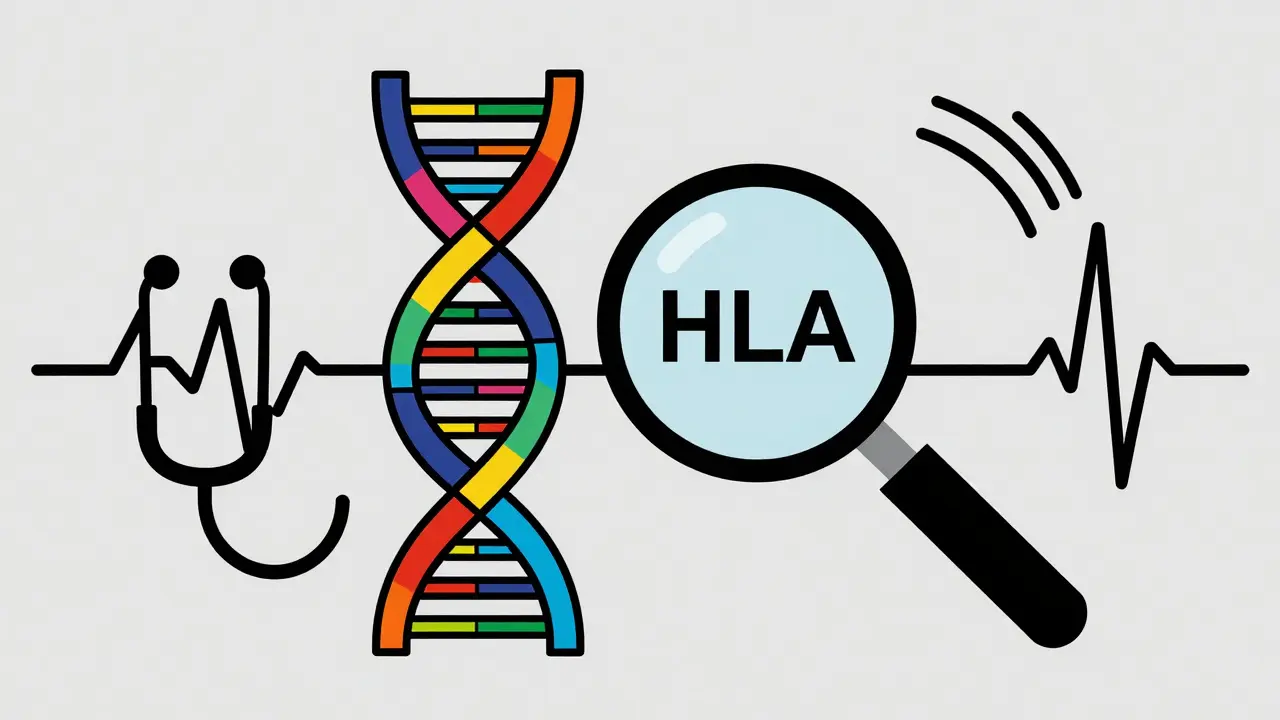
Genetics play a massive role. For example, the HLA-B*58:01 allele confers an 80-90% sensitivity for allopurinol-induced DRESS in Asian populations. In response, the FDA recommended screening for this allele in high-risk groups in 2020. Similarly, HLA-B*1502 testing is standard for carbamazepine initiation in certain ethnic groups. These pharmacogenomic tests have drastically reduced incidence rates in regions where they are implemented.
Treatment and Management
If you suspect DRESS, time is critical. The single most important step is immediate discontinuation of the suspected drug. Studies show that stopping the drug within 24 hours of recognition reduces mortality from 15% to 5%.
Most patients require hospitalization, often in intensive care or specialized dermatology units. Treatment protocols include:
- Systemic Corticosteroids: Prednisone (0.5-1 mg/kg/day) is the first-line treatment for moderate to severe cases. Tapering must be slow (over 4-8 weeks) to prevent rebound symptoms.
- Supportive Care: Fluid management, wound care for any skin lesions, and strict infection control. Patients are immunocompromised and susceptible to bacteremia and fungemia.
- Monitoring: Daily liver function tests, complete blood counts, and renal panels for the first two weeks.
- Advanced Therapies: For steroid-refractory cases, biologics like anakinra (IL-1 receptor antagonist) or tocilizumab are being studied and used off-label with promising results.
Long-term follow-up is essential. About 20-30% of survivors experience persistent organ damage, particularly renal impairment. Additionally, 5-10% of patients develop autoimmune sequelae, such as Graves’ disease or thyroiditis, months after the initial reaction resolves.
Prevention and Future Directions
Prevention hinges on awareness and genetic screening. Physicians are increasingly adopting guidelines to avoid high-risk drugs in susceptible patients. For instance, the American College of Rheumatology now recommends febuxostat as a first-line alternative to allopurinol for patients with chronic kidney disease to mitigate DRESS risk.
Research is ongoing. The EuroSCAR registry is developing point-of-care diagnostic algorithms incorporating HHV-6 PCR and eosinophil cationic protein levels. Clinical trials are evaluating newer biologic agents to reduce reliance on steroids and improve outcomes for refractory cases. As the population ages and use of high-risk medications expands, recognizing DRESS early will remain a critical skill for healthcare providers.
How long does it take for DRESS symptoms to appear?
DRESS syndrome typically has a long latency period, with symptoms appearing 2 to 8 weeks after starting the offending medication. In rare cases, it can occur as early as 1 week or as late as 16 weeks.
Is DRESS syndrome fatal?
Yes, DRESS has a mortality rate of approximately 10%. Death is most commonly caused by fulminant hepatitis leading to liver necrosis. Early diagnosis and immediate cessation of the causative drug significantly improve survival rates.
What is the difference between DRESS and Stevens-Johnson Syndrome?
While both are severe drug reactions, SJS presents faster (1-4 weeks) with significant mucosal involvement and skin blistering/detachment. DRESS appears later (2-8 weeks), features prominent eosinophilia and fever, and causes multi-organ inflammation without extensive skin peeling.
Can DRESS syndrome come back?
Re-exposure to the same drug or structurally similar drugs can trigger a rapid and severe recurrence. Patients diagnosed with DRESS must permanently avoid the culprit medication and inform all future healthcare providers about their history.
Are there genetic tests for DRESS prevention?
Yes. Genetic screening for HLA-B*58:01 is recommended before starting allopurinol in high-risk populations (e.g., Southeast Asian descent). Similarly, HLA-B*1502 testing is advised before prescribing carbamazepine in certain ethnic groups to prevent DRESS and SJS.