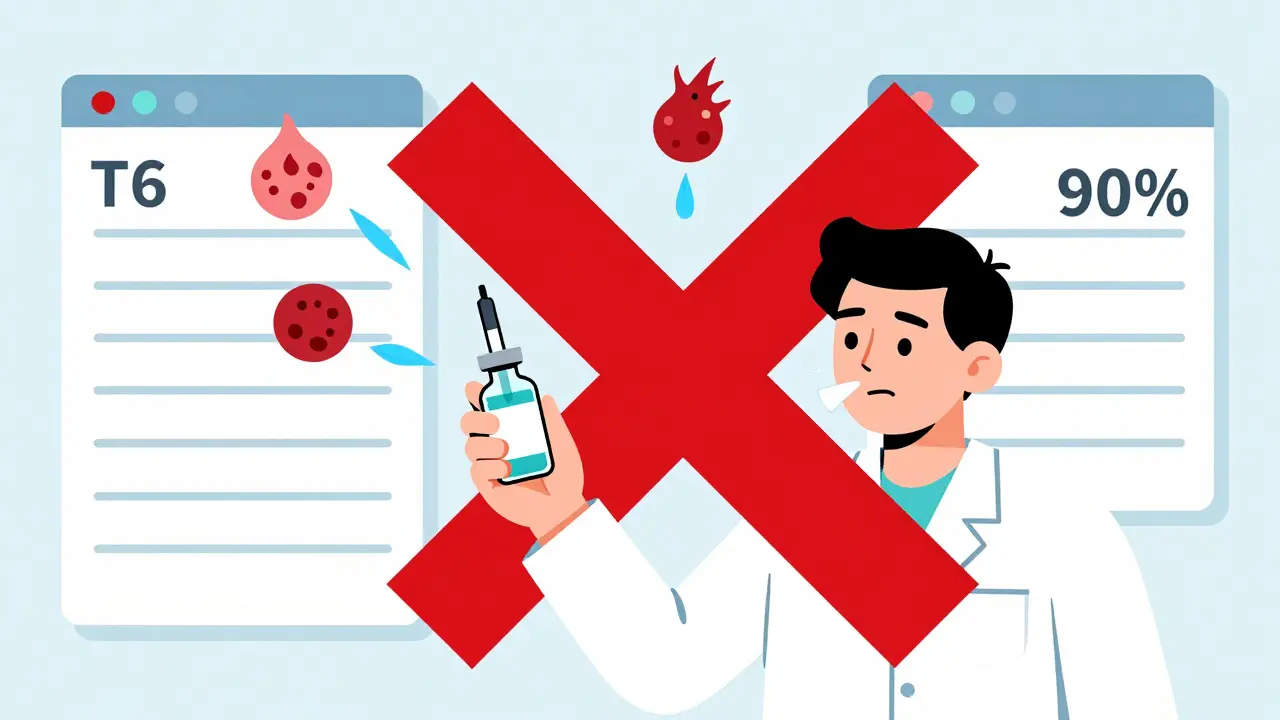

More than 10% of people in the U.S. say they’re allergic to penicillin. But here’s the twist: up to 90% of them aren’t. That’s not a typo. Most people who think they’re allergic to penicillin can safely take it again-after the right testing. The same goes for NSAIDs like ibuprofen or aspirin. Many think they’re allergic because they got a rash or felt nauseous after taking the drug. But those aren’t always true allergies. They’re side effects. And confusing them can cost you more than just a headache-it can mean being stuck with stronger, costlier, and riskier antibiotics when a simple penicillin would’ve worked just fine.
What’s Really Going On With Penicillin Allergies?
Penicillin is one of the most common drugs people claim to be allergic to. But here’s the problem: many of those labels were given decades ago, based on a rash that might’ve been a virus, not a drug reaction. Or maybe someone had a reaction once as a kid and was told to never take it again. No one ever tested it. No one ever rechecked.
True penicillin allergies involve the immune system. It’s not just a stomach ache or a mild rash. It’s hives, swelling, trouble breathing, or a drop in blood pressure-symptoms that show up within minutes to an hour after taking the drug. That’s called an immediate-type reaction. And yes, it can be life-threatening. But here’s the thing: skin testing for penicillin is highly accurate. If you get a negative result, the chance of a real reaction is less than 5%. That’s why doctors now recommend a simple challenge: give the patient a full dose of amoxicillin under observation. If nothing happens? You’re not allergic. You never were.
And yet, millions still avoid penicillin. Why? Because the label sticks. Hospitals, pharmacies, even EHRs keep the allergy flagged. So doctors give you vancomycin or clindamycin instead. Those drugs cost more, cause more side effects, and can lead to dangerous infections like C. diff. One study found patients labeled penicillin-allergic cost hospitals about $500 more per hospital stay. That’s not just a medical issue-it’s a financial one too.
NSAID Allergies Are Different
NSAIDs-like ibuprofen, naproxen, or aspirin-are trickier. A true NSAID allergy is rare. Most people who react to these drugs don’t have IgE-mediated reactions like with penicillin. Instead, they have something called NSAID-exacerbated respiratory disease (NERD) or NSAID-exacerbated cutaneous disease (NECD). Think asthma flare-ups after taking ibuprofen. Or hives that keep coming back every time you take Advil.
Unlike penicillin, there’s no skin test for NSAID allergies. The only way to confirm it is by doing a controlled challenge in a clinic. And if someone needs aspirin long-term-for heart disease, for example-they can’t just avoid it forever. That’s where desensitization comes in.
For NSAIDs, desensitization isn’t a one-time thing. It’s daily. You start with a tiny dose-30 mg of aspirin-and slowly increase it over hours. Once you reach the target dose, you keep taking it every day. The body adapts. The immune system stops reacting. You can stay on that dose indefinitely. That’s not possible with penicillin. With penicillin, you only get tolerance for the length of that one treatment. Stop the drug? You’re back to square one.
How Desensitization Actually Works
Desensitization sounds scary. You’re giving someone a drug they had a bad reaction to. But it’s not magic. It’s science. And it’s been used since the 1970s.
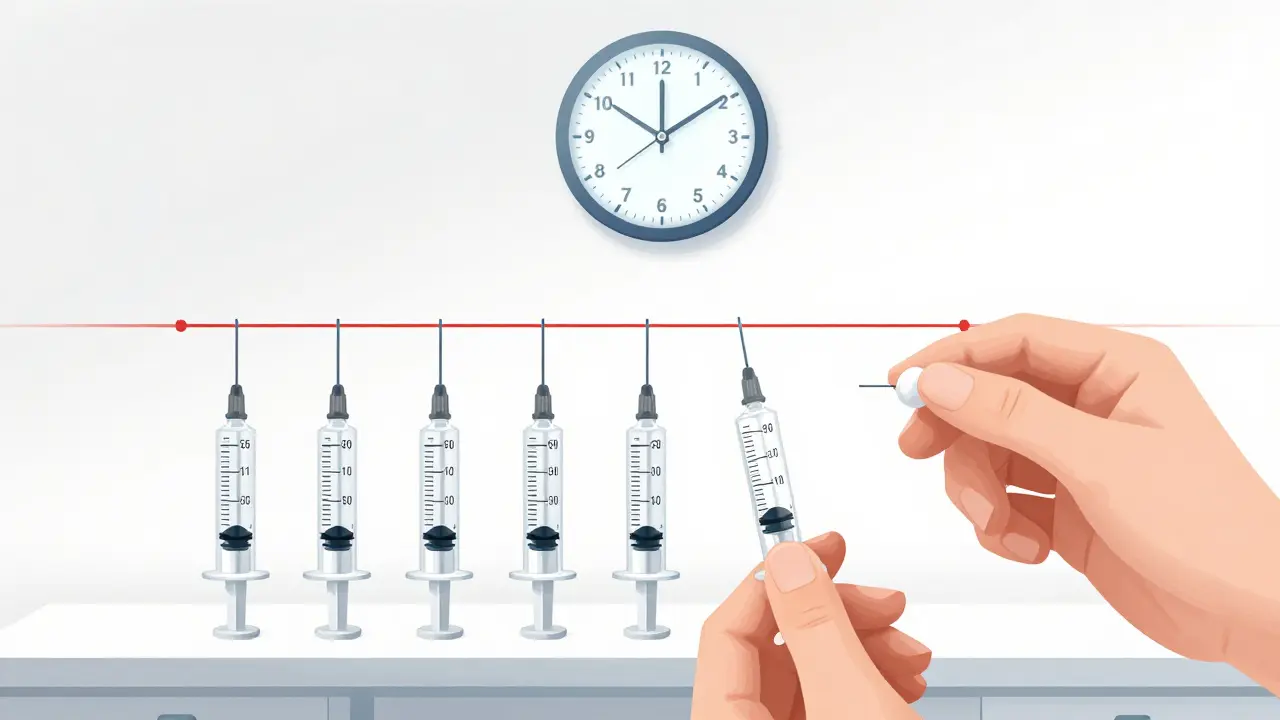
The idea is simple: give the drug in tiny, slowly increasing doses. Start with 1/10,000th of the full dose. Wait 15 to 20 minutes. If no reaction, double the dose. Keep going. By the end of 4 to 8 hours, you’ve given the full therapeutic dose. The immune system gets overwhelmed-not in a bad way, but in a way that temporarily shuts down its overreaction. It’s like resetting a faulty alarm.
For penicillin and other beta-lactams, there’s a standard 12-step protocol used at places like Brigham and Women’s Hospital. They prepare three solutions: one at full strength, one 10 times weaker, and one 100 times weaker. Each step uses a specific volume from one of these. It’s precise. It’s repeatable. And it works. Studies show over 95% of patients who go through this can complete the full course without a reaction.
For some drugs, like cefazolin or ceftriaxone, they’ve even sped it up. One protocol takes just 2 hours and 15 minutes. Doses triple every 15 minutes. No one’s had a major reaction in those trials. That’s huge for patients in urgent need-like someone with a severe infection who’s out of options.
But here’s the catch: you have to do this in a hospital. Or at least in a clinic with full resuscitation gear ready. Epinephrine on standby. Oxygen. IV lines. Because even though reactions are rare, they can happen. And if they do, you need to act fast. No one should ever try this at home.
Who Gets Desensitized-and Who Doesn’t?
Not everyone qualifies. There are strict rules.
- You must have a confirmed history of an immediate allergic reaction (hives, swelling, breathing trouble, low blood pressure).
- You must need the drug-no good alternatives exist.
- You must be stable. No active asthma flare, no heart problems, no uncontrolled seizures.
For example, a cancer patient on chemotherapy who’s allergic to a key drug? Desensitization can be lifesaving. A pregnant woman with syphilis who’s allergic to penicillin? Desensitization is the only safe way to treat her and protect the baby. A child with a severe ear infection who’s allergic to all other antibiotics? Desensitization might be their only path to recovery.
But if you just got a rash once and aren’t sure? You don’t need desensitization. You need testing. A skin test. A challenge. Then you might find out you’re fine.
And here’s something many don’t realize: desensitization doesn’t cure the allergy. It just turns it off-for that one treatment. If you need the drug again next year? You’ll have to go through the whole process again. That’s why some doctors hesitate. It’s time-consuming. It’s resource-heavy. But for the right patient? It’s worth every minute.
The Hidden Gaps: Kids, Guidelines, and Access
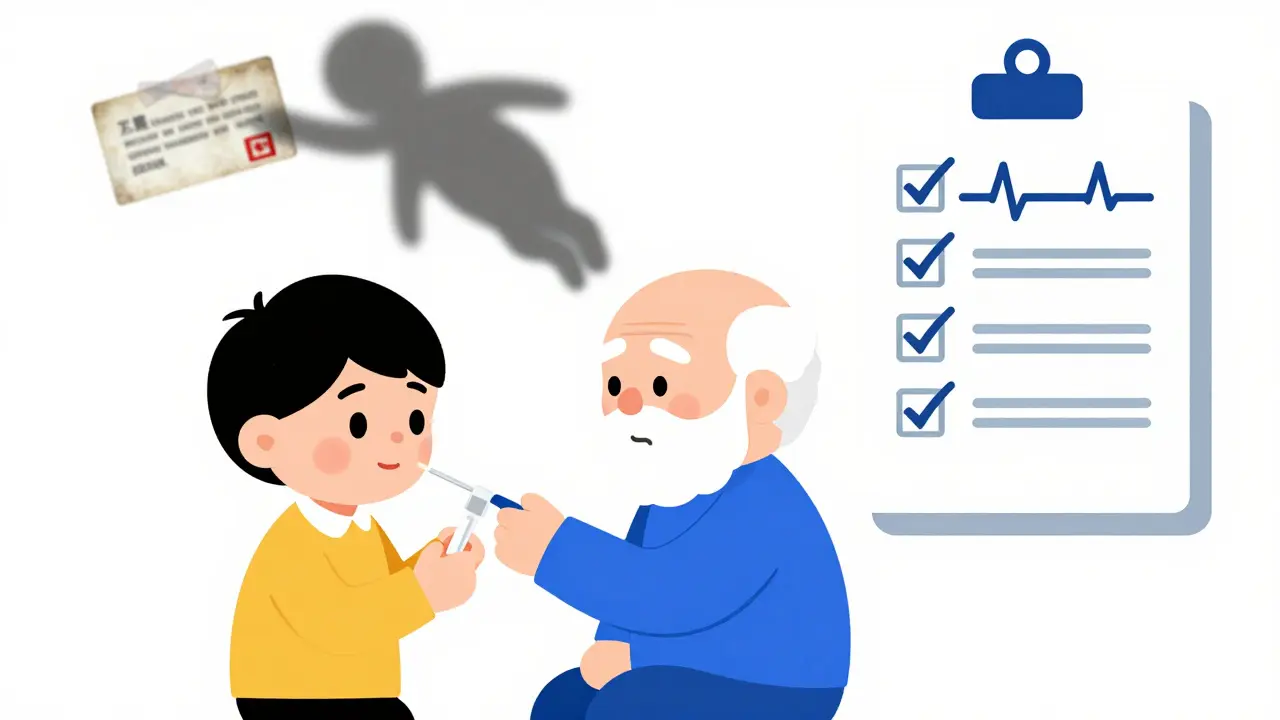
Most of the research on desensitization comes from adults. But kids need it too. A child with cystic fibrosis who’s allergic to their only effective antibiotic? A teen with meningitis who’s allergic to penicillin? These aren’t edge cases. They’re real. And right now, there’s no standardized pediatric protocol. Most centers just adapt adult rules-and that’s risky.
Also, not every hospital offers this. It’s mostly done in big academic centers. If you live outside a major city, you might have to travel hours just to get tested. And even then, not every allergist is trained in it. The learning curve is steep. You need to know how to read symptoms, how to adjust doses, how to handle emergencies. That’s why some clinics won’t do it. They don’t have the experience.
And yet, the demand is growing. As antibiotic resistance climbs, we need to use the right drugs-not just the safe ones. Penicillin is still the gold standard for many infections. Avoiding it because of a label that might be wrong? That’s outdated.
What Comes Next?
Experts agree: we need better guidelines. International standards. More training for allergists. More awareness for primary care doctors. And more access for patients outside big cities.
Right now, the best thing you can do if you think you’re allergic to penicillin or an NSAID? Get evaluated. Don’t just live with the label. Ask for a skin test. Ask for a challenge. Ask if desensitization is an option. It’s not just about avoiding drugs. It’s about getting the right ones. And sometimes, that means facing your fear-carefully, safely, and with expert help.


