
You take your morning medication, sip your coffee, and head out. It seems harmless enough. But what if that routine hides a dangerous secret? Every year, thousands of people end up in hospitals because of drug interactions that doctors and patients didn't know existed until it was too late. These aren't just theoretical risks; they are real-world dangers discovered only after millions of people have already taken the pills.
When we talk about drugs being 'safe,' we usually mean they passed clinical trials. But those trials are like small snapshots of reality. They involve a few thousand people, mostly healthy adults, taking the drug for a short time. Real life is messy. You might be older, sicker, or taking five other medications. That's where post-market surveillance comes in. It’s the system designed to catch these hidden dangers after a drug hits the shelves.
Why Clinical Trials Miss the Danger
To understand why interactions slip through the cracks, you have to look at how drugs are tested before approval. Clinical trials are rigorous, but they are also limited. A typical trial involves between 1,000 and 5,000 participants. That sounds like a lot, but compared to the millions who eventually use the drug, it’s a drop in the ocean.
More importantly, these trials exclude many groups. Children, pregnant women, and the elderly are often left out. People with multiple health conditions-like diabetes, heart disease, and high blood pressure-are rarely included because researchers want to isolate the drug's effect on one specific issue. If you don't test a new heart pill on someone who also takes antidepressants and antibiotics, you won't see how they clash.
The duration is another blind spot. Most trials last six to twelve months. Many dangerous interactions only show up after years of use. For example, the risk of valvular heart disease from benfluorex (sold as Mediator) wasn't spotted until after five million patients had used it for thirty years. By then, the damage was done. This gap between controlled testing and chaotic real-world usage is exactly why post-market monitoring exists.
How We Spot Hidden Risks After Approval
Once a drug is approved, the job shifts from proving it works to watching for harm. This process is called pharmacovigilance. In the United States, the Food and Drug Administration (FDA) runs the FDA Adverse Event Reporting System (FAERS). Launched in its modern form in 2012, FAERS collects reports from doctors, patients, and manufacturers about bad reactions.
It’s not perfect. The FDA estimates that 90% to 95% of adverse events go unreported. Patients often assume side effects are normal or forget to mention them. Doctors are busy. But even with underreporting, the sheer volume of data helps. The FDA’s Sentinel Initiative, launched in 2008, now monitors over 300 million patient records across 18 healthcare partners. It uses automated tools to scan for patterns that human reviewers might miss.
In Europe, the European Medicines Agency (EMA) runs EudraVigilance, which analyzes over 2.1 million annual reports. Since a 2017 upgrade, it uses artificial intelligence to recognize patterns faster. These systems don’t just wait for complaints; they actively hunt for signals. If more people than expected report liver failure while taking Drug A and Drug B together, an alarm goes off.
| Feature | Pre-Market Clinical Trials | Post-Market Surveillance |
|---|---|---|
| Population Size | 1,000 - 5,000 participants | Millions of users |
| Demographics | Narrow (healthy, single condition) | Broad (elderly, comorbidities, all ages) |
| Duration | 6 - 12 months typically | Years or decades of use |
| Interaction Detection | 50-60% of common reactions | 70-80% of serious reactions |
| Primary Goal | Efficacy and basic safety | Rare and long-term risks |
Real-Life Examples of Dangerous Interactions
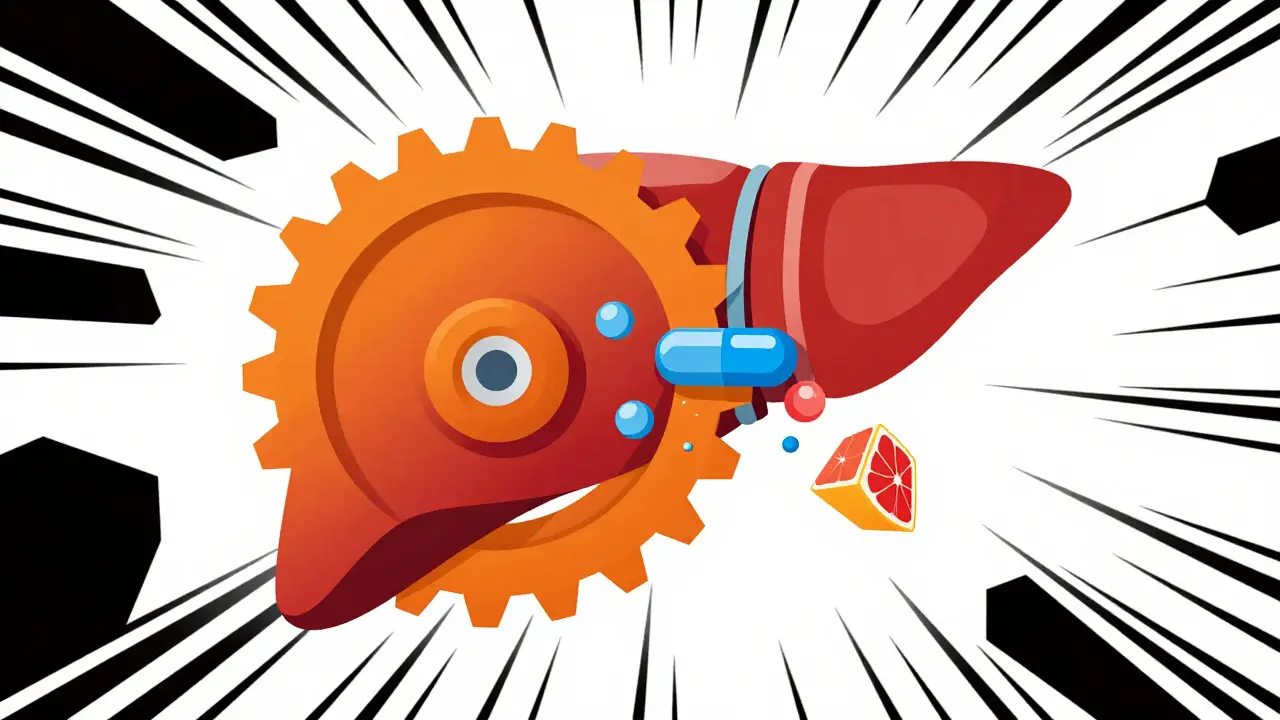
Let’s look at some specific cases where post-market surveillance saved lives-or failed to do so in time. One of the most well-known mechanisms involves cytochrome P450 enzymes. These are proteins in your liver that break down drugs. If one drug blocks these enzymes, another drug can build up to toxic levels.
Take simvastatin (Zocor), a common cholesterol medication. When combined with fluconazole (Diflucan), an antifungal, fluconazole inhibits the CYP3A4 enzyme. This causes simvastatin levels in the blood to spike by 3 to 10 times. The result? Rhabdomyolysis, a condition where muscle tissue breaks down and floods the kidneys with toxins, potentially causing kidney failure. Data from FAERS between 2015 and 2020 showed 2,847 reports of rhabdomyolysis linked to statin-drug interactions, with simvastatin-azole combinations making up 37% of those cases.
Food can be just as dangerous as other drugs. Grapefruit juice blocks the same CYP3A4 enzymes that metabolize atorvastatin (Lipitor). According to a 2023 analysis by GoodRx, drinking grapefruit juice can raise atorvastatin levels by up to 15-fold. I’ve heard stories from patients who thought a glass of juice was harmless, only to end up in the emergency room with severe muscle pain and kidney damage. It’s a stark reminder that 'natural' doesn't always mean safe when mixed with prescription meds.
Another tragic example is terfenadine (Seldane), an antihistamine withdrawn from the market. When taken with ketoconazole, it caused fatal heart arrhythmias. This interaction wasn't fully understood until after widespread use, leading to deaths that could have been prevented with better early warning systems. Today, such errors are less common, but they still happen. In 2022, a 78-year-old patient reported life-threatening bleeding after starting apixaban (Eliquis) while continuing St. John’s Wort, an herbal supplement not adequately highlighted in initial labeling.
What Happens When a Risk Is Found?
When regulators find a significant interaction, they don’t just shrug. They act. The severity of the action depends on the risk. Sometimes, it’s a simple update to the drug’s label, adding a warning box. Other times, it’s a Black Box Warning-the strongest warning the FDA can issue. According to a 2020 study, nearly 20% of new medications received a black box warning after market launch.
In extreme cases, the drug is pulled from the market entirely. About 4% of new drugs are removed due to safety concerns. Pergolide, a Parkinson’s disease drug, was withdrawn in 2007 after it was linked to cardiac valve problems. Benfluorex was pulled in France in 2009. These withdrawals are rare but devastating for patients who relied on them.
Most often, the response is a Risk Evaluation and Mitigation Strategy (REMS). This requires doctors to get special certification before prescribing the drug, or mandates that patients sign acknowledgment forms. The goal is to ensure that anyone taking the drug knows the risks and has their interactions checked regularly.
How You Can Protect Yourself
You don’t need to be a pharmacist to stay safe. Here are practical steps you can take today:
- Use one pharmacy. If all your prescriptions come from the same place, the pharmacist’s computer system will automatically flag potential interactions. Splitting prescriptions between different pharmacies increases the chance of missing a conflict.
- Tell your doctor everything. This includes over-the-counter drugs, vitamins, and herbal supplements. St. John’s Wort, garlic pills, and even cranberry juice can interact with prescription meds. Don’t assume natural means inert.
- Ask about food interactions. Before you buy that bottle of grapefruit juice or start a new diet, ask your pharmacist if it affects your current medications. Some drugs require you to avoid dairy, alcohol, or tyramine-rich foods like aged cheeses.
- Check online resources. Tools like the FDA’s Drug Interaction API or apps like GoodRx allow you to type in your medications and see potential conflicts. While not a substitute for professional advice, they’re great for quick checks.
- Watch for symptoms. If you start feeling unusually tired, notice muscle pain, experience bleeding, or feel dizzy after starting a new med, don’t ignore it. Call your doctor immediately. Early detection can prevent hospitalization.
The Future of Drug Safety Monitoring
Technology is changing how we catch these risks. In January 2023, the FDA approved the first AI-powered pharmacovigilance platform from Oracle Health Sciences. It can process 10,000 adverse event reports daily with 92.7% accuracy. The EMA’s new guidelines incorporate machine learning algorithms that have reduced signal detection time from 18 months to just 45 days in pilot studies.
Genomics is also playing a bigger role. The NIH’s Pharmacogenomics Research Network-2 (PGRN-2) analyzes genetic factors in over 15,000 drug interaction cases. Some people are genetically predisposed to metabolizing drugs slowly, making them more susceptible to toxicity. In the future, your DNA profile might determine which drugs are safe for you, moving us toward truly personalized medicine.
Despite these advances, challenges remain. Underreporting is still huge. Standardization of drug labels is lacking. And as the Duke University Health Policy paper noted, without better communication, preventable adverse events may continue to account for 3-5% of hospital admissions. The technology is there, but we need better integration into everyday care.
Post-market drug interactions are a sobering reality. They remind us that science is never finished. A drug approved today might reveal a flaw tomorrow. But thanks to systems like FAERS and EudraVigilance, we’re getting better at catching these flaws before they cause widespread harm. Stay informed, talk to your providers, and never underestimate the power of asking questions.
What is post-market surveillance?
Post-market surveillance (PMS) is the ongoing monitoring of a drug's safety and efficacy after it has been approved and released to the public. It aims to detect rare, long-term, or unexpected side effects and drug interactions that were not identified during pre-approval clinical trials due to smaller sample sizes and shorter durations.
Why do drug interactions happen after a drug is approved?
Clinical trials typically involve 1,000-5,000 healthy participants with single conditions, excluding elderly patients or those with multiple comorbidities. Real-world patients often take multiple medications, have complex health histories, and use drugs for longer periods, creating scenarios where interactions emerge that weren't visible in controlled trials.
How does the FDA track adverse drug reactions?
The FDA uses the FDA Adverse Event Reporting System (FAERS) to collect reports from healthcare professionals, consumers, and manufacturers. Additionally, the Sentinel Initiative analyzes electronic health records from over 300 million patients across 18 data partners to identify safety signals automatically.
Can food interact with prescription medications?
Yes, significantly. Grapefruit juice, for example, inhibits CYP3A4 enzymes in the liver, which can increase blood levels of drugs like atorvastatin (Lipitor) by up to 15-fold, raising the risk of toxicity. Other foods like dairy, aged cheeses, and alcohol can also interfere with certain medications.
What happens when a serious drug interaction is discovered?
Regulatory agencies may issue updated warnings, add Black Box Warnings to the label, require Risk Evaluation and Mitigation Strategies (REMS), or withdraw the drug from the market entirely. Approximately 20% of new drugs receive black box warnings post-marketing, and 4% are withdrawn due to safety concerns.
How can patients protect themselves from unknown drug interactions?
Patients should use a single pharmacy for all prescriptions to enable automatic interaction checks, disclose all supplements and OTC drugs to their provider, ask specifically about food interactions, utilize online interaction checkers, and monitor for new symptoms after starting any medication.
Is AI improving drug safety monitoring?
Yes. AI platforms like those approved by the FDA in 2023 can process thousands of adverse event reports daily with high accuracy. Machine learning algorithms used by the EMA have reduced signal detection times from 18 months to 45 days, allowing for faster identification and response to emerging safety risks.