
Imagine a team of federal investigators walking through your manufacturing floor. They aren't just looking around; they are scrutinizing every record, interviewing staff, and checking equipment calibration logs to see if you meet strict federal standards. This is an FDA facility inspection, defined as a careful, critical, official onsite examination of a facility to determine its compliance with federal law. For companies in the pharmaceutical, medical device, biologic, and food sectors, these inspections are not optional-they are mandatory checkpoints that ensure the safety and quality of products reaching consumers.
The U.S. Food and Drug Administration (FDA) conducts roughly 12,000 domestic and 1,000 foreign facility inspections annually. But why do they target some sites more often than others? And what exactly happens when those inspectors arrive? Understanding this process is crucial for any organization hoping to avoid warning letters or production halts.
Why Your Facility Gets Inspected: The Risk-Based Model
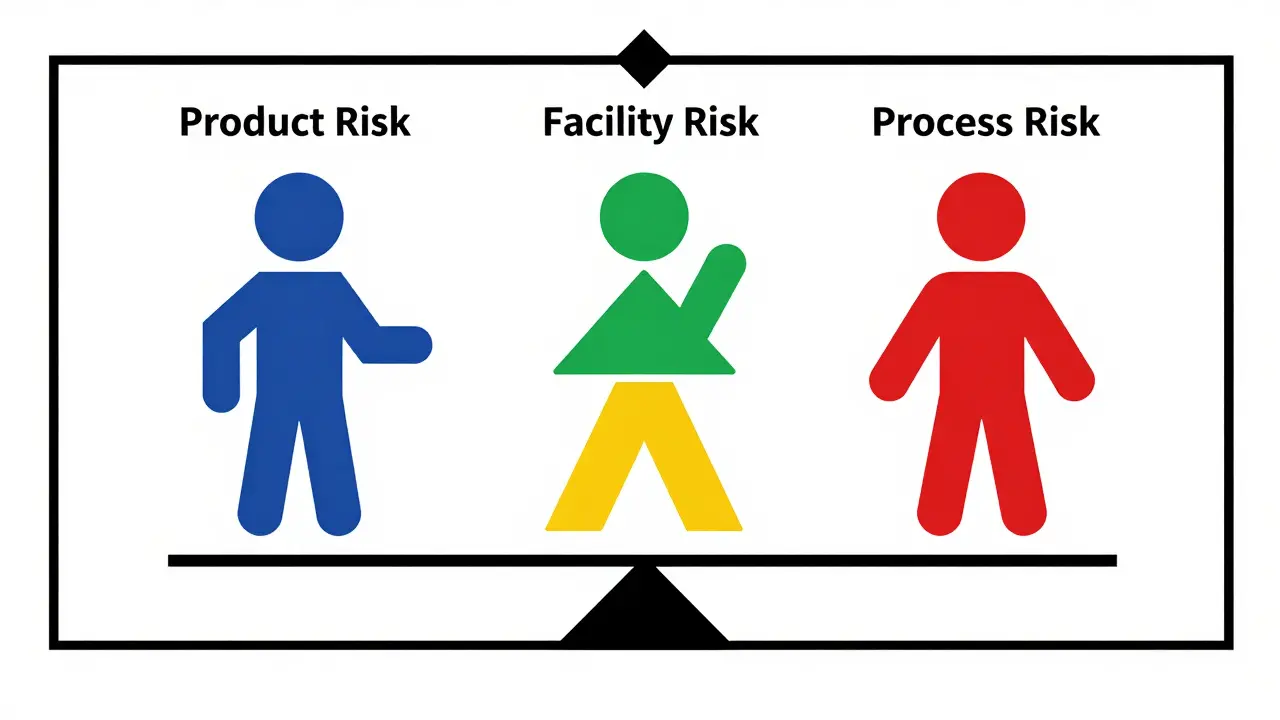
You might wonder, "Will the FDA come to my site next month?" The answer depends on a sophisticated risk-based model. Since 2019, the FDA has used a multi-criteria decision analysis tool to prioritize which sites need attention. They don't inspect everyone randomly. Instead, they look at three main buckets of risk:
- Product Risk: Does your product treat serious conditions? Is it for vulnerable populations like infants or the elderly? High-risk products get higher scrutiny.
- Facility Risk: Do you have a history of violations, recalls, or previous poor performance during inspections?
- Process Risk: Are you using novel manufacturing approaches or new technologies that haven't been fully validated yet?
If your facility scores high on these factors, you could be inspected every 6 to 12 months. Lower-risk sites might go 3 to 5 years between visits. According to the FDA's Office of Regulatory Affairs (ORA) Inspection Dashboard updated in March 2024, this targeted approach allows the agency to focus its limited resources-about 900 field investigators across 21 district offices-where they matter most.
The Four Types of FDA Inspections
Not all inspections are created equal. Knowing which type you are facing helps you prepare better. The FDA categorizes them into four distinct types:
- Routine Surveillance Inspections: These are periodic checks based on your risk profile. They happen without specific triggers other than time elapsed since the last visit.
- Pre-Approval Inspections (PAI): Conducted before a new product gets approved. For example, after you submit a Pre-Market Approval (PMA) application, the FDA will inspect your facility within 30 days of determining it is ready. This ensures your Current Good Manufacturing Practice (CGMP) systems can actually produce the product as described.
- Compliance Follow-Up Inspections: If you had issues in the past, the FDA returns to verify you fixed them. You can't move forward until these are resolved.
- For-Cause Inspections: These are unannounced and triggered by specific evidence. Think confidential informant tips, a sudden spike in consumer complaints, or adverse event reports. There is no notice here.
What Happens During the Inspection: A Step-by-Step Look
When the inspectors arrive, the clock starts ticking. Here is how the typical process unfolds, based on protocols outlined in FDA guidance documents from 2023 and 2024.
Day 1: Arrival and Introduction
The investigators present their credentials and hand you FDA Form 482, the "Notice of Inspection." This is mandated by 21 CFR 10.20. They will ask for a designated facility representative to accompany them throughout the visit. This person acts as a liaison, ensuring questions are answered accurately and documents are retrieved efficiently.
The Tour and Interviews
Inspectors walk the facility. They look for housekeeping issues, proper labeling, and general orderliness. But the real work happens in the records room. They review deviation reports, non-conformance reports, equipment qualification docs, and process validation records. They also interview personnel. Be careful here-inconsistent answers from different staff members about the same procedure is a major red flag. In fact, a survey on the Biotechnology Innovation Organization (BIO) forum found that 42% of facilities struggled with staff providing inconsistent answers.
Document Review
This is where most observations stem from. Inspectors may request hundreds of documents. If you have a "runner system"-a dedicated team member whose only job is to fetch documents-you’ll likely finish faster. Facilities using this method completed inspections 22% faster on average, according to a 2023 Medical Device Manufacturers Association survey.
Closing Meeting
At the end of the inspection, which can last 3 to 10 days depending on complexity, investigators discuss significant findings. If they found objectionable conditions, they issue FDA Form 483. You have 15 working days to respond to this form. This response is critical-it sets the stage for whether you receive a Warning Letter later.
Top Reasons for Failure: Data Integrity and Documentation
So, what causes facilities to fail? It’s rarely because the product itself is bad. It’s usually because the paperwork doesn’t prove the product is good. Dr. Rebecca Wang, Director of the Center for Devices and Radiological Health, noted in February 2024 testimony that data integrity concerns now account for 45% of all inspection observations. That’s up from 28% in 2020.
Why the jump? The FDA is cracking down on electronic records under 21 CFR Part 11 requirements. They want to ensure computer systems are validated and that data cannot be easily altered or deleted. Michael Halpern, a former FDA district compliance officer, analyzed inspection data and found that 78% of observations stem from just four documentation deficiencies:
| Deficiency Area | Percentage of Observations | Key Issue |
|---|---|---|
| Inadequate Deviation Investigations | 32% | Failing to root-cause analyze errors properly |
| Incomplete Training Records | 24% | Staff not trained on current SOPs |
| Insufficient Validation Documentation | 15% | Lack of proof that processes work consistently |
| Poor Change Control Records | 7% | Unapproved changes to materials or methods |
If your deviation investigations are weak, the FDA assumes your quality system is broken. You must show that when things go wrong, you find out why, fix it, and prevent recurrence.
How to Prepare: A 30-Day Readiness Plan
Don't wait for the knock on the door. Preparation should be ongoing, but if you suspect an inspection is coming, follow this timeline recommended by the University of Iowa's Human Subjects Office FDA Site Inspection Guide (updated January 2024).
- Days 1-5: Document Review. Audit your own files. Ensure all batch records, training logs, and validation reports are complete and accessible. Check that your facility diagram is updated within 7 days of any layout change-inspectors notice discrepancies immediately.
- Days 6-15: Staff Training and Mock Inspections. Run a mock inspection. Have internal auditors play the role of FDA investigators. Train all staff on how to answer questions honestly and direct complex queries to the inspection coordinator. The FDA recommends 8 hours of inspection-specific training annually for interacting staff.
- Days 16-25: Facility Walkthroughs and Housekeeping. Clean up. Remove clutter, ensure labels are correct, and make sure restricted areas are secured. A messy facility distracts from process evaluations and signals poor control.
- Days 26-30: Final Readiness Verification. Set up your inspection support room. Equip it with printers, computers, phones, and document management systems. Facilities using this approach resolved document requests 40% faster during 2023 inspections.
Designate a single inspection coordinator. An 83% success rate was reported by facilities that did this, compared to those with multiple points of contact. One voice keeps the communication clear and consistent.
Looking Ahead: Remote Assessments and AI
The landscape of FDA inspections is changing. The FDA's 2024 Strategic Plan projects a 35% increase in remote assessment tools by 2026. We’re talking about virtual facility tours and remote document reviews. Pilots in 2022-2023 showed these methods were effective for 78% of documentation review items.
Additionally, the FDA's 2024-2027 Inspection Modernization Initiative plans to implement AI-assisted document review systems by Q3 2025. While this might sound futuristic, it means the agency will use technology to spot anomalies in your data faster than ever. If your data integrity isn't solid, AI will find it.
For high-risk product manufacturers, especially those serving geriatric populations, expect an 18% increase in inspection frequency through 2026, according to Gartner's January 2024 report. Low-risk dietary supplement manufacturers might see a 12% decrease, but don't get complacent. The FDA's net is tightening, not loosening.
FAQ: Common Questions About FDA Inspections
How far in advance does the FDA notify you of an inspection?
For routine surveillance inspections, the FDA typically provides 5 business days' notice. However, for "for cause" inspections triggered by safety concerns or tips, there is often no notice whatsoever. Pre-approval inspections are scheduled closer to the submission date, usually within 30 days of the FDA determining the facility is ready.
What is FDA Form 483 and how long do I have to respond?
Form 483 is a written report issued by FDA investigators at the conclusion of an inspection listing observed objectionable conditions. It is not a final regulatory action but a serious warning. You must provide a written response within 15 working days. This response should detail your corrective actions and preventive measures. Failing to respond adequately can lead to a Warning Letter.
Can the FDA refuse entry to my facility?
No. Under the Federal Food, Drug, and Cosmetic Act, the FDA has the legal authority to inspect facilities upon presentation of credentials and Form 482. Refusing entry is considered refusal of inspection and can result in severe penalties, including injunctions, seizure of products, or criminal prosecution. Always allow access, but ensure you have a designated representative present.
How does data integrity affect inspection outcomes?
Data integrity is currently the top concern for the FDA, accounting for 45% of inspection observations. This includes ensuring electronic records are accurate, complete, and contemporaneous. Issues like unauthorized deletions, lack of audit trails, or unvalidated computer systems under 21 CFR Part 11 can lead to major observations. The FDA views data integrity as foundational to proving product quality.
What is the difference between a Warning Letter and a Form 483?
A Form 483 is issued on-site by investigators and lists immediate observations. It gives you 15 days to respond. A Warning Letter is issued later by the FDA headquarters if your response to the Form 483 is inadequate or if the violations are severe. Warning Letters are public, carry heavier legal weight, and can block product approvals or exports. In 2023, the FDA issued 1,842 warning letters following inspections.
Should I hire a consultant for FDA inspection preparation?
While not mandatory, hiring a consultant with former FDA experience can be highly beneficial, especially for first-time inspections or complex facilities. Experts can conduct realistic mock inspections, identify blind spots in your documentation, and train staff on how to handle inspector interactions. Greenlight Guru’s analysis shows that facilities with formal readiness programs reduced observation rates by 63%.