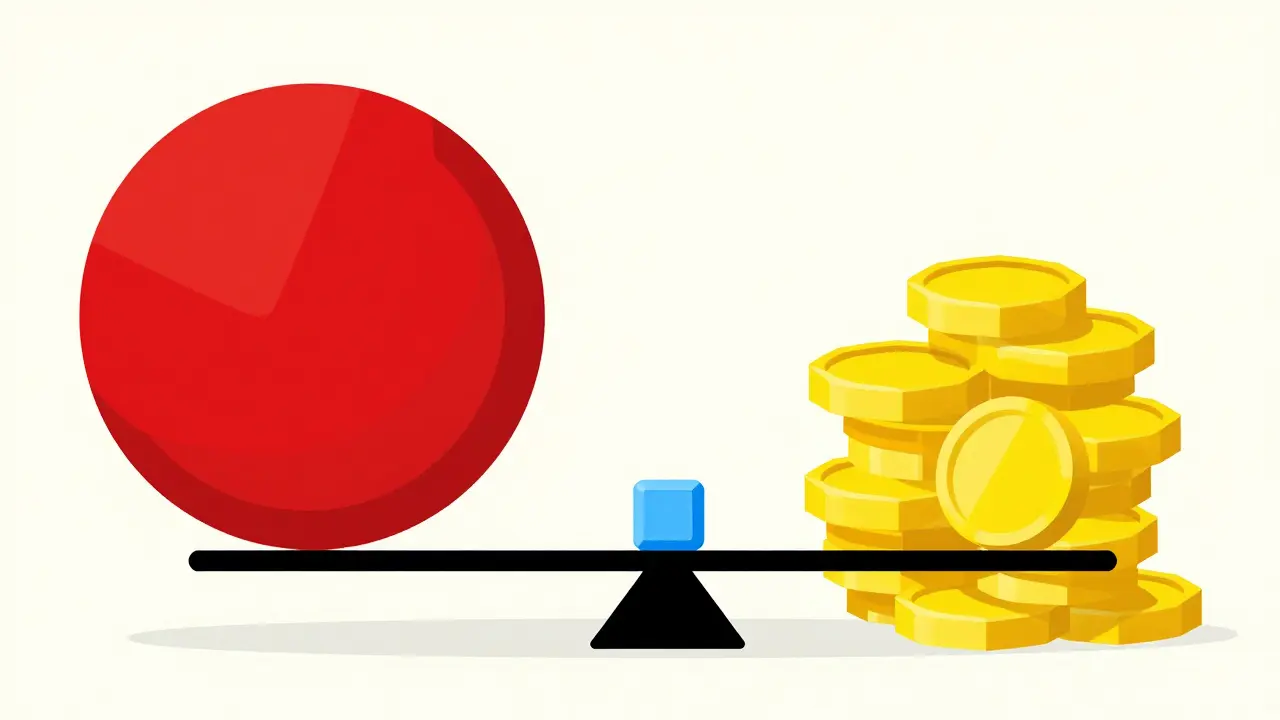

The numbers are honestly staggering. In 2024 alone, generic and biosimilar medications saved American patients and the healthcare system about $467 billion. If you look at the bigger picture, from 2015 to 2024, the cumulative savings hit $3.4 trillion. To put that in perspective, these drugs are the primary reason why the cost of treating chronic conditions hasn't spiraled completely out of control. They act as a financial safety valve, creating the "headroom" needed for the system to afford new, innovative breakthrough treatments.
The Massive Gap Between Volume and Spend
One of the weirdest things about the U.S. pharmacy market is the disparity between how many generics we use versus how much we pay for them. In 2024, generics accounted for over 90% of all prescriptions filled-that's nearly 4 billion prescriptions. Yet, they only made up 12% of the total spending on prescription drugs.
Think about that: 90% of the volume, but only 12% of the cost. While Americans spent $98 billion on generic medicines, they poured $700 billion into brand-name drugs. This happens because once a patent expires, multiple companies enter the market, driving prices down through sheer competition. It's the classic economic rule of supply and demand, and it's the only thing keeping many patients from abandoning their treatment due to cost.
| Metric | Brand-Name Drugs | Generic Medications |
|---|---|---|
| % of Total Prescriptions | ~10% | 90.2% |
| Total Spending | $700 Billion | $98 Billion |
| % of Total Spend | 88% | 12% |
The Legal Engine: The Hatch-Waxman Act
This whole system didn't happen by accident. It was built on the back of the Hatch-Waxman Act is a 1984 law that established the regulatory pathway for generic drug approval while balancing patent protections for innovator drugs. This law basically created a deal: brand-name companies get a period of exclusivity to recoup their research and development costs, but after a certain point, generic companies can enter the market without repeating every single clinical trial. This balance is what allows us to have high-tech innovation without paying brand-name prices forever.
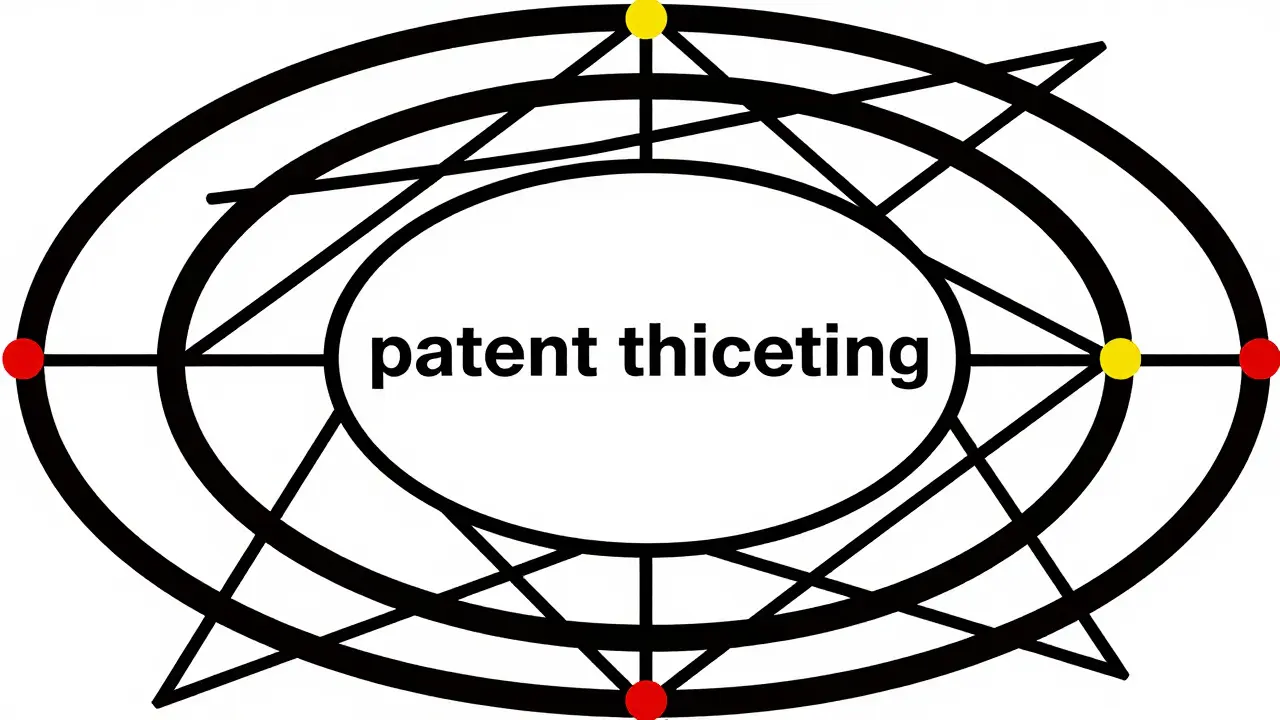
However, the system isn't perfect. Some "Big Pharma" companies use a tactic called "patent thicketing," where they file dozens of minor patents on a drug to keep generics off the market longer. A recent study found that this practice cost taxpayers and patients over $3.5 billion over just two years for only four widely used drugs. It's a game of legal cat-and-mouse that keeps prices high even when the original patent should have expired.
The New Frontier: Biosimilars
While traditional generics are simple chemical copies, biosimilars are highly similar versions of complex biological medicines made from living organisms. Because biologics are much harder to copy than a simple pill, biosimilars took longer to hit the market. But they are now becoming a huge deal for savings, especially for expensive treatments like those for cancer or autoimmune diseases.
Since the first biosimilar entered the U.S. market in 2015, they've generated $56.2 billion in cumulative savings. In 2024 alone, they contributed $20.2 billion. Because biologic drugs are among the most expensive in the world, the introduction of a biosimilar can drop the price of a treatment by thousands of dollars per dose, which is a literal lifesaver for patients with chronic illnesses.
Real-World Impact: Patient Experiences and Barriers
If you scroll through forums like Reddit, you'll find thousands of stories from people who switched from a brand-name drug to a generic and saw their monthly bill drop from $800 to $10. For many, this is the difference between staying healthy and going into debt. In one survey, nearly 90% of patients who switched to generics reported being satisfied with both the cost and the efficacy.
But it's not always a smooth ride. Some patients worry about "therapeutic equivalence," wondering if the cheaper version works as well. While the FDA requires generics to be bioequivalent, some people perceive differences in how the drug feels or works. More frustratingly, some insurance plans use "formulary design" to steer patients toward more expensive brand-name drugs because of the rebates the insurance company gets from the manufacturer. This is a systemic failure where the patient pays more, but the middleman profits.
Who Actually Saves the Money?
When we talk about "trillions in savings," it's important to ask who is actually keeping that money. A huge chunk goes to government programs. In 2024, Medicare is the federal health insurance program for people 65 or older and certain younger people with disabilities saw $142 billion in savings, while Medicaid is a joint federal and state program that helps with medical costs for some people with limited income saved $62.1 billion. This means that without generics, our taxes would likely be much higher to cover the cost of public health.
Private companies, specifically Pharmacy Benefit Managers (PBMs) are third-party administrators of prescription drug programs that negotiate prices with pharmacies and drug makers , also play a role. For example, Express Scripts reported $18.3 billion in savings through generic substitution in 2023. The problem is that these savings don't always reach the patient's pocket due to opaque pricing structures and co-pay requirements.
The Future: What's Next for Drug Pricing?
Looking ahead, the potential for more savings is huge. The FDA approved 1,145 generic drugs in 2024, and we're seeing a shift toward "specialty generics," which include complex inhalers and injectables. There's also new legislation, like the Affordable Prescriptions for Patients Act, aiming to stop patent abuse. If these laws pass, we could see another $7.2 billion in annual savings.
However, we have to watch out for drug shortages. As the market for generics becomes more consolidated-with the top 10 manufacturers now controlling 63% of the market-the system becomes more fragile. If one major factory has a problem, thousands of patients lose access to their medication. The goal for the next decade is to find a balance: keeping prices low through competition while ensuring we have enough diverse manufacturers to keep the supply chain stable.
Is a generic drug exactly the same as a brand-name drug?
Yes, in terms of the active ingredient. The FDA requires generic drugs to be bioequivalent to the brand-name version, meaning they have the same active ingredient, strength, dosage form, and route of administration. They may have different "inactive" ingredients (like binders or dyes), which is why some people report slight differences in how they feel, but the therapeutic effect is designed to be the same.
Why are some generics still expensive?
This usually happens for two reasons. First, if only one or two companies make a specific generic, there isn't enough competition to drive the price down. Second, some insurance plans have "tiered formularies" where they might prefer a specific brand-name drug because of a rebate deal with the manufacturer, making the generic more expensive or harder for the patient to access via co-pays.
What is the difference between a generic and a biosimilar?
Generics are copies of simple chemical drugs (small molecules). Biosimilars are copies of biologic drugs, which are made from living cells and are much larger and more complex. Because you can't perfectly "copy" a living organism, biosimilars are "highly similar" rather than identical, though they are proven to provide the same clinical result.
How does "patent thicketing" affect my medication cost?
Patent thicketing is when a company files many overlapping patents to extend their monopoly over a drug. This prevents generic competitors from entering the market even after the main patent expires. This lack of competition keeps prices high for years longer than they should be, costing the healthcare system billions.
Can I ask my doctor to switch me to a generic?
Absolutely. In most cases, you can ask your healthcare provider if a generic alternative is available and appropriate for your condition. Most doctors are happy to switch to a generic to help you save money, provided there isn't a specific medical reason why you need the brand-name version.
Next Steps for Patients and Providers
If you're looking to reduce your medication costs, start by reviewing your current prescriptions with your pharmacist. Ask specifically if there is a generic or biosimilar version available. If your insurance is blocking a generic, ask for a "formulary exception" or check if a different pharmacy is offering a lower cash price through a discount program.
For healthcare providers, the focus should be on "generic-first" prescribing. By prioritizing generics in the initial prescription phase, you can help patients avoid the "sticker shock" that leads to prescription abandonment, ensuring better long-term health outcomes for your patients.


