
You might think your doctor knows everything you take. You hand over the prescription slip, maybe mention that aspirin you pop for headaches, and walk away feeling safe. But here is the hard truth: adverse drug events are harmful reactions caused by medications that lead to injury or death kill over 100,000 people in the United States every year. A huge chunk of these tragedies happens because providers simply don't know what else is in your system. When you see multiple specialists, or even just your primary care doctor and a dentist, information gets lost in the shuffle. The good news? You hold the power to stop this. By sharing a complete, accurate medication list, you can slash the risk of dangerous interactions by up to 50%.
The Hidden Danger of Polypharmacy
We need to talk about polypharmacy is the concurrent use of five or more medications by a single patient. It sounds technical, but it’s incredibly common. If you are over 65, there is a 40% chance you are taking at least five prescription drugs. That number jumps when you add in the ibuprofen for back pain, the fish oil from the health food store, and the St. John's Wort for mood support. Each new pill adds another link to the chain, and each link increases the chance of a collision.
Drug interactions aren’t just about two prescriptions canceling each other out. They happen when:
- Drug-drug interactions: One medication changes how your body processes another, making it too strong or too weak.
- Drug-supplement interactions: Herbs like garlic or ginkgo biloba can thin your blood, which is disastrous if you are also on warfarin.
- Drug-food interactions: Grapefruit juice doesn’t just taste sweet; it blocks enzymes that break down statins, leading to toxic levels in your bloodstream.
The Agency for Healthcare Research and Quality found that proper medication list sharing reduces these adverse events by 35-50%. That is not a small margin. It is the difference between a routine check-up and an emergency room visit.
Building Your Master Medication List
A sticky note with "blood pressure pill" written on it is not enough. To be effective, your list needs to be forensic in its detail. The Institute for Safe Medication Practices has clear guidelines, but let’s translate them into something you can actually do today. For every item you ingest-whether it requires a prescription or not-you need to record specific attributes.
| Component | Why It Matters | Example Entry |
|---|---|---|
| Name (Brand & Generic) | Prevents confusion between similar-sounding drugs. | Lisinopril (Zestril) |
| Dosage Strength | Ensures the provider knows the potency. | 10 mg |
| Frequency & Timing | Reveals potential overlaps or missed doses. | Once daily, morning with food |
| Indication (Reason) | Helps doctors identify duplicate therapies. | Hypertension (High Blood Pressure) |
| Prescriber | Clarifies who to contact for changes. | Dr. Smith, Cardiology |
| Allergies & Reactions | Critical for avoiding life-threatening responses. | Penicillin - causes hives |
Do not forget the "invisible" meds. Over-the-counter (OTC) products contribute to 30% of serious drug interactions. If you take Tylenol Extra Strength, write down "Acetaminophen 500 mg." If you take Vitamin D, note "Vitamin D3 2000 IU." These seem harmless, but they change how your liver works. The Merck Manuals emphasize that listing the condition each drug treats helps providers spot redundancy. For instance, if you are seeing three doctors and all three prescribe different NSAIDs for pain, only one of them should know about the others without you telling them.
Paper vs. Digital: Choosing Your Format
How you carry this list matters as much as what is in it. There is no single perfect method, but combining approaches yields the best results. Let’s look at the data on accuracy and accessibility.
The Wallet Card Method: Keep a printed card in your wallet. Studies show paper lists have a 62% accuracy rate in emergencies. Why isn’t it higher? Because people forget to update them. However, in a crash or sudden illness where your phone is inaccessible, a physical card is your lifeline. Update this monthly.
Digital Health Apps: Smartphone apps like Medisafe or MyMeds boast 78% accuracy. They send reminders and allow you to snap photos of bottles. But here is the catch: 23% of adults over 65 do not own smartphones (Pew Research Center). If you rely solely on an app, ensure your family knows the password. Also, digital lists require discipline. If you start a new med and don’t log it within 24 hours, the benefit vanishes.
Electronic Health Records (EHR): Many patients assume their doctor’s computer has the full picture. It does not. EHRs capture 85% of prescription data but only 45% of OTC and supplement info. Never assume the system knows. Always bring your own list to bridge that gap.
The Pharmacy as Your Safety Net
Your local pharmacist is arguably the most important person in your medication safety team. Pharmacists are trained specifically to detect drug interactions are occurrences where one drug affects the activity of another when both are administered together. When you fill all your prescriptions at one pharmacy, their software screens for major interactions with a 92% detection rate (FDA data).
However, this only works if they know about your non-prescription items. When you pick up a new script, ask: "Does this interact with my vitamin E or my daily aspirin?" Independent pharmacies often provide personalized counseling that large chains might rush through. In fact, reviews from 2023 highlight that pharmacists frequently catch dangerous combinations that specialists miss because they view patients in silos.
Consider asking for a Medication Therapy Management (MTM) is a service provided by pharmacists to optimize therapeutic outcomes and reduce health risks. Medicare Part D requires this for patients taking eight or more chronic medications, but many private insurers offer it too. This is a dedicated review session where a pharmacist goes through every bottle, checks for duplicates, and adjusts timing to minimize side effects.
Sharing Strategy: What to Say and When
Having the list is step one. Using it is step two. Most patients wait to be asked. Do not wait. Providers are busy, and 63% do not routinely request complete lists. You must initiate the conversation.
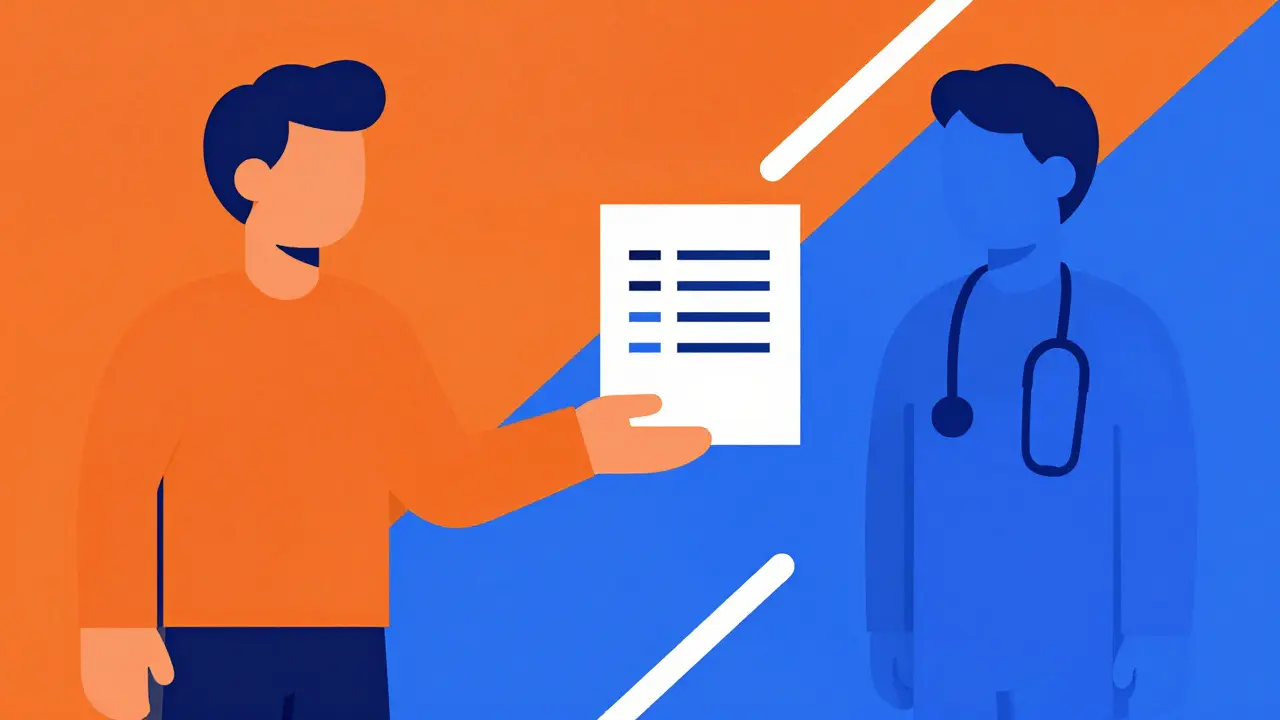
- At the Start of Every Visit: Hand the list to the receptionist or nurse before you even sit down. Say, "Here is my current medication list, including supplements. Please make sure the doctor sees it."
- Ask Specific Questions: Don’t just say "Is this okay?" Ask, "Could these medications interact with each other?" and "Should I avoid any foods or supplements while taking this?"
- Designate a Coordinator: If you see three or more specialists, pick one primary provider to act as the quarterback. Tell them, "I am giving you the master list. Please coordinate with Dr. X and Dr. Y."
- Update Immediately: The moment a dose changes, or you stop a drug, update your list. Outdated lists are responsible for 52% of medication errors. An old list is worse than no list because it gives false confidence.
Dr. Robert W. Hardy from Harvard Medical School notes that failure to share a complete list is the single most preventable cause of adverse events in multi-specialty care. You are not being annoying; you are being your own advocate.
Troubleshooting Common Challenges
Keeping track of pills is hard work. Here is how to handle the friction points.
I forget to update my list. Tie the update to a habit. Every time you throw away an empty bottle, open your app or edit your document. Set a calendar reminder for the first of every month to do a comprehensive review.
I have too many pills to organize. Use a color-coded weekly pill organizer. Assign a color to each medication type (e.g., blue for heart, green for pain). This visual cue helps you and your provider see patterns quickly. For complex regimens, ask your pharmacy about synchronization programs where all refills are ready on the same day.
My provider ignores my list. If a doctor dismisses your concerns, speak up firmly. "I am concerned about an interaction between Drug A and Drug B. Can we address this?" If they still ignore you, consider finding a new provider. Patient safety is non-negotiable.
Future-Proofing Your Health
The landscape of medication safety is evolving. New technologies like AI-powered interaction checkers are hitting the market, promising 94% accuracy in detecting complex issues. By 2026, we expect 75% of medication lists to incorporate patient-reported OTC data through standardized digital interfaces. However, until that seamless integration is universal, the responsibility remains largely on you.
The World Health Organization has made medication safety a global priority. In the US, CMS penalties for high adverse event rates create a financial incentive for hospitals to get this right. But technology cannot replace human vigilance. Your active participation in maintaining and sharing your medication list is the strongest defense against preventable harm. Take control today. Print that list. Update that app. Ask those questions. Your health depends on it.
What exactly counts as a 'complete' medication list?
A complete list includes every substance you ingest: prescription drugs, over-the-counter medicines (like ibuprofen or antacids), vitamins, herbal supplements, and recreational substances. For each item, include the brand/generic name, dosage strength, frequency, reason for use, prescribing provider, and known allergies with specific reactions.
Why are over-the-counter meds so dangerous if not disclosed?
OTC meds contribute to 30% of serious drug interactions. For example, acetaminophen can damage the liver when combined with certain antibiotics, and NSAIDs like naproxen can increase bleeding risk when taken with blood thinners like warfarin. Doctors cannot protect you from these risks if they don't know you're taking them.
How often should I update my medication list?
You should update your list within 24 hours of any change-starting a new med, stopping one, or changing a dose. Additionally, conduct a comprehensive review of the entire list once a month to remove discontinued drugs and verify details. Outdated lists are a major source of medical errors.
Is a digital app better than a paper list?
Digital apps offer better accuracy (78%) and reminders but require smartphone access and regular updates. Paper lists have lower accuracy (62%) due to infrequent updates but are accessible in emergencies if your phone is unavailable. The best strategy is a hybrid approach: keep a digital master list and carry a printed summary card in your wallet.
Who should I trust more: my doctor or my pharmacist?
Both are essential, but pharmacists specialize in drug interactions. While doctors diagnose and treat conditions, pharmacists focus on how medications work together in your body. Always consult your pharmacist about potential interactions, especially with supplements and OTC drugs, as they have specialized screening tools and training in this area.
What is polypharmacy and why is it risky?
Polypharmacy is the use of five or more medications simultaneously. It is risky because each additional drug increases the likelihood of interactions exponentially. Patients with polypharmacy face 87% more interaction risks. It can lead to confusion, side effects, and reduced effectiveness of treatments, particularly in older adults.
Can food really interact with my medications?
Yes. Food-drug interactions are common and dangerous. Grapefruit juice interferes with statins and some blood pressure meds. Dairy products can block absorption of certain antibiotics. Alcohol can amplify sedative effects. Always ask your provider if there are specific dietary restrictions associated with your prescriptions.
What should I do if I suspect a drug interaction?
If you experience new symptoms like dizziness, nausea, rash, or unusual bleeding after starting a new medication, contact your healthcare provider immediately. Do not stop taking prescribed medication abruptly without consulting them, as this can also be dangerous. Bring your complete medication list to the appointment to help them identify the culprit.