
Let’s cut through the noise: if you’ve tried counting calories, skipping meals, or buying fancy shakes that promise quick results, you’re not alone. And you’re probably tired of it. The truth is, intermittent fasting isn’t another fad-it’s a simple, science-backed way to reset how your body handles food, and it’s working for millions. Not because it’s restrictive, but because it’s aligned with how your body was built to function.
What Time-Restricted Eating Actually Does
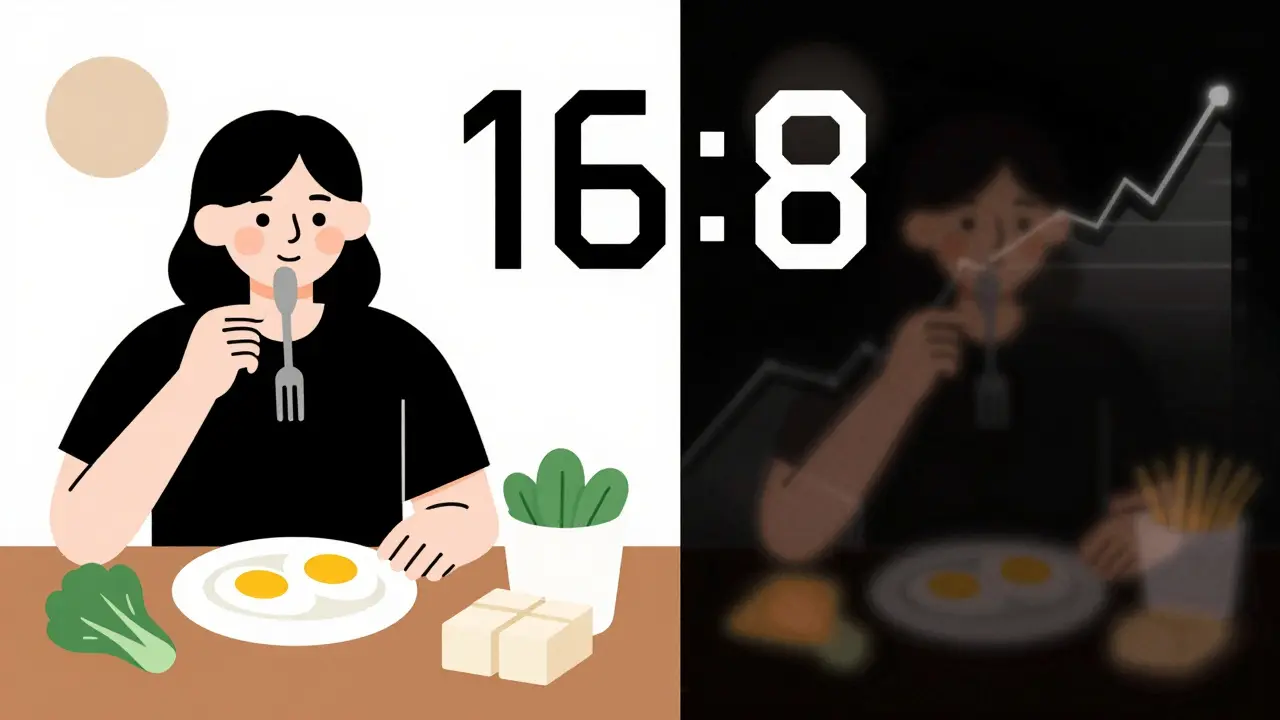
Time-restricted eating (TRE) means you eat only during a set window each day-usually 8 to 12 hours-and fast for the rest. The most popular version? The 16:8 method. That’s 16 hours without food, 8 hours to eat. No calorie counting. No food weighing. Just a clock.
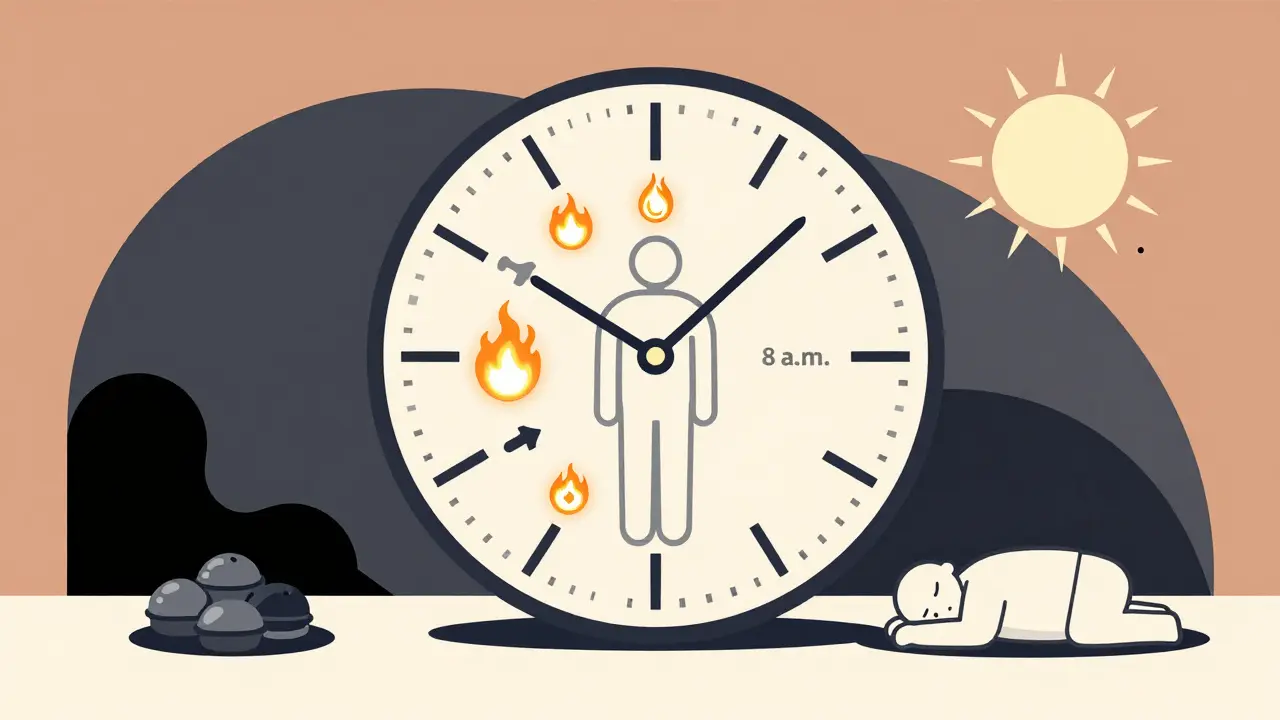
Here’s the thing most people miss: it’s not about eating less. It’s about when you eat. Your body runs on a 24-hour cycle called the circadian rhythm. When you eat late at night, you’re fighting that rhythm. Your insulin sensitivity drops, your metabolism slows, and your body starts storing fat instead of burning it. But when you eat earlier-say, between 8 a.m. and 4 p.m.-your body gets a signal to burn fuel efficiently. A study from UTSW Medical Center found that people who ate within this window improved insulin sensitivity by 12.4%. That’s not magic. That’s biology.
The Numbers Don’t Lie
In July 2025, Harvard’s public health team reviewed 99 clinical trials involving over 6,500 people. The result? Intermittent fasting led to 1.7 to 2.5 kg more weight loss than eating without any structure. That’s about 4 to 5.5 pounds over a few months. Not overnight. Not extreme. Just consistent.
Alternate-day fasting-where you eat normally one day, then cut calories to 500-600 the next-showed even stronger results. Participants lost 1.3 kg more than those on traditional calorie-restricted diets. That’s a 7.8% edge. Plus, waistlines shrank by 1.5 to 2.2 cm, LDL cholesterol dropped by nearly 7 mg/dL, and inflammation markers like CRP went down too. This isn’t just weight loss. It’s metabolic repair.
And here’s the kicker: when compared directly to calorie counting, intermittent fasting didn’t lose. In fact, the University of Toronto’s July 2025 study in The BMJ found the weight loss was nearly identical. So if you hate counting calories, TRE gives you the same results without the spreadsheets.
Who It Works For (and Who It Doesn’t)
Not everyone thrives on this. People with type 2 diabetes saw big improvements in blood sugar-HbA1c dropped from 7.8% to 6.9% in one group. But they also reported higher hunger levels. That’s normal. Your body’s adjusting. Ghrelin, the hunger hormone, spikes at first. But by day 72, it settles. Most people say the hunger fades after two weeks.
Shift workers? They’re the unsung heroes of TRE. A study in the NIH meta-analysis found they stuck with time-restricted eating 22.3% better than day workers. Why? Because their internal clocks are already out of sync. Eating during their active hours-even if it’s midnight-works better than forcing a 9-to-5 schedule.
But if you’re under 18, pregnant, have a history of eating disorders, or are on insulin or other diabetes meds, talk to your doctor first. This isn’t a one-size-fits-all fix. It’s a tool. And tools need to fit the job.
Why People Quit (And How to Avoid It)
Let’s be real: 18.7% of people drop out of intermittent fasting trials. That’s higher than traditional diet groups. Why? Two big reasons: social life and energy crashes.
Reddit’s r/IntermittentFasting has over 1.2 million members. One top comment: “Dinner invitations became impossible to accept without explaining my eating schedule.” That’s not just inconvenient-it’s isolating. And it’s real. Social eating is baked into human culture. If you’re trying to fast from 8 p.m. to 12 p.m., and your partner wants pizza at 9 p.m., you’re setting up for conflict.
Then there’s the energy dip. 58.2% of people who quit reported crashes during fasting hours. That’s not laziness. That’s your body learning to use fat for fuel. The fix? Eat more protein during your eating window. Aim for 1.2 to 1.6 grams per kilogram of body weight. So if you weigh 70 kg, that’s 84 to 112 grams of protein a day. Eggs, chicken, tofu, Greek yogurt-get those in. And drink water. Seriously. Thirst feels like hunger. Dehydration is the #1 reason people think they’re starving.
Getting Started: No Guesswork
Start slow. Don’t jump into 16:8 on day one. Begin with 12 hours of fasting-say, 7 p.m. to 7 a.m. That’s overnight. You’re already asleep for half of it. Then move to 14 hours. Then 16. You’ll adapt faster than you think.
Here’s a simple plan:
- Choose your eating window: 8 a.m. to 4 p.m. (best for circadian alignment) or 12 p.m. to 8 p.m. (easier for social life).
- Focus on whole foods: vegetables, lean protein, healthy fats, complex carbs. Skip the processed stuff-even if it’s within your window.
- Hydrate: water, herbal tea, black coffee. No sugar. No cream. No flavored sodas.
- Track your hunger: Use a journal. Note when cravings hit. You’ll see patterns.
- Be patient: The first week is the hardest. After that, it gets easier.
And if you’re struggling? Get support. The Endocrine Society’s study showed that with weekly nutritionist check-ins, dropout rates fell from 22% to under 10%. You don’t need a coach. But you do need someone to talk to when it gets tough.
The Bigger Picture
The global intermittent fasting market hit $782 million in 2024. Apps like Zero and BioOptimizers are booming. But the real win isn’t the apps. It’s the shift in thinking. We’re moving away from “eat less, move more” to “eat when your body is ready to burn.”
And the science is catching up. The NIH is now funding a $2.4 million study to see how shift work changes fasting outcomes. Companies like Viome are using microbiome data to personalize fasting windows. This isn’t about willpower. It’s about biology.
But here’s the truth: if you’re not ready to stick with it for six months, don’t start. The best diet is the one you can live with. Intermittent fasting isn’t a quick fix. It’s a long-term reset. And if you’re willing to give it time, your body will thank you.
Can I drink coffee while fasting?
Yes. Black coffee, plain tea, and water are all fine during fasting periods. Just avoid sugar, cream, milk, or flavored syrups-they can spike insulin and break your fast. A splash of unsweetened almond milk (under 10 calories) is usually okay, but stick to plain if you’re new.
Does intermittent fasting slow down my metabolism?
No-not if you’re doing it right. Short-term fasting (up to 24 hours) doesn’t lower your metabolic rate. In fact, studies show it can increase fat burning. The myth comes from older studies on extreme, prolonged fasting. Time-restricted eating, like 16:8, doesn’t trigger that response. Your body switches to fat-burning mode, not starvation mode.
Is the 16:8 method the best for weight loss?
It’s the most popular and easiest to stick with, but not necessarily the best. Alternate-day fasting led to slightly more weight loss in studies. But adherence matters more than the method. If 16:8 fits your life, you’ll stick with it-and that’s what leads to results. Choose the window that works with your schedule, not the one you think you "should" do.
Can I eat anything during my eating window?
Technically, yes. But if you eat junk food, you’ll miss the benefits. Intermittent fasting works best when paired with whole, unprocessed foods. Eating pizza and cake every day might help you lose weight if you’re under your calorie limit, but your blood sugar, cholesterol, and energy levels will suffer. The goal is metabolic health-not just weight loss.
How long until I see results?
Most people notice changes in energy and hunger after 1-2 weeks. Weight loss typically starts in week 2-3. A 2025 Harvard review showed measurable weight loss after 8 weeks. Don’t expect miracles in 3 days. This is a long-term habit, not a 10-day detox.
What Comes Next
If you’re thinking about trying this, start small. Pick one day this week to try a 14-hour fast. Maybe skip breakfast. Eat dinner earlier. See how you feel. No pressure. No rules. Just observe.
And if you’ve tried before and quit? That’s okay. You weren’t failing. You were learning. The next time, adjust the window. Change your protein intake. Get a friend to join you. You’re not behind. You’re just getting started.


