

Medication Safety & Rights Simulator
The Rushed Explanation
The pharmacist explains the dosage rapidly. You don't understand most of it but nod along.
The Family Offer
A staff member suggests your young child can translate because they speak both languages.
The Label Check
You receive your medication. The label is entirely in English with no translations.
The Cost Question
The pharmacy asks if you want to pay an extra $15 fee for the interpretation service.
Imagine picking up a prescription for a critical heart medication. The pharmacist speaks quickly, using terms like "titration" and "contraindications." You nod along, but inside, you are lost. This scenario is not just an inconvenience; it is a dangerous reality for millions of people with Limited English Proficiency (LEP). When language barriers block understanding, the risk of taking the wrong dose or missing essential warnings skyrockets.
This is why language access in healthcare has moved from a nice-to-have courtesy to a strict legal requirement. In the United States, federal laws and specific state regulations now mandate that pharmacies provide accurate interpretation services during medication counseling. These rules exist to protect your health, ensuring that you understand exactly how to use your medicine safely.
The Legal Backbone: ACA Section 1557
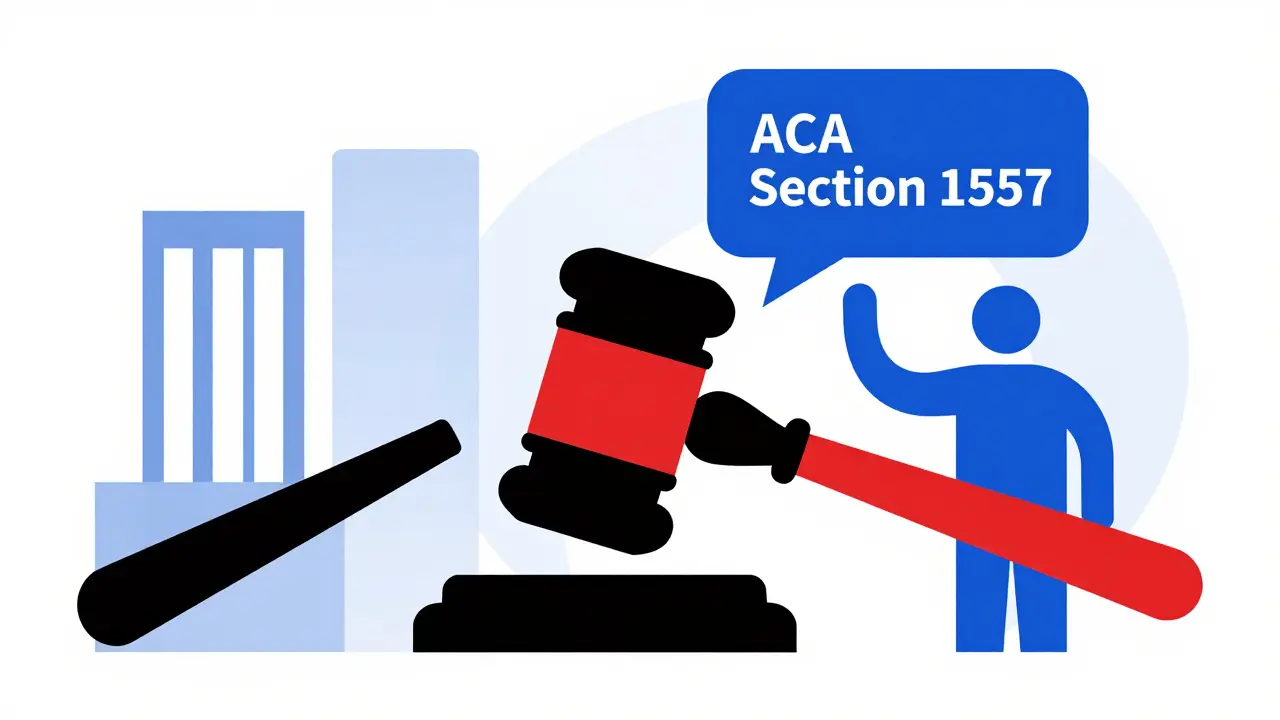
The foundation of patient rights in this area comes from Section 1557 of the Affordable Care Act (ACA). Originally passed in 2010, this law was significantly strengthened with new enforcement provisions that took effect on July 5, 2024. These updates made it crystal clear: any healthcare provider receiving federal funds must offer "meaningful access" to patients who do not speak English fluently.
What does "meaningful access" actually mean for you? It means you have the right to receive medical information in a language you understand. The regulations explicitly prohibit providers from forcing you to bring a family member or friend to interpret for you, unless you specifically request it. Family members, especially children, often lack the medical vocabulary needed to translate complex drug interactions accurately. Relying on them can lead to serious errors.
Under these federal rules, pharmacies must provide qualified interpreters. A qualified interpreter is not just someone who speaks both languages; they must demonstrate proficiency in specialized medical and pharmaceutical terminology. They also need to understand confidentiality and cultural nuances. If a pharmacy fails to provide this service, they are violating federal civil rights protections.
New York's SafeRx Regulations: A Gold Standard
While federal law sets the baseline, some states go much further. New York State is a prime example with its SafeRx regulations (Education Law section 6829). Implemented between 2008 and 2012, these rules created one of the most comprehensive frameworks for pharmacy language access in the country.
New York defines "pharmacy primary languages" based on local demographics. Specifically, if a language is spoken by one percent or more of the population in a region-according to U.S. Census data-the pharmacy must support it. However, there is a cap: pharmacies are required to handle a maximum of seven languages per region. This balance aims to cover the majority of needs without overwhelming smaller independent shops.
Here is what New York’s rules require in practice:
- Free Oral Interpretation: Pharmacies must provide free interpretation services for medication counseling. This can be done via telephone or video remote interpreting (VRI), so an interpreter does not need to be physically present at all times.
- Translated Labels: Prescription labels, warning stickers, and other written materials must be translated into the patient’s preferred language.
- Visible Signage: Pharmacies must post conspicuous multilingual notices near the counter. The standard phrase used is "Point to your language," which helps patients easily identify their options without needing to read English first.
- Documentation: Staff must record language preferences in patient profiles and document when interpretation services are provided or waived.
These requirements apply unless the patient explicitly refuses the service or the materials are already available in their language. For small pharmacies struggling with costs, waivers are available for one year, renewable if they can prove they are sourcing alternative interpretation methods nearby.
Why Language Access Saves Lives
You might wonder if these regulations are just bureaucratic red tape. The data says otherwise. Misunderstanding medication instructions is a leading cause of adverse drug events among non-English speakers. A pivotal study by Weiss et al., published in PMC in 2018, highlighted that inadequate comprehension poses a significant safety risk. Dr. Lisa M. Weiss, the lead author, noted that confusion can lead to overdosing, dangerous drug interactions, or skipping essential doses due to fear.
The impact of proper language services is measurable. Research published in JAMA Internal Medicine by Dr. Glenn Flores in 2021 found that inadequate language services contributed to 32% of adverse drug events among LEP patients. Conversely, when professional interpretation is used, the American Pharmacists Association reported a 67% reduction in medication errors.
In New York City, the results have been stark. After the implementation of strict language access regulations, the translation of medication instructions in pharmacies jumped from 42% in 2006 to 78% in 2015. Access to phone interpretation rose from 38% to 92% during the same period. Most importantly, medication-related emergency department visits among LEP patients dropped by 28% between 2010 and 2020, according to NYC Health Department data.
Real-World Experiences and Challenges
Despite the progress, the system is not perfect. Patient experiences vary widely depending on location and pharmacy type. On Reddit’s r/Pharmacy community, a verified pharmacist shared in July 2024 that since implementing new ACA requirements, their Bronx location had zero medication errors related to language barriers. Similarly, Yelp reviews for chain pharmacies in New York show high satisfaction, with customers praising staff who speak their native tongue.
However, gaps remain. A Chinese-speaking patient reviewed a CVS in Queens on Google in June 2024, noting, "They have the signs but no one knows how to access the interpretation service when I need it." This highlights a common issue: training. While major chains like CVS and Walgreens implemented mandatory 10-hour language access training modules in 2023, many independent pharmacies struggle. Only 67% of independent pharmacies in New York report full compliance, compared to 92% of chains, largely due to cost and administrative burdens.
Weekend hours are another pain point. A 2023 survey by the Asian American Federation found that while 68% of LEP patients felt more confident taking medications after improvements, 29% still reported difficulties accessing services during weekends when staffing is leaner.
| Feature | Chain Pharmacies (e.g., CVS, Walgreens) | Independent Pharmacies |
|---|---|---|
| Compliance Rate (NYC) | 92% | 67% |
| Training Hours Required | 10 hours (mandatory) | Varies (often minimal) |
| Interpretation Technology | Integrated VRI/Phone systems | Often manual/external contracts |
| Main Challenge | Staff turnover/training consistency | Cost of services/compliance admin |
How to Assert Your Interpreter Rights
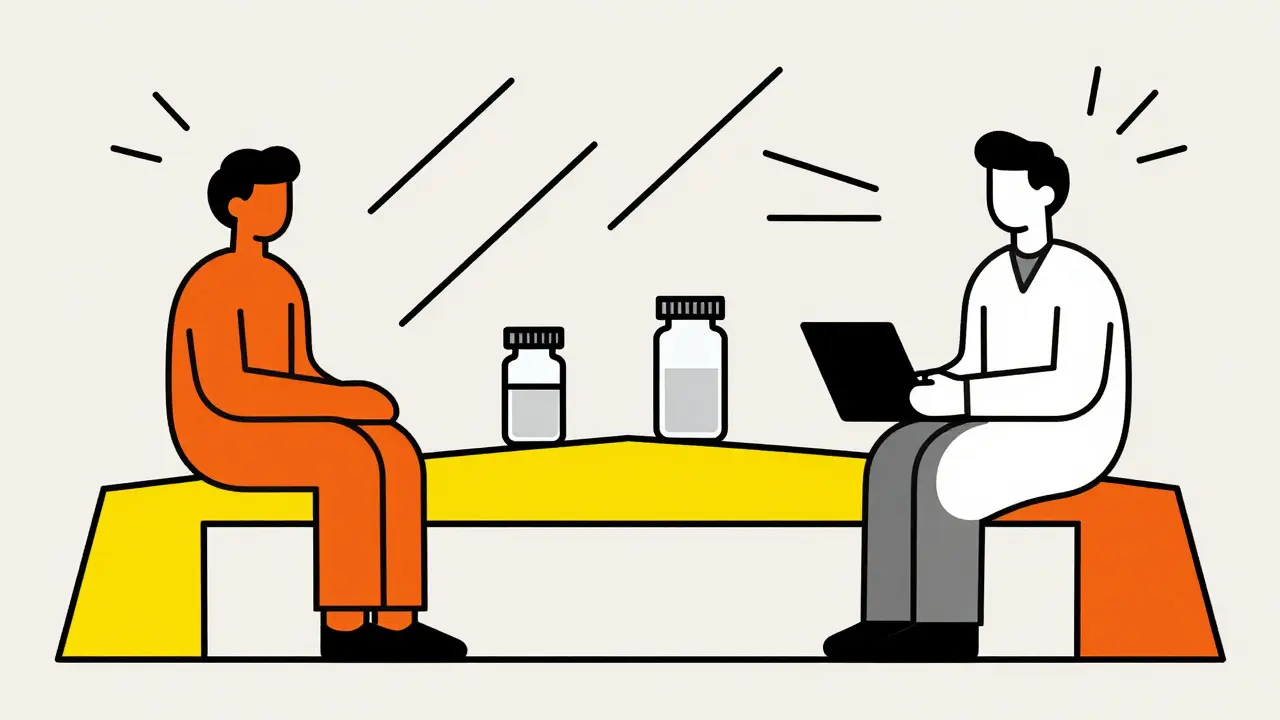
Knowing your rights is the first step, but knowing how to use them is crucial. Here is a practical guide for navigating medication counseling as an LEP patient:
- Look for the Signage: Upon entering, check for the "Point to your language" sign. This is a legal requirement in many jurisdictions and indicates the pharmacy is prepared to assist you.
- Request Professional Help Early: Do not wait until you are at the counter with the pills in hand. Tell the technician or pharmacist immediately that you need an interpreter. Ask specifically for a "qualified medical interpreter" rather than a general translator.
- Refuse Family Interpreters if Needed: If a staff member suggests using a child or spouse, politely decline if you feel uncomfortable. Under ACA Section 1557, you have the right to a professional. Say, "I would prefer a professional interpreter to ensure I understand the medical details correctly."
- Check the Label: Once you receive your medication, verify that the label includes translations of key instructions. If it does not, ask for clarification before leaving the store.
- Document Issues: If a pharmacy refuses service or lacks resources, note the date, time, and staff names. You can report violations to state health departments or the Office for Civil Rights (OCR) under the Department of Health and Human Services.
The Future of Language Access in Pharmacy
The landscape is evolving rapidly. The market for medical interpretation services is projected to reach $3.8 billion by 2027, driven by regulatory compliance and demographic shifts. Major players like LanguageLine Solutions and TransPerfect dominate the space, providing the infrastructure that pharmacies rely on.
Technology is also playing a bigger role. While current regulations still require human verification for medication instructions to ensure accuracy, AI-powered translation tools are being integrated into pharmacy workflows. The FDA issued draft guidance in 2023 encouraging standardized pictograms on medication labels to supplement language services, aiming to bridge gaps where text alone fails.
Furthermore, the Long-Term Care Phases of the Affordable Care Act require all Medicare and Medicaid providers to achieve full language access compliance by 2026. This deadline will likely force remaining holdouts to upgrade their systems. With the Congressional Budget Office estimating that these regulations prevent approximately 14,000 adverse drug events annually and save $187 million in healthcare costs, the push for universal language access is both a moral imperative and an economic necessity.
Can a pharmacy charge me for an interpreter?
No. Under federal law (ACA Section 1557) and state regulations like New York’s SafeRx, pharmacies must provide interpretation services free of charge to Limited English Proficient (LEP) patients. They cannot pass the cost of interpretation onto you.
Is a bilingual pharmacist considered a qualified interpreter?
Not necessarily. While a bilingual pharmacist can communicate with you, they may not meet the strict definition of a "qualified interpreter" if they lack formal training in medical interpretation ethics and terminology. However, in many practical scenarios, a fluent bilingual staff member is acceptable for basic counseling, provided they can accurately convey complex medical information. For highly complex cases, a dedicated interpreter is preferred.
What should I do if my pharmacy doesn't have an interpreter available?
Regulations typically allow for telephone or video remote interpreting (VRI) services. If the pharmacy claims they don't have one, ask them to call a service like LanguageLine Solutions. If they refuse or fail to provide any form of assistance, you can file a complaint with your state’s Department of Health or the federal Office for Civil Rights.
Do these laws apply to online pharmacies?
Yes. Any pharmacy receiving federal funding or operating under state licenses that enforce language access laws must provide meaningful access. This includes translating digital interfaces, chat support, and mailed medication labels. However, enforcement can be trickier for purely digital platforms compared to brick-and-mortar stores.
How many languages must a pharmacy support?
This depends on local laws. In New York, pharmacies must support languages spoken by at least 1% of the local population, up to a maximum of seven languages per region. Federally, the requirement is broader: you must be offered access to *any* language you need, though the method (phone vs. in-person) may vary based on availability.
Can I bring my own interpreter?
You can request to bring your own interpreter, but the pharmacy is not obligated to accept them if they do not meet qualification standards (medical knowledge, confidentiality agreements). Generally, it is safer to use the pharmacy's contracted professional service to ensure liability coverage and accuracy.