

Isotretinoin Mental Health Monitoring Tool
Risk Window
Guidance & Action
Taking a powerful medication for severe acne can feel like a miracle when your skin finally clears, but it often comes with a heavy set of warnings. For those prescribed Isotretinoin is a potent retinoid used to treat severe nodular acne by shrinking sebaceous glands and reducing oil production, the conversation about mental health is often the most stressful part of the process. You've likely seen the warnings about depression and mood swings, leaving you to wonder: is this a rare fluke or a real risk you should worry about?
The reality is a bit of a tug-of-war between two types of data. On one hand, we have reports from thousands of patients and regulatory databases showing a clear link to mood changes. On the other, massive meta-analyses suggest the actual risk of a major psychiatric event is incredibly low-sometimes even lower than the rate of depression found in the general teenage population. The truth is usually somewhere in the middle. While most people sail through treatment without a hitch, a small number experience genuine psychiatric distress that requires immediate medical attention.
Quick Guide to Mental Health Risks
If you're starting a course of isotretinoin, you need a baseline of what to expect. Most treatments last between 15 and 20 weeks, and while the physical side effects like dry lips are guaranteed, the mental ones are not. Here is a breakdown of the key takeaways regarding psychiatric risks.
| Risk Factor | Observation / Data Point | Clinical Significance |
|---|---|---|
| Common Symptoms | Depression, Anxiety, Irritability | Moderate to Low Risk |
| Critical Signals | Suicidal Ideation, Psychosis | Rare but High Severity |
| Critical Window | First 80 days (Median onset) | High Monitoring Priority |
| Pre-existing History | Prior depression or mood disorders | Increased Risk Profile |
The Conflict: Reported Events vs. Clinical Studies
Why is there so much conflicting information about Accutane and depression? It comes down to how we collect data. If you look at the FDA Adverse Event Reporting System (FAERS), the numbers look scary. A recent analysis of over 19,000 cases showed that depression and suicidal ideation were frequently reported, with reporting odds ratios significantly higher for isotretinoin users than non-users.
However, a massive meta-analysis published in JAMA Dermatology involving over 1.6 million participants painted a different picture. They found that the 1-year risk of a suicide attempt was only 0.14%-which is actually lower than the rate seen in general adolescent populations. This suggests that for many, the "depression" reported might be a reaction to the stress of the condition or a pre-existing tendency, rather than a direct chemical result of the drug.
That said, user experience tells us that "emotional blunting" and increased irritability are real. In community discussions, nearly half of the people who noticed mood changes described feeling a strange numbness or a shorter fuse with their loved ones. Whether this is a clinical "depressive disorder" or a side effect of the medication's impact on the body, it's something that affects your quality of life.
When to Worry: The 80-Day Window
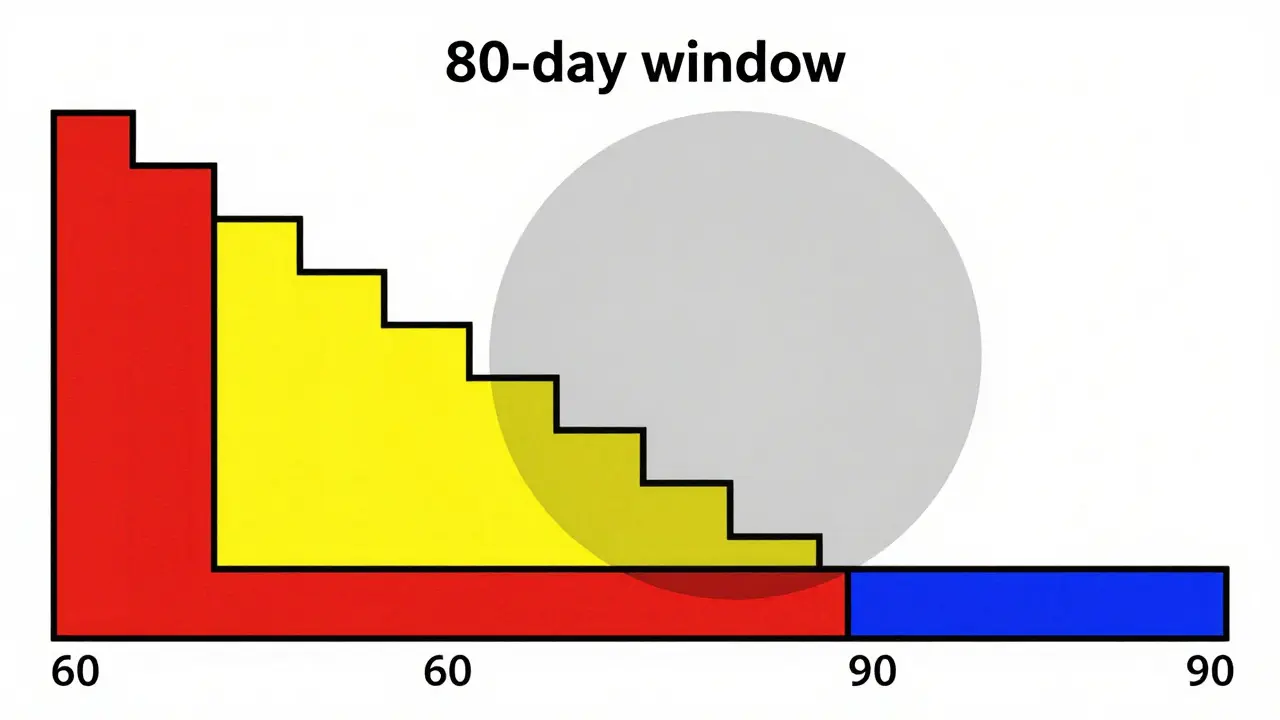
Timing is everything. Data suggests that the median time-to-onset for psychiatric signals is around 80 days. This means the second and third months of treatment are often the most volatile. If you're feeling fine in week two but start feeling a deep sense of hopelessness in week ten, it's not "all in your head"-it aligns with the known window where these symptoms tend to surface.
It is also worth noting that a significant number of psychiatric events manifest within the first 8 weeks. This is why some clinics, like those following the University of California, San Francisco protocol, implement a mandatory "mental health pause" at week 8. It's a formal check-in to ensure the patient is stable before continuing the dose.
You should look out for "red flags" that require an immediate call to your doctor:
- Thoughts of self-harm or suicide, regardless of how "mild" they seem.
- Severe anxiety that prevents you from performing daily tasks.
- Abrupt personality changes that are totally inconsistent with your usual self.
- Loss of interest in activities you previously loved (anhedonia).
Monitoring Frameworks and Safety Nets
Because of these risks, regulatory bodies have created strict safety nets. In the US, the iPLEDGE is a risk management program designed to prevent fetal exposure to isotretinoin and monitor patient safety program is the gold standard. It doesn't just track pregnancy; it now pushes for consistent mental health screening.
Modern best practices involve using the PHQ-9 is a 9-question tool used to screen for the severity of depression, a standardized questionnaire. A score of 10 or higher typically triggers a mandatory psychiatric evaluation. If your dermatologist isn't asking you about your mood at every visit, you should bring it up. A good monitoring schedule usually looks like this:
- Baseline: Full psychiatric history and family history review before the first pill.
- Weeks 1-8: Weekly or bi-weekly check-ins focusing on mood stability.
- Weeks 9-16: Bi-weekly monitoring as you hit the peak risk window.
- Post-Treatment: A follow-up to ensure symptoms resolve after the drug leaves your system.
The Role of Pre-existing Conditions and Alternatives
If you already struggle with depression, you aren't necessarily barred from taking isotretinoin, but you are in a higher risk category. Research shows that a prior history of psychiatric disorders is the strongest predictor of a suicide attempt during treatment. In these cases, the European Medicines Agency (EMA) recommends close monitoring, often involving a co-managed approach between a dermatologist and a psychiatrist.
It's also important to consider alternatives if the risk feels too high. While Minocycline is a common antibiotic for acne, it has its own (albeit much lower) risk of depression, affecting about 1.7% of users. Topical retinoids are generally safer for mental health but aren't powerful enough for severe nodular cysts.
One interesting recent development is the focus on differential diagnosis. Sometimes, the "depression" people feel on isotretinoin isn't psychiatric at all. Some studies indicate that a significant percentage of users develop a vitamin B12 deficiency, which can mimic symptoms of depression and fatigue. Checking your nutrient levels can sometimes reveal that the problem is nutritional, not neurological.

Practical Tips for Patients and Caregivers
If you are the one taking the medication, or if you're a parent of a teen on this journey, communication is your best tool. Because "emotional blunting" can make it hard to express feelings, caregivers should look for behavioral changes rather than waiting for the patient to say, "I feel depressed."
Keep a simple mood journal. Note down your energy levels and irritability on a scale of 1-10 every few days. If you notice a downward trend over two weeks, share that data with your doctor. It's much easier for a physician to spot a pattern in a journal than to rely on a patient's memory during a brief 15-minute appointment.
Does isotretinoin cause depression in everyone?
No. In fact, most people do not experience clinical depression. Large-scale studies suggest the absolute risk is very low, and some patients even report improved mood because their skin clears up, reducing the social anxiety associated with severe acne.
What should I do if I start feeling depressed?
Contact your prescribing doctor immediately. Do not wait until your next scheduled appointment. Depending on the severity, your doctor may adjust your dose, refer you to a mental health professional, or discontinue the medication. Many users report that psychiatric symptoms resolve quickly once the medication is stopped.
Is it safe to take antidepressants while on isotretinoin?
Generally, yes, but this must be managed by your doctor. Many patients with pre-existing depression continue their medication throughout the course of isotretinoin treatment, provided they are monitored closely by both their dermatologist and psychiatrist.
Can a vitamin deficiency cause these mood changes?
Yes. There is evidence that isotretinoin use can be linked to B12 deficiency, which can cause fatigue and depressive symptoms. Doctors may suggest blood tests to rule this out before attributing mood changes solely to the drug's effect on the brain.
How long does it take for mood side effects to go away?
User reports and clinical observations suggest that once the medication is discontinued, psychiatric side effects often resolve within a few weeks as the drug is cleared from the system.
Next Steps and Troubleshooting
If you are currently on the medication and feeling unstable, your first step is a phone call to your clinic. If you cannot reach them and are experiencing a crisis, contact a local crisis hotline or emergency services immediately. For those just starting, ensure you have a trusted friend or family member who knows you are taking the drug and can help you spot mood changes you might not notice yourself.
For healthcare providers, the transition to digital monitoring-such as electronic PHQ-9 check-ins-is becoming more common. Encouraging patients to use these tools during the first 8 weeks can provide an early warning system that traditional monthly visits might miss.


