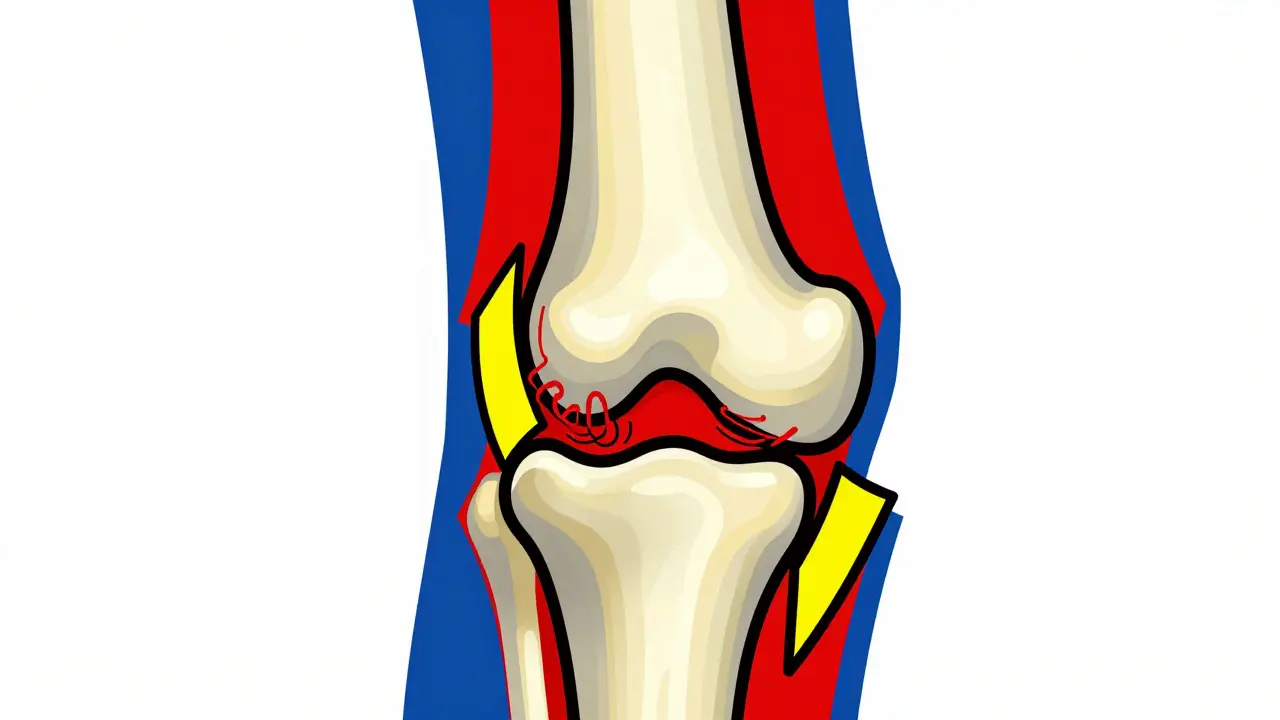

That grinding sensation in your knee when you stand up? It’s not just "getting old." For millions of people, it is knee osteoarthritis, a condition where the protective cartilage wears down, leaving bone rubbing against bone. The pain can be sharp, dull, or throbbing, often making simple tasks like walking up stairs or getting out of a chair feel impossible. While surgery is an option, most doctors now recommend trying non-surgical treatments first. These include knee osteoarthritis pain management strategies like bracing, injections, and specific exercises.
You might wonder which approach works best for you. The truth is, there is no single magic bullet. Instead, the most effective strategy usually involves combining these three pillars to target different aspects of the problem. Let’s break down how each one works, what the science says about their effectiveness, and how you can use them to get back to living your life without constant discomfort.
Understanding Knee Osteoarthritis: More Than Just Wear and Tear
To treat the pain effectively, it helps to understand what is happening inside the joint. Osteoarthritis (OA) is a degenerative joint disease. Imagine the ends of your bones are covered in smooth, slippery cartilage that acts as a shock absorber. In OA, this cartilage breaks down over time. As it thins, the cushioning effect disappears. Your body tries to repair itself by growing extra bone, called bone spurs or osteophytes, but these can actually cause more pain and limit movement.
Inflammation also plays a huge role. The lining of the joint, known as the synovium, becomes irritated and swollen. This creates a cycle of pain, stiffness, and reduced mobility. According to the World Health Organization, knee OA affects approximately 250 million people globally. It is not just a senior citizen issue; prevalence rises sharply with age, affecting nearly 44% of adults over 80, but it can start much earlier, especially if you have had previous knee injuries or carry excess weight.
| Feature | Description | Impact on Patient |
|---|---|---|
| Cartilage Breakdown | Loss of protective tissue between bones | Bone-on-bone friction, sharp pain |
| Bone Spurs | Extra bone growth at joint edges | Stiffness, limited range of motion |
| Synovitis | Inflammation of the joint lining | Swelling, warmth, aching pain |
| Muscle Weakness | Quadriceps and hamstring atrophy | Joint instability, increased load on knee |
Knee Bracing: Shifting the Load
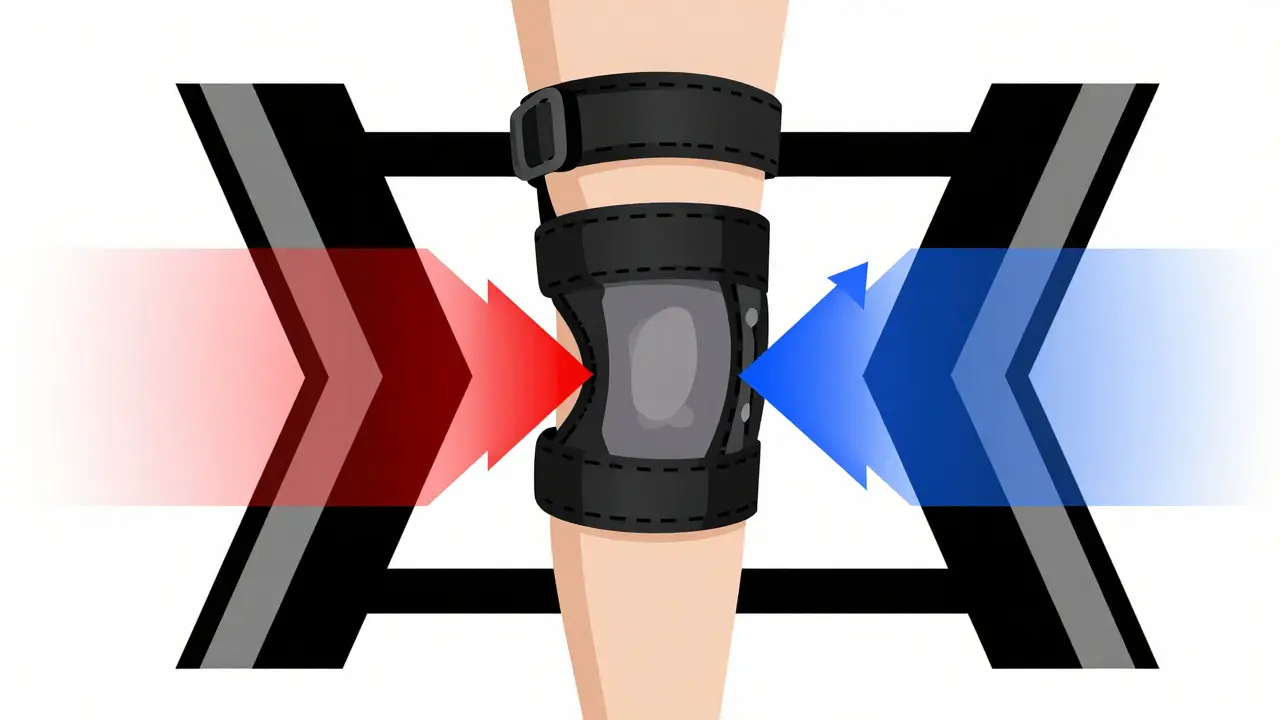
If your knee OA is primarily in one side of the joint-usually the inner side, known as medial compartment OA-a brace can be a game-changer. Unloader braces are designed specifically for this purpose. They work by applying gentle pressure to shift your weight away from the damaged part of the knee toward the healthier side. Think of it like steering a car slightly to avoid a pothole; the brace steers your force distribution to spare the painful area.
The data supports this approach. A 2023 meta-analysis published in PLOS ONE found that knee braces reduced WOMAC pain scores by 30-45%. That is a significant drop in pain perception. Unloader braces can reduce the knee adduction moment-the mechanical force pushing the knee inward-by 20-40%. This reduction in stress allows the joint to function with less irritation.
However, braces are not one-size-fits-all. Off-the-shelf hinged braces offer general stability but do not unload the joint effectively. To get the full benefit, you need a custom-fit unloader brace fitted by a certified orthotist. These can cost between $300 and $1,200, though insurance may cover part of the cost if your doctor documents medical necessity. Most patients need a 2-3 week adjustment period to get used to the bulk and tightness. Common complaints include skin irritation and the brace feeling bulky under clothing, but many users report immediate pain relief during walking.
Injections: Quick Relief for Flare-Ups
When pain spikes, exercise and bracing might feel too difficult to start. This is where intra-articular injections come in. They deliver medication directly into the joint space, providing targeted relief. There are three main types you should know about:
- Corticosteroids: These are powerful anti-inflammatories. They work fast, often within days, and can provide 4-12 weeks of pain relief. They are inexpensive ($50-$150 per injection) but should be limited to 3-4 times a year. Overuse can potentially damage cartilage further.
- Hyaluronic Acid (Viscosupplementation): This substance mimics the natural lubricating fluid in your joints. It aims to restore viscosity and cushioning. A series of 3-5 weekly injections is typical, costing $500-$1,200. Studies show mixed results, but some patients experience relief lasting up to 6 months. Newer formulations, like Gel-Syn 3 approved in 2023, claim even longer durability.
- Platelet-Rich Plasma (PRP): Derived from your own blood, PRP contains growth factors that may help reduce inflammation and promote healing. It is more expensive ($500-$2,000) and often not covered by insurance, but emerging evidence suggests it may provide longer-lasting benefits than steroids for mild-to-moderate OA.
Injections are great for breaking the pain cycle so you can participate in other treatments. However, they are not a cure. Dr. Scott Rodeo, an orthopedic surgeon at Hospital for Special Surgery, warns that relying solely on injections without strengthening the surrounding muscles can lead to functional decline. Use them as a bridge to get you moving, not as a permanent solution.
Exercise: The Long-Term Foundation
If there is one intervention with the strongest long-term evidence, it is exercise. Therapeutic exercise does not wear out your knees; it strengthens the muscles that support them. Strong quadriceps and hamstrings act as shock absorbers, taking pressure off the joint itself.
The European League Against Rheumatism (EULAR) gives exercise therapy its highest recommendation (level 1A evidence). Research shows that water-based exercise can reduce pain by 28.7% on visual analog scales, while land-based strength training improves function by over 30% after 12 weeks. The key is consistency. You need to aim for 2-3 sessions per week, lasting 45-60 minutes.
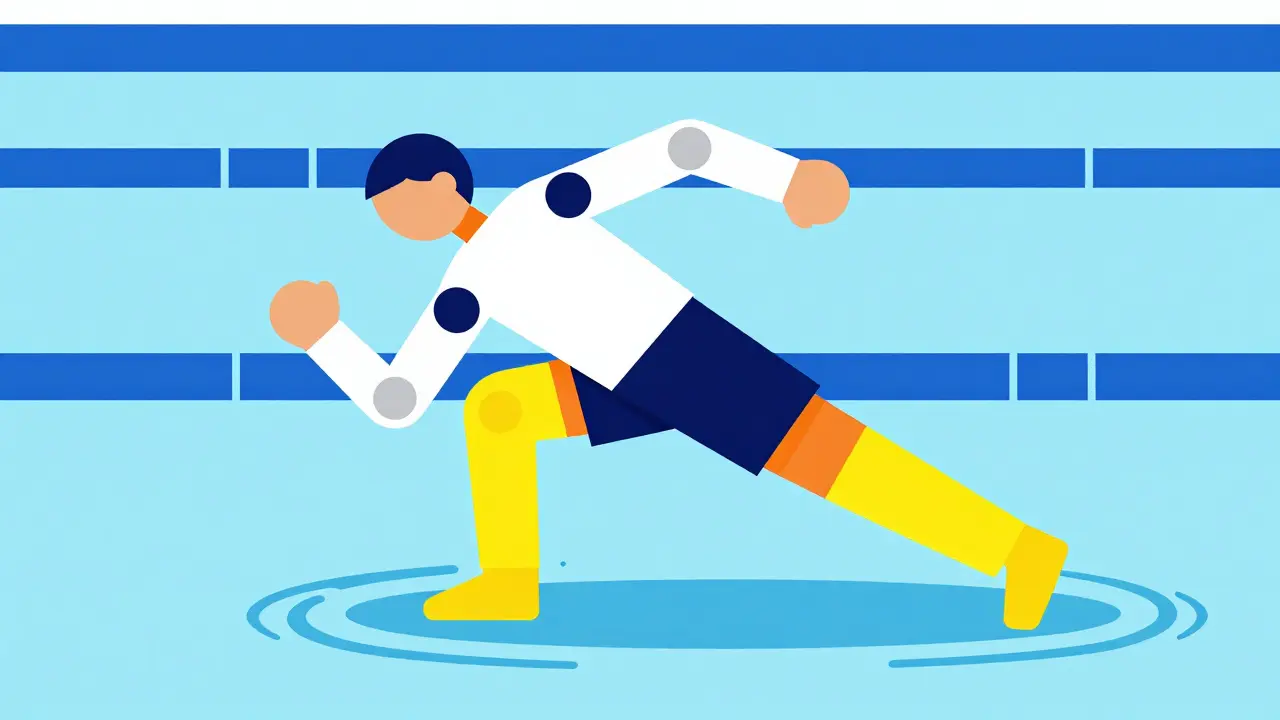
Start low and go slow. Low-impact activities like swimming, cycling, and elliptical training are excellent because they keep the joint moving without pounding it. Strengthening exercises should focus on the quadriceps (front thigh), hamstrings (back thigh), and glutes. Simple movements like straight leg raises, seated marches, and mini-squats can make a big difference. If pain flares during exercise, scale back the intensity but don’t stop completely. Consistency beats intensity in OA management.
| Intervention | Primary Benefit | Duration of Relief | Average Cost |
|---|---|---|---|
| Unloader Brace | Immediate mechanical offloading | While wearing | $300 - $1,200 |
| Corticosteroid Injection | Rapid anti-inflammatory effect | 4 - 12 weeks | $50 - $150 |
| Hyaluronic Acid | Lubrication and cushioning | Up to 6 months | $500 - $1,200 |
| Exercise Therapy | Long-term strength and function | Indefinite with maintenance | $0 - $150/session |
Combining Approaches for Best Results
The most successful patients rarely rely on just one method. Dr. Tuhina Neogi, a leading rheumatologist, advocates for combination therapy. Here is how you might integrate these tools:
- For Daily Activity: Wear your unloader brace when walking long distances or standing for extended periods to prevent pain buildup.
- For Maintenance: Commit to a regular exercise routine 3 times a week to build muscle strength and maintain range of motion.
- For Flare-Ups: If you have a bad week due to overexertion or weather changes, consider a corticosteroid injection to calm the inflammation quickly, then resume your exercise program once the pain subsides.
This multimodal approach addresses the mechanical, inflammatory, and muscular components of OA simultaneously. It is also cost-effective. Health economics studies show that comprehensive non-surgical management costs significantly less per quality-adjusted life year than total knee replacement surgery.
Practical Tips for Starting Today
Knowing what works is only half the battle; implementing it is the hard part. Here are some practical steps to get started:
- Consult a Professional: See an orthopedist or physical therapist to determine if you are a candidate for an unloader brace. Proper fitting is crucial.
- Start Small with Exercise: Begin with 10-minute sessions. Focus on form rather than resistance. Water aerobics classes are a fantastic way to start because the buoyancy reduces joint load.
- Track Your Symptoms: Keep a pain diary. Note what activities trigger pain and what relieves it. This data helps your doctor tailor your treatment plan.
- Manage Expectations: Injections provide quick relief, but exercise provides lasting change. Be patient with the exercise component; improvements take 8-12 weeks to become noticeable.
- Check Insurance Coverage: Medicare and private insurers often cover braces and physical therapy but may require prior authorization for hyaluronic acid injections. Call ahead to avoid surprise bills.
Do knee braces permanently fix osteoarthritis?
No, knee braces do not reverse cartilage loss or cure osteoarthritis. They are a symptomatic treatment that helps manage pain by shifting weight away from the damaged part of the joint. Their benefit lasts only while you are wearing them, but they can improve your ability to perform daily activities and exercise.
Are corticosteroid injections safe for long-term use?
Corticosteroid injections are generally safe when used sparingly, typically no more than 3-4 times per year. Frequent use can potentially weaken tendons and damage cartilage over time. They are best reserved for acute flare-ups rather than as a regular maintenance treatment.
What is the best type of exercise for knee OA?
Low-impact aerobic exercises like swimming, cycling, and walking are excellent for maintaining joint health. Strength training focusing on the quadriceps, hamstrings, and glutes is crucial for stabilizing the knee. Range-of-motion exercises like heel slides help maintain flexibility. Avoid high-impact activities like running or jumping if they cause pain.
How long does hyaluronic acid injection relief last?
Relief from hyaluronic acid injections varies by individual and formulation. On average, patients may experience pain reduction for 6 months. Some newer formulations claim relief lasting up to a year. It often requires a series of 3-5 injections initially to achieve maximum benefit.
Will losing weight help my knee osteoarthritis?
Yes, weight loss is one of the most effective interventions for knee OA. For every pound of body weight lost, there is a 4-pound reduction in the load placed on the knee during walking. Losing even 10-15 pounds can significantly reduce pain and slow disease progression.