

You know that feeling when your body screams it’s time to sleep, but your alarm clock says you need to be alert? For millions of people, this isn’t just a bad Tuesday-it’s their daily reality. Shift Work Sleep Disorder is a recognized medical condition where your internal clock fights against your work schedule, leading to chronic insomnia or dangerous daytime sleepiness. It’s not laziness, and it’s not a lack of willpower. It is biology working against you.
If you are a nurse, a factory worker, or a first responder, you might feel like you’re fighting a losing battle every single day. The good news? You don’t have to accept exhaustion as your normal state. By understanding how your circadian rhythm works and using specific, science-backed strategies, you can reclaim your energy, protect your health, and stay safe on the job. This guide cuts through the noise to give you actionable steps for managing night shifts without sacrificing your well-being.
Understanding the Biology Behind the Struggle
To fix the problem, we first need to understand why it happens. Your body runs on a master clock called the suprachiasmatic nucleus, located deep in your brain. This tiny region dictates your sleep-wake cycle based largely on light exposure. When you work nights, you are essentially asking your biology to do something it evolved over millions of years to avoid: being awake during darkness and asleep during daylight.
The core issue is circadian misalignment. During a typical night shift, your body expects to produce melatonin-the hormone that signals sleep-around 10 PM. But if you are exposed to bright artificial lights at work, your body suppresses melatonin production by up to 85%. Simultaneously, your cortisol levels (the stress and wakefulness hormone) remain low when you need them high, and spike when you are trying to sleep during the day. This hormonal mismatch leaves you feeling groggy at work and wired at home.
Research from Harvard Medical School suggests that only 2-5% of night shift workers ever fully adapt to this schedule. For the rest of us, every night shift is a partial jet lag experience. Recognizing this as a physiological barrier, not a personal failure, is the first step toward effective management.
Signs You Have More Than Just Fatigue
Feeling tired after a long shift is normal. Feeling unable to function safely is not. Shift Work Sleep Disorder (SWSD) is diagnosed when symptoms persist for at least one to three months and directly impact your health or safety. Here is what to look out for:
- Persistent Insomnia: You lie in bed during the day, knowing you need sleep, but your mind races or you simply cannot fall asleep despite total darkness.
- Excessive Sleepiness: You find yourself nodding off while driving home, staring blankly at screens, or experiencing "microsleeps" where you lose awareness for seconds.
- Cognitive Decline: Memory lapses, difficulty concentrating on simple tasks, or making uncharacteristic errors at work.
- Mood Disturbances: Increased irritability, anxiety, or feelings of depression that seem tied to your work schedule.
- Digestive Issues: Stomach pain, acid reflux, or changes in bowel habits caused by eating at odd hours.
If these symptoms sound familiar, you are not alone. Studies show that nearly 30% of night shift workers experience moderate to severe sleepiness. Ignoring these signs increases your risk of workplace accidents, cardiovascular disease, and metabolic disorders like diabetes. Treating SWSD is about more than just getting more sleep; it’s about protecting your long-term health.
Mastering Daytime Sleep Hygiene
Sleeping during the day is hard because the world is loud, bright, and warm. To create a sleep-conducive environment, you need to mimic nighttime conditions as closely as possible. Here is how to optimize your bedroom for daytime rest:
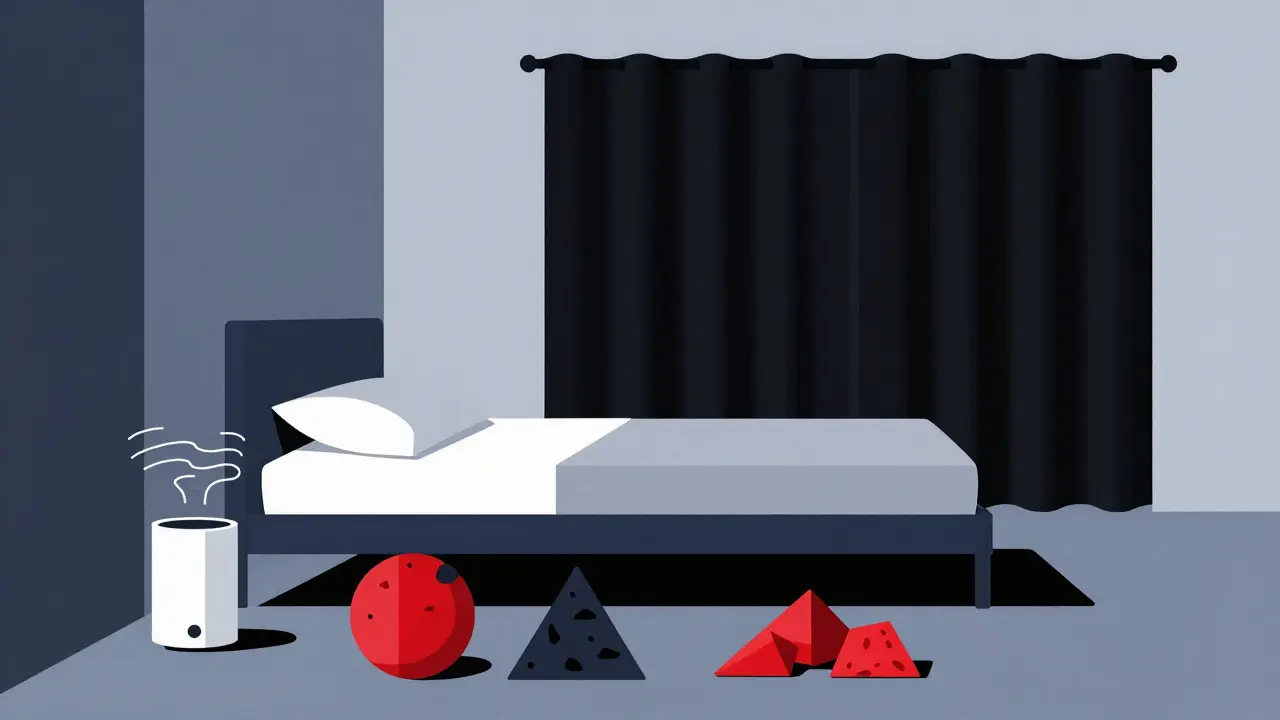
- Block All Light: Use blackout curtains that cover the entire window frame. Even small gaps of sunlight can disrupt melatonin production. If you share a room, wear a comfortable eye mask.
- Control Noise: Invest in a white noise machine or a fan to mask traffic, neighbors, or household sounds. Earplugs can also help, but ensure they fit comfortably so they don’t disturb your sleep position.
- Keep It Cool: Your body temperature needs to drop to initiate sleep. Set your thermostat to around 65°F (18°C). A cooler room signals to your brain that it is time to rest.
- Communicate Your Needs: Post a sign on your door: "Sleeping. Do Not Disturb." Inform family members and friends of your sleep schedule so they respect your quiet time.
Consistency is key. Try to sleep at the same times every day, even on your days off, to stabilize your rhythm as much as possible. While this may mean missing some morning social events, the trade-off in mental clarity and physical health is worth it.
Strategic Light Exposure Therapy
Light is the most powerful tool you have for resetting your internal clock. However, timing is everything. Using light incorrectly can make your symptoms worse.
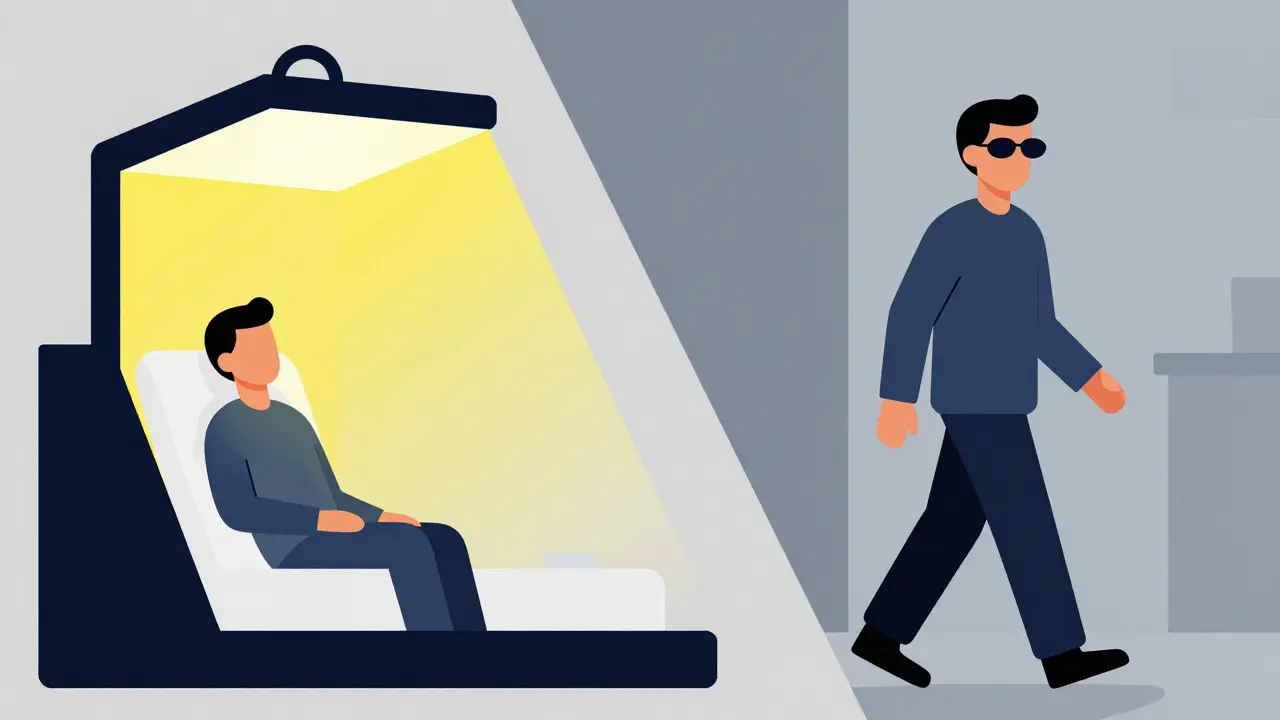
During Your Shift: Seek bright light exposure. If your workplace allows it, use a light therapy box with an intensity of 2,000 to 10,000 lux. Sit near it for 30-60 minutes during the first half of your shift. This tells your brain, "It is daytime now," boosting alertness and delaying melatonin release. Wear blue-light-blocking glasses on your commute home to prevent early melatonin suppression.
After Your Shift: Avoid bright light completely. Wear sunglasses immediately when you leave work. Keep indoor lights dim until you are ready to sleep. This helps your body start producing melatonin earlier, aiding the transition into sleep.
This strategy requires discipline, but studies show it can significantly improve sleep quality and reduce daytime sleepiness within a few weeks.
Nutrition and Caffeine Timing
What you eat and drink matters just as much as when you sleep. Eating heavy meals late at night can cause digestive issues and disrupt sleep. Instead, opt for smaller, balanced snacks throughout your shift. Focus on protein, complex carbohydrates, and healthy fats to maintain steady energy levels without the sugar crash.
Caffeine is a double-edged sword. It can boost alertness, but its half-life is roughly five to six hours. This means if you drink coffee at 2 AM, half of that caffeine is still in your system at 8 AM, right when you are trying to sleep. Follow these rules:
- Limit Intake: Stick to no more than 200 mg per dose (about two cups of coffee).
- Stop Early: Cut off caffeine consumption at least six to eight hours before your planned bedtime.
- Avoid Late Snacks: Finish your last meal or large snack at least two hours before sleep to allow digestion to settle.
Hydration is also critical. Dehydration worsens fatigue. Drink water regularly, but taper off intake one hour before bed to avoid waking up for bathroom trips.
The Power of Strategic Napping
If you cannot get enough sleep at home, strategic napping can bridge the gap. A power nap of 20-30 minutes taken before your shift starts can significantly improve alertness and cognitive performance. This duration is short enough to avoid entering deep sleep stages, which causes grogginess upon waking (known as sleep inertia).
If your job permits, a short nap during a break can also provide a mid-shift boost. However, avoid napping for longer than 45 minutes unless you have several hours left in your shift, as this can interfere with your primary sleep period later.
When to Seek Professional Help
Lifestyle changes can go a long way, but they are not always enough. If you continue to struggle despite optimizing your sleep environment and habits, consult a healthcare provider. They may recommend:
- Melatonin Supplements: Low doses (0.5-5 mg) taken 30 minutes before daytime sleep can help signal your body to wind down. Always consult a doctor before starting supplements.
- Prescription Medications: Wake-promoting agents like modafinil may be prescribed for severe cases of excessive sleepiness, particularly in safety-sensitive roles.
- Cognitive Behavioral Therapy for Insomnia (CBT-I): Specialized therapy can help address the psychological aspects of sleep disruption.
Remember, seeking help is a proactive step toward maintaining your career and health. Employers are increasingly recognizing SWSD as a legitimate occupational health concern, and many offer resources or accommodations to support affected workers.
How long does it take to adjust to night shifts?
Full adaptation is rare, with only 2-5% of workers achieving it. Most people experience partial adaptation over several weeks, but consistent symptoms often require ongoing management strategies rather than a permanent "fix."
Is Shift Work Sleep Disorder dangerous?
Yes, untreated SWSD increases the risk of workplace accidents, motor vehicle crashes due to drowsy driving, and long-term health issues such as heart disease, diabetes, and certain cancers.
Can I cure Shift Work Sleep Disorder?
While there is no permanent "cure" since the disorder is linked to your work schedule, you can effectively manage symptoms through strict sleep hygiene, light therapy, and potentially medication, allowing you to function safely and healthily.
What should I eat during a night shift?
Opt for light, balanced meals rich in protein and complex carbs. Avoid heavy, fatty foods and high-sugar snacks that lead to energy crashes. Stay hydrated with water, but limit fluids close to your bedtime.
Do blue light glasses help with night shift sleep?
Yes, wearing blue-light-blocking glasses on your commute home and in the hours before bed can help preserve melatonin production, making it easier to fall asleep during the day.