

Sleep Medication Timing Calculator
Key Effects
Select a medication to see its effects on sleep.
Critical Timing Rule
Select a medication to see timing recommendations.
Your Personalized Sleep Plan
When your medication is keeping you awake-or making you groggy all day-it’s not just annoying, it’s dangerous. You’re not imagining it. Fluoxetine, beta blockers, even sleep pills themselves can wreck your natural sleep rhythm. And if you’re relying on those pills to fix the problem, you might be making it worse. The good news? You don’t need more drugs. You need better habits. This is about sleep hygiene-not as a nice-to-have, but as your first line of defense when medications mess with your rest.
Why Your Medication Is Ruining Your Sleep
Not all meds affect sleep the same way. Some are stimulants in disguise. Fluoxetine (Prozac), for example, can make it nearly impossible to fall asleep, even if you’re exhausted. Meanwhile, paroxetine (Paxil), from the same drug class, makes you drowsy. Why? Because small chemical differences change how they interact with your brain’s sleep chemicals. Beta blockers like metoprolol and atenolol? They slash your body’s natural melatonin by almost 40%. No melatonin? No deep sleep. Your body’s internal clock gets scrambled. Even the pills meant to help you sleep can backfire. Zolpidem (Ambien), eszopiclone (Lunesta), and zaleplon (Sonata) are designed to knock you out-but they don’t always leave you when you need them to. Studies show 68% of users feel foggy the next morning. 55% struggle to focus. 42% report memory lapses. Worse, some people sleepwalk, eat in their sleep, or even drive while half-asleep. The FDA gave these drugs a black box warning-the strongest safety alert possible-because the risks aren’t theoretical. They’re real, documented, and happening to people just like you.What Sleep Hygiene Actually Means (When You’re on Meds)
Sleep hygiene isn’t about candles and lavender. It’s science. It’s structure. And when medications are throwing off your rhythm, it’s the only thing that can truly reset you.- Fix your wake-up time. No exceptions. Not even on weekends. Set your alarm to go off within 30 minutes of the same time every day. This isn’t about how much you sleep-it’s about when you wake. A 2022 JAMA study found that people who stuck to this for 21 days improved their sleep efficiency by over 58%. Why? Your brain learns to trust the clock. It stops fighting your meds.
- Block blue light after 8 p.m. Your phone, TV, even LED bulbs suppress melatonin. If your beta blocker already cut your melatonin production, you can’t afford to lose more. Use night mode, dim your lights, and keep screens off. If you need light, use a red bulb. It doesn’t interfere with your sleep chemistry.
- Move, but not too late. Exercise helps. But if you’re on a stimulant like fluoxetine, working out too close to bedtime can make insomnia worse. Aim for at least four hours before bed. Morning walks or afternoon gym sessions are ideal.
- Time your sleep meds right. If you’re taking zolpidem, don’t take it unless you can sleep for 7-8 hours straight. Taking it at 1 a.m. with a 6 a.m. alarm? You’re asking for next-day fog. The FDA’s own trials showed a 32% drop in grogginess when people timed it properly.
- Eat smart. Avoid aged cheese, cured meats, and soy sauce if you’re on blood pressure meds-they contain tyramine, which can spike your heart rate and keep you awake. Instead, eat magnesium-rich foods: almonds, spinach, pumpkin seeds. A 2020 study found these cut insomnia severity by over 34% on the standard insomnia scale.
The Big Shift: From Pills to Patterns
The American College of Physicians says it plainly: Cognitive Behavioral Therapy for Insomnia (CBT-I) should come before any sleep pill. Why? Because long-term use of benzodiazepines and Z-drugs raises your dementia risk by 83%. That’s not a small number. That’s a life-altering risk. Meanwhile, digital CBT-I programs like Sleepio and Somryst are exploding. Since 2020, their user base has grown 347%. Why? Because they work. In one study of 2,315 people, 71% saw a major drop in next-day drowsiness within six weeks-just by following sleep hygiene rules. No new prescriptions. No side effects. Just better timing, better light, better routine. And the system is catching on. Twenty-eight U.S. states now require doctors to document sleep hygiene education before writing long-term sleep med prescriptions. The European Medicines Agency limits benzodiazepines to four weeks. The FDA now requires all sleep med prescriptions to include sleep hygiene education. This isn’t a trend. It’s a policy shift.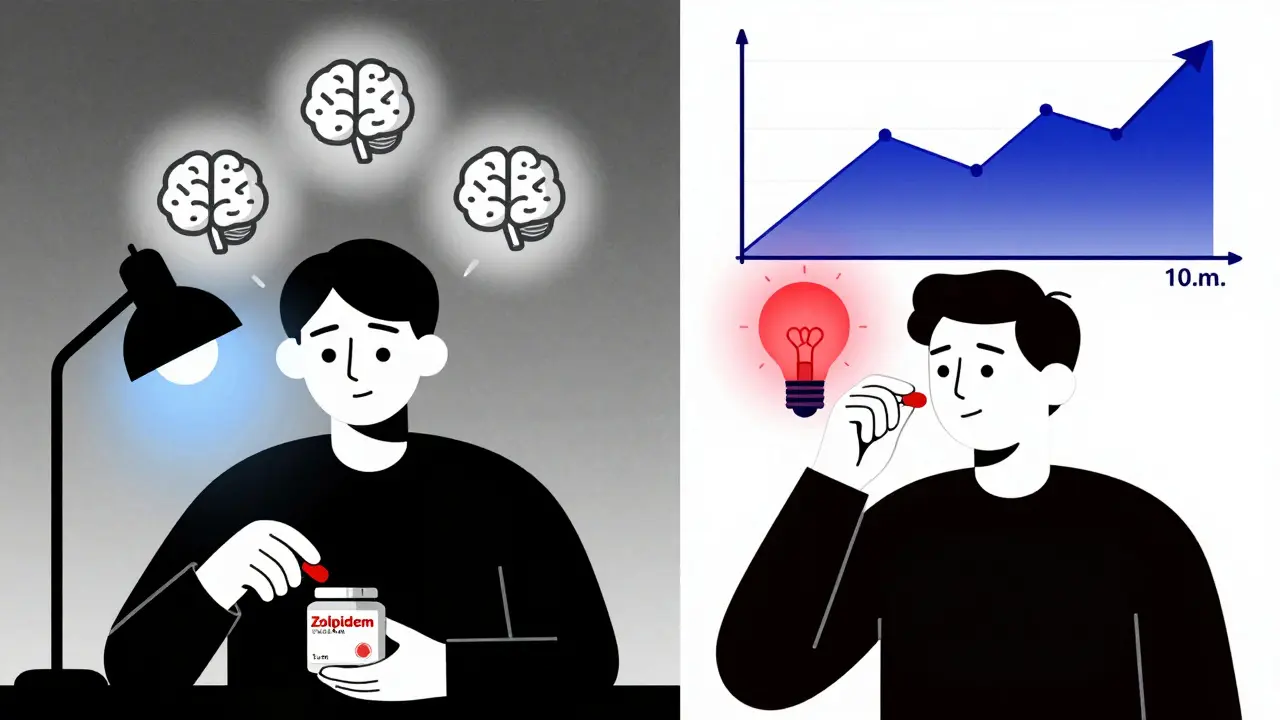
How to Start Today
You don’t need to overhaul your life. Start with one thing. Pick the one that matches your biggest problem.- If you’re wide awake at night? Fix your wake time. Set your alarm. Stick to it. For 21 days.
- If you’re foggy all day? Stop taking your sleep med unless you can sleep 7+ hours. Talk to your doctor about timing.
- If you’re on beta blockers? Get 10 minutes of bright light right after waking. Even on a cloudy day. It helps your body fight the melatonin drop.
- If you’re eating in your sleep? That’s a red flag. Don’t ignore it. Talk to your doctor. It’s a known side effect of zolpidem.
What’s Next? The Future Is Personalized
Apple’s iOS 17 Health app now scores your sleep disruption risk based on your meds. If you’re on metoprolol and zolpidem? It flags you. It suggests light exposure times, bedtime adjustments, even magnesium dosing. Clinical trials show this cuts medication-related sleep complaints by 41%. The NIH just poured $14.7 million into research targeting elderly patients-who suffer 3.2 times more side effects from sleep meds. Why? Because they’re the most vulnerable. And because the solution isn’t more drugs. It’s better habits.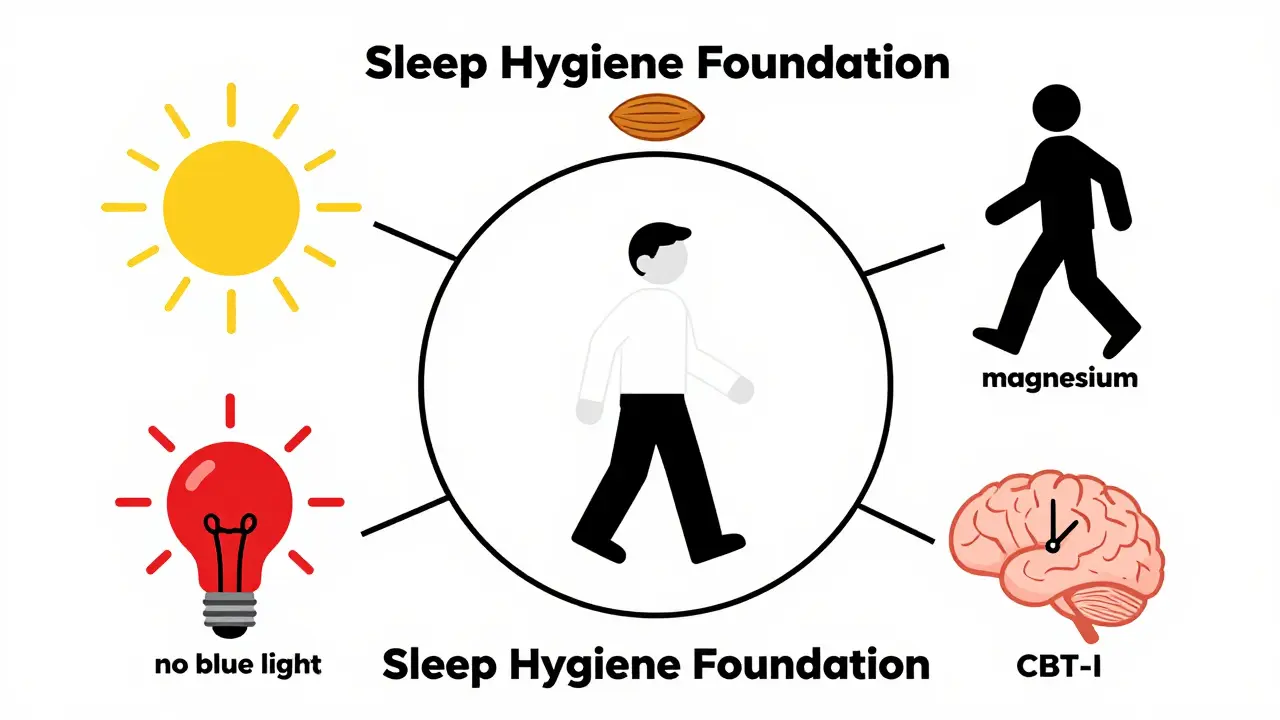
Real People, Real Results
On Reddit’s r/Insomnia, 78% of users who took zolpidem said they felt "severe grogginess" the next day. One in three had unexplained nighttime eating episodes. That’s not laziness. That’s a drug side effect. But those who switched to sleep hygiene? They saw change. One woman, 69, on atenolol and zolpidem, started waking at 6:30 a.m. sharp. She turned off screens at 8 p.m. She ate almonds before bed. Within three weeks, her next-day fog vanished. Her doctor cut her zolpidem dose in half. She hasn’t looked back.Don’t Just Tolerate It-Fix It
Medications aren’t the enemy. But relying on them to fix sleep problems they create? That’s a trap. Sleep hygiene isn’t a backup plan. It’s the foundation. When your meds are throwing off your rhythm, your body doesn’t need another chemical. It needs consistency. Light. Time. And structure. You can do this. Start with one rule. Stick with it. And watch how your nights-and your days-change.Can sleep hygiene replace my sleep medication entirely?
Sleep hygiene alone can replace medication for many people, especially if the sleep problem is chronic insomnia. But if you’re on medication for another condition-like depression or high blood pressure-don’t stop it without talking to your doctor. Sleep hygiene won’t fix the root cause of your medication’s side effects, but it can reduce how much those side effects impact you. Many patients cut their sleep med dose in half-or eliminate it-after 6-8 weeks of consistent sleep hygiene practices.
Why does waking up at the same time matter so much?
Your body’s internal clock runs on predictability. If you sleep in on weekends, your brain gets confused. It doesn’t know when to release melatonin or cortisol. This confusion gets worse when medications like beta blockers or antidepressants are already disrupting your rhythm. A fixed wake time-even if you went to bed late-tells your brain: "This is when we wake up." Within three weeks, your body starts adjusting. Studies show this simple habit improves sleep efficiency by over 58% in people on sleep-disrupting meds.
Is it safe to take magnesium with my current medications?
Magnesium is generally safe with most medications, including blood pressure drugs and antidepressants. But if you’re on kidney medication or have kidney disease, talk to your doctor first. Magnesium is processed by the kidneys, and too much can build up. For most people, eating magnesium-rich foods-like spinach, almonds, and black beans-is the safest way to get it. Supplements can be helpful, but start low (200 mg) and check with your provider if you’re on multiple prescriptions.
What if my medication makes me too tired during the day?
Daytime drowsiness from sleep meds is often caused by taking them too late, or taking too high a dose. The fix isn’t more stimulants-it’s better timing. Take your sleep med earlier, when you’re sure you can sleep 7-8 hours. Also, get bright light exposure right after waking. A 10,000 lux light box for 20-30 minutes in the morning helps reset your circadian rhythm and fights residual grogginess. Many patients report feeling more alert within days of making this change.
Are digital CBT-I programs really effective?
Yes. Programs like Sleepio and Somryst are backed by clinical trials and now covered by most major insurers. A 2022 report from Big Health showed 71% of users reported reduced next-day impairment from sleep meds within six weeks. These aren’t apps that just play relaxing sounds. They use the same evidence-based techniques as in-person CBT-I: sleep restriction, stimulus control, cognitive restructuring. And they work better than most sleep medications for long-term results.
Why are doctors pushing back on prescribing sleep meds anymore?
Because the risks are too high. Long-term use of benzodiazepines and Z-drugs is linked to a nearly 80% higher risk of dementia. The FDA issued black box warnings after reports of sleep-driving, memory blackouts, and falls. In 2023, 28 U.S. states began requiring doctors to document sleep hygiene education before writing long-term prescriptions. It’s not about being against meds-it’s about protecting patients. Sleep hygiene is safer, cheaper, and more effective over time.


