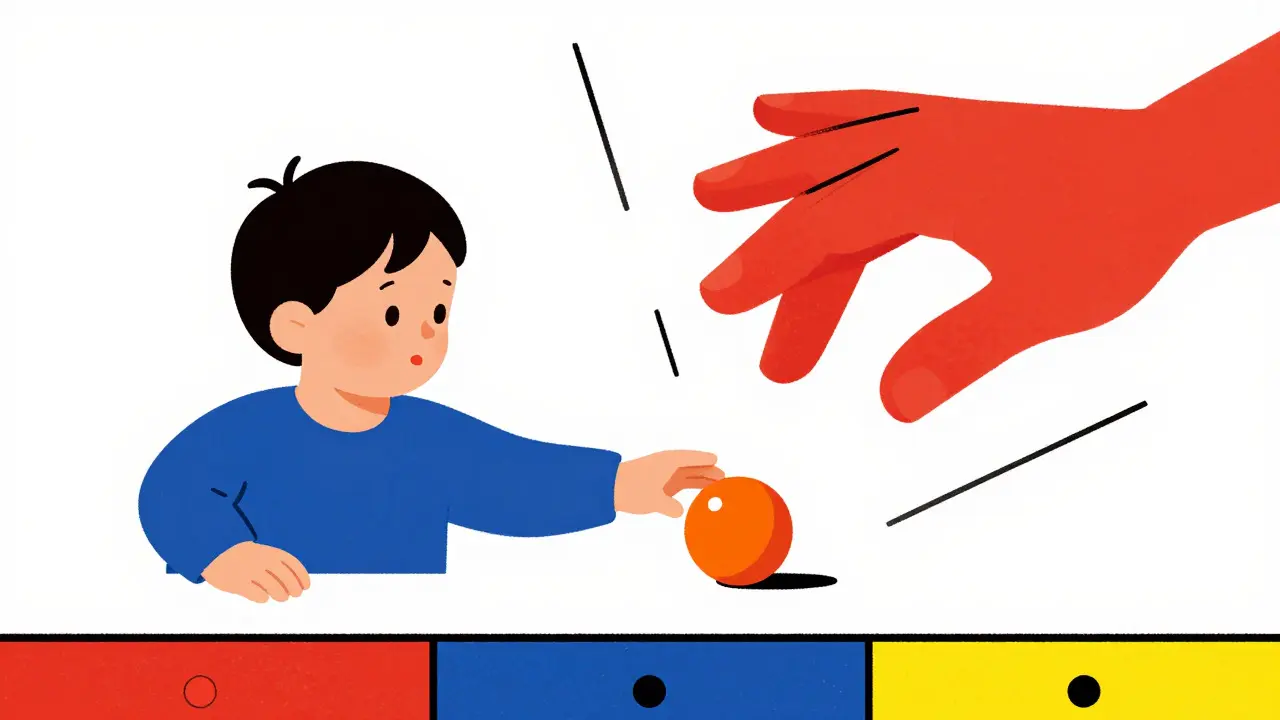

Imagine a bright orange pill sitting on a kitchen counter. To an adult, it’s just blood pressure medication. To a curious three-year-old, it looks exactly like a piece of candy. This simple visual trick is behind thousands of emergency room visits every year. In fact, roughly 50,000 children under the age of five end up in the ER annually due to accidental medication ingestions. Most of these incidents happen right at home, often involving common drugs like opioids, heart medications, or even prenatal vitamins that can be fatal in doses as small as one or two pills.
The good news? These accidents are largely preventable. Research from the Centers for Disease Control and Prevention (CDC) shows that proper storage alone could stop 67% of medication incidents involving toddlers. But storage is only half the battle. The other half involves teaching your child how to think about medicine. It’s not enough to hide the bottles; you need to build a culture of safety that starts early and continues through their school years.
Understanding the Developmental Stages of Medication Safety
Children don’t understand danger the way adults do. Their ability to grasp concepts like "poison" or "medicine" evolves with their brain development. Trying to teach a toddler what you would tell a ten-year-old doesn’t work. Instead, experts recommend following specific developmental milestones to ensure the message lands correctly.
FDA's 'As They Grow' Initiative is a framework launched by the U.S. Food and Drug Administration to provide parents with developmental-stage guidance for teaching medication safety. This program breaks down safety lessons by age, recognizing that a five-year-old needs different instructions than a seven-year-old.
- Ages 3-4: At this stage, the goal is simple association. Teach them to give any found pills to an adult immediately without tasting them. The key phrase here is "ask first." Avoid calling medicine "candy," as studies show this increases ingestion risk by 220%. Instead, use terms like "special tools for bodies" or simply "medicine."
- Ages 5-6: Five-year-olds can start personalizing their understanding. Have them put stickers on their own medicine bottles so they recognize ownership. They should learn that all medicines must stay out of reach of younger siblings. By age six, introduce label-reading. Sit with them and read the dosage instructions together, explaining that the doctor and parent decide when to take it, not the child.
- Ages 7-8: Seven-year-olds are ready for more responsibility. They can learn the full administration process, including checking the label against parent instructions. Crucially, teach them not to take medication in front of children under four, as imitation behavior peaks in that younger group. Eight-year-olds should know their exact weight, which is critical for accurate dosing if they ever need to help administer medicine to themselves or others.
Dr. Jennifer Lowry from the American Academy of Pediatrics notes that children as young as three can begin learning these concepts if presented appropriately. The key is consistency. If you say "ask first" once but let them self-medicate for a headache another time, the rule dissolves.
Safety Protocols at Home: Storage and Habits
You can teach your child all the rules in the world, but if your home environment contradicts those lessons, they will fail. One of the biggest hurdles parents face is inconsistent storage habits. Surveys reveal that 41% of parents unintentionally undermine safety messages by keeping medications in places children can access, such as bedside tables, kitchen counters, or purses.
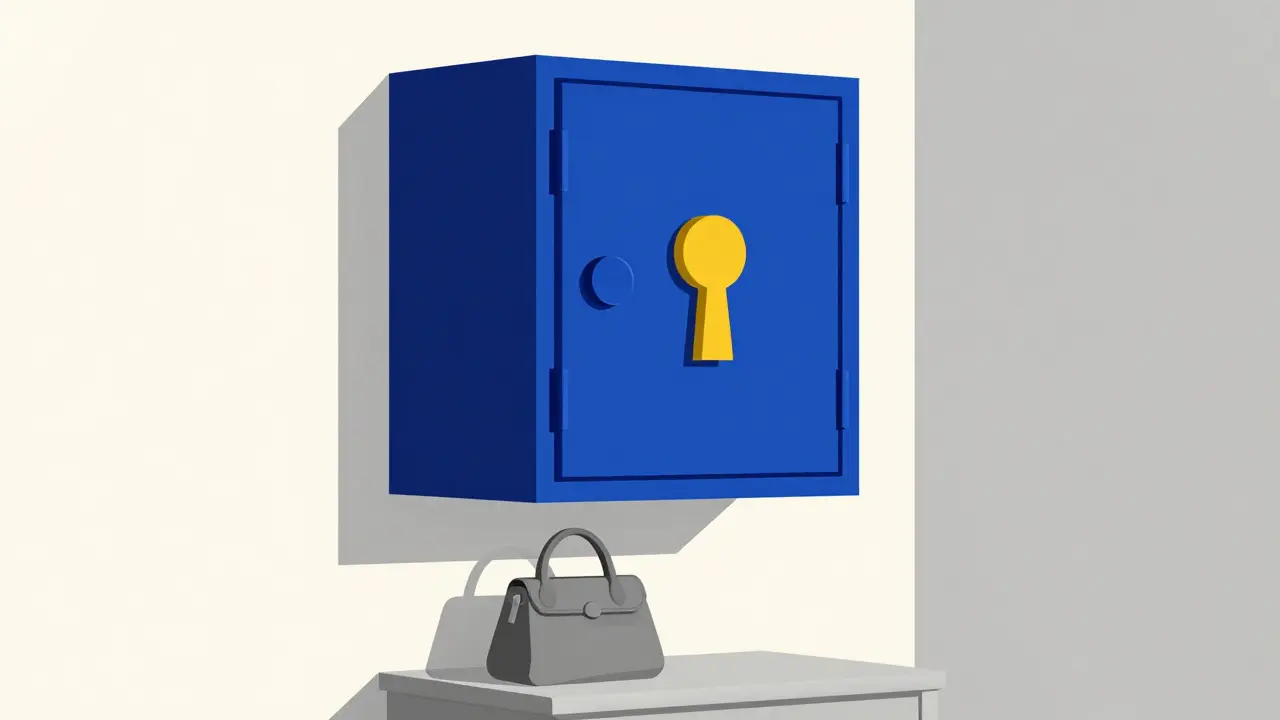
The golden rule of home medication safety is "Up and Away." Store all medications-prescription, over-the-counter, and supplements-in a locked cabinet or box that is high up and out of sight. Child-resistant caps are helpful, but they are not foolproof. Toddlers are surprisingly dexterous. A locked box meeting ASTM F2057-22 safety standards provides a much stronger barrier.
Consider the role of grandparents and caregivers. A CDC survey found that 79% of grandparents don’t follow strict medication storage guidelines when grandchildren visit, with many keeping pills in purses or suitcases. When your child is with relatives, have a quick chat about where the medicine is kept. It’s not about mistrust; it’s about aligning expectations.
Another critical habit is immediate disposal. Old medications pile up in bathrooms and kitchens. Expired drugs lose potency and can sometimes become toxic. Use local pharmacy take-back programs or FDA-approved disposal methods (like mixing with cat litter) rather than flushing everything down the toilet. Fewer pills in the house mean fewer opportunities for accidents.
Making Safety Stick in the Classroom
Schools play a vital role in reinforcing medication safety, especially as children gain more independence. However, the landscape varies wildly. While 92% of Head Start programs have formal medication administration protocols, only 47% of private childcare centers do. In public schools, the National Association of School Nurses reports that only 39% of U.S. schools have full-time nurses, creating gaps in rural districts where 68% of schools lack consistent nursing coverage.
To bridge this gap, educators and parents can leverage structured educational programs. Generation Rx's Medication Safety Patrol is an educational program active since 2007 that teaches children through role-playing scenarios how to identify medications versus candy and practice safe storage behaviors.
This program offers classroom-ready materials, including instructional videos and activity sheets designed for grades K-2 and 3-5. In Columbus City Schools, implementing this curriculum reduced medication-related incidents by 34% over two years. Teachers reported that 89% of students could correctly distinguish between medicine and candy after instruction.
If your school doesn’t have a dedicated health program, you can still advocate for safety. Ask teachers to reinforce the "ask first" rule during science or health class. Encourage them to avoid using candy-like rewards for completing tasks, which blurs the line between treats and medicine. Simple reinforcement at school helps cement the habits learned at home.
| Initiative | Primary Focus | Target Audience | Key Feature |
|---|---|---|---|
| FDA 'As They Grow' | Developmental milestones | Parents/Caregivers | Age-specific conversation guides |
| CDC PROTECT Initiative | Environmental safety | Public/Policy Makers | Packaging improvements & storage education |
| Generation Rx | Classroom education | Students (K-5) | Role-playing activities & videos |
| Head Start Protocols | Administrative compliance | Early Childhood Staff | Mandatory training & documentation |
Practical Tools and Emergency Preparedness
Knowledge is power, but tools save lives. Every household and school nurse station should have specific equipment ready for medication administration and emergencies.
- Oral Syringes: Never use household spoons. Pediatric pharmacologist Dr. Gigi McMillan points out that using teaspoons creates a 40-98% measurement error compared to oral syringes. Keep calibrated syringes for liquid medications. Most pharmacies provide these for free.
- Poison Help Number: Program 800-222-1222 into every phone in your house and your smartphone contacts. Label it clearly. The National Poison Control Center reports that 91% of calls related to children’s medication exposures occur within one hour of the incident. Speed matters.
- Medication Logs: For schools and daycare centers, documentation is non-negotiable. The CDC reports that 18% of pediatric medication errors stem from incomplete logs. Ensure every dose given away from home is recorded with time, amount, and administrator name.
For parents of children with chronic conditions like asthma or diabetes, consider the new digital tools available. The FDA’s 2023 launch of "Med Safety for Kids" offers interactive games for ages 4-10. These games help children visualize consequences without real-world risks, making abstract concepts concrete.
Bridging the Adolescent Gap
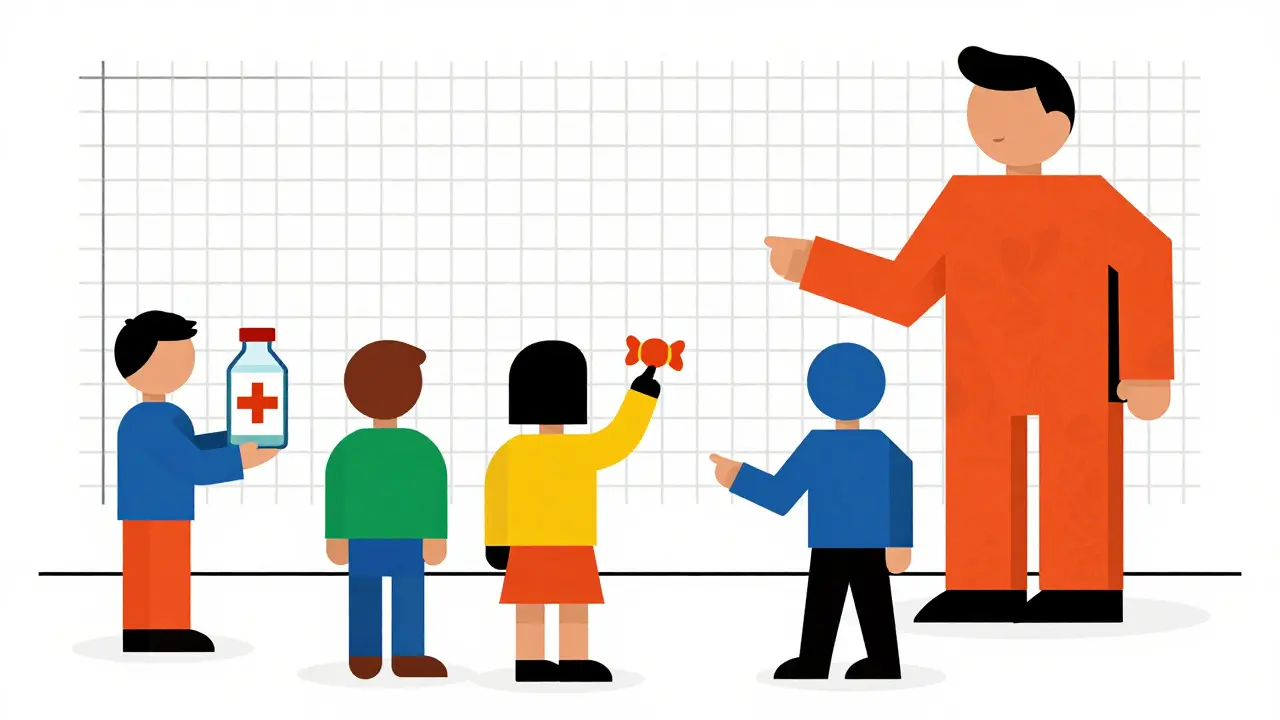
Most medication safety programs stop at age 10. This is a significant oversight. Prescription misuse peaks at age 16, yet we rarely talk to teens about the dangers of sharing or misusing medications. Dr. Stephen Wallace from the Center for Adolescent Research and Education highlights this gap, noting that current initiatives fail to address adolescent-specific risks.
As your child enters middle school, shift the conversation from "don't touch" to "understand the impact." Discuss the difference between taking medicine as prescribed and recreational misuse. Talk about the risks of sharing prescription painkillers or ADHD medications with friends. Make it clear that while medicine is a tool for health, it becomes dangerous when used incorrectly or by someone else.
The CDC plans to expand its PROTECT Initiative to address adolescent prescription misuse through school-based programs starting in 2024. Until then, parents must lead this conversation. Keep an open dialogue about mental health and stress, as these are often drivers of teen medication misuse.
Common Pitfalls to Avoid
Even well-meaning parents make mistakes that compromise safety. Here are the most common traps:
- Calling Medicine Candy: This is the number one mistake. It creates a direct association between pleasure and ingestion. Always call it medicine.
- Inconsistent Rules: If Mom says "ask first" but Dad lets the child take a Tylenol independently, the child learns that the rule is optional. Agree on a family protocol.
- Ignoring Liquid Medications: Brightly colored, flavored liquids are increasingly popular among manufacturers. The AAP reports a 45% increase in liquid medication exposures among children under five. Treat these with the same caution as pills.
- Assuming Child-Resistant Caps Are Enough: They are resistant, not proof. Always store meds in a locked container, especially if you have toddlers who are determined climbers.
What should I do if my child swallows a pill?
Stay calm and call the Poison Help number at 800-222-1222 immediately. Do not wait for symptoms to appear. Have the medication bottle ready to provide details on the drug name, strength, and estimated amount ingested. Follow the instructions given by the specialist, which may include going to the ER or monitoring at home.
At what age can kids start learning about medication safety?
Experts recommend starting as early as age three. At this stage, focus on simple rules like "give pills to adults" and "ask before touching." The complexity of the lessons should grow with the child’s developmental abilities, moving from basic avoidance to understanding labels and dosing by age six or seven.
Is it safe to store medicine in the bathroom?
Ideally, no. Bathrooms are humid and warm, which can degrade medications. More importantly, they are often accessible to children. If you must store medicine there, keep it in a locked cabinet high up. The best place is a cool, dry, locked drawer in a bedroom or closet that is out of reach of children.
How can I teach my child the difference between medicine and candy?
Use clear language. Never refer to medicine as candy. Explain that medicine is a special tool for helping sick bodies, while candy is a treat for happy times. Role-play scenarios where they find a pill and practice handing it to an adult. Programs like Generation Rx offer specific activities to reinforce this distinction through play.
What is the best way to measure liquid medicine?
Always use an oral syringe or a dosing cup specifically designed for medication. Household teaspoons vary greatly in size and can lead to dangerous overdoses or ineffective underdoses. Most pharmacies provide free oral syringes when you pick up a prescription. Check the markings carefully before administering.